
The Quran is more than a holy book—it is Allah’s perfect guidance for humanity. Every chapter, every verse, and every word carries wisdom, mercy, healing, and blessings. Muslims around the world turn to the Quran not only for religious guidance but also for comfort, strength, and peace during life’s greatest challenges.
When people search for Islamic Blessings from Quran, they often seek verses that inspire hope, bring peace to the heart, and strengthen their connection with Allah. The Quran answers these needs beautifully. It teaches patience during hardship, gratitude during ease, and unwavering faith in every circumstance.
Islamic scholars have long described the Quran as a source of Barakah, an Arabic word that means divine blessing, increase in goodness, and lasting benefit. Unlike material wealth, Barakah enriches every part of life. It brings contentment, wisdom, happiness, and closeness to Allah.
Allah says that the Quran itself is a blessed Book sent down for reflection and guidance. Every Muslim who recites it, studies it, and acts upon it receives countless rewards. Even listening to the Quran can calm anxious hearts and remind believers that Allah’s mercy is always near.
Throughout this article, you’ll discover some of the most powerful Quranic verses about blessings, their meanings, and practical ways to apply them in everyday life. Whether you’re beginning your Islamic journey or deepening your understanding of the Quran, these verses offer timeless guidance that continues to transform millions of lives.
What Are Islamic Blessings? Understanding the Meaning of Barakah
The Meaning of Barakah
One of the most beautiful concepts in Islam is Barakah. Although commonly translated as “blessing,” Barakah has a much deeper meaning. It refers to Allah placing goodness, increase, mercy, and lasting benefit into a person’s life, wealth, family, health, knowledge, and time.
For example:
- A small amount of food feeds many people.
- Limited income covers every need.
- A few hours of work produce excellent results.
- A short life leaves a lasting legacy.
These are examples of Barakah.
Unlike worldly success, Barakah cannot be bought or earned through effort alone. It is a special gift from Allah bestowed upon those who seek Him sincerely.
Quranic Foundation of Blessings
Allah repeatedly reminds believers that true blessings come only from Him.
“And if the people of the towns had believed and feared Allah, We would have opened upon them blessings from the heaven and the earth.”
This powerful message teaches that faith and righteousness open the doors to divine blessings. Success is not measured solely by wealth or status but by the presence of Allah’s mercy in every aspect of life.
Blessings Beyond Wealth
Many people mistakenly believe blessings are only about financial prosperity. However, Islam presents a much broader understanding.
Allah blesses His servants with:
- Strong faith
- Good character
- Loving families
- Good health
- Beneficial knowledge
- Peaceful hearts
- Forgiveness
- Guidance
- Patience
- Hope
These blessings often bring greater happiness than material possessions.
Why Every Muslim Seeks Barakah
Every believer naturally desires Allah’s blessings because Barakah brings:
Spiritual Benefits
- Stronger faith
- Better worship
- Inner peace
- Greater gratitude
- Increased remembrance of Allah
Personal Benefits
- Healthy relationships
- Wise decisions
- Productive time
- Emotional stability
- Positive attitude
Community Benefits
Barakah extends beyond individuals. Families become stronger, communities become kinder, and societies become more compassionate when Quranic teachings are practiced.
The Relationship Between Faith and Blessings
The Quran consistently connects blessings with obedience.
When Muslims:
- Pray regularly
- Read the Quran
- Give charity
- Speak truthfully
- Help others
- Remain patient
Allah increases goodness in ways they may never expect.
This doesn’t mean believers never face hardships. In fact, trials often become blessings themselves because they strengthen faith, increase patience, and draw believers closer to Allah.
Barakah in Everyday Life
Many Muslims notice Barakah in simple moments.
Examples include:
| Situation | Possible Blessing |
|---|---|
| Family meal | Love and gratitude increase |
| Daily work | Productivity improves |
| Studying Quran | Knowledge grows |
| Helping someone | Happiness multiplies |
| Giving charity | Wealth feels more meaningful |
| Making dua | Hope replaces anxiety |
These daily blessings remind believers that Allah’s mercy surrounds them continually.
Signs of Divine Blessings
Some common signs include:
- Feeling content with what you have.
- Finding peace during difficulties.
- Having time for worship.
- Loving acts of kindness.
- Feeling motivated to improve.
- Experiencing gratitude every day.
- Maintaining hope despite hardships.
These blessings often appear quietly but have a lasting impact on life.
Why the Quran Is the Greatest Source of Blessings
The Quran is unlike any other book ever revealed. It is Allah’s final revelation to humanity, preserved exactly as it was sent to the Prophet Muhammad ﷺ. Beyond its guidance, the Quran is described as a blessed Book, filled with mercy, wisdom, healing, and light.
For Muslims, turning to the Quran is not simply an act of reading. It is an act of worship that nourishes the soul and strengthens faith. Every letter recited earns reward, every verse teaches wisdom, and every chapter invites believers to reflect on Allah’s greatness.
A Blessed Revelation
Allah describes the Quran as a source of blessing and guidance for all people. It was revealed to transform hearts, reform character, and lead humanity toward truth. Its teachings remain relevant across generations, offering timeless solutions to life’s challenges.
Healing for Hearts
The Quran provides comfort during sadness, hope during hardship, and reassurance in times of uncertainty. Its verses remind believers that Allah is Most Merciful, Most Wise, and always aware of their struggles.
Many Muslims find that regular recitation helps them:
- Reduce stress and anxiety.
- Increase patience.
- Strengthen trust in Allah.
- Develop gratitude.
- Find emotional peace.
Guidance for Every Aspect of Life
The Quran addresses every stage of life, including:
- Worship
- Family relationships
- Marriage
- Business ethics
- Charity
- Justice
- Forgiveness
- Patience
- Leadership
- Community service
Its guidance encourages believers to balance spiritual growth with responsible living.
The Reward of Recitation
The Prophet Muhammad ﷺ taught that every letter of the Quran recited brings immense reward. This motivates Muslims to read, memorize, and reflect on the Quran regularly, knowing that each moment spent with Allah’s words is filled with Barakah.
A Source of Unity
The Quran unites Muslims around the world through a shared message of faith, compassion, and righteousness. Regardless of language or culture, its teachings inspire millions to seek Allah’s pleasure and live with integrity.
Practical Ways to Benefit from the Quran
To experience its blessings more deeply:
- Read a portion every day.
- Reflect on the meanings of the verses.
- Memorize short surahs.
- Apply Quranic teachings in daily life.
- Teach what you learn to others.
- Make dua for understanding and sincerity.
The more a believer engages with the Quran, the more its guidance shapes character and brings lasting peace.
Powerful Verse #1: Surah Al-Fatihah – The 7 Powerful Verses of Mercy and Guidance
Why Is Surah Al-Fatihah So Special?
Surah Al-Fatihah is the opening chapter of the Holy Quran and is often called “The Mother of the Book” (Umm al-Kitab). It consists of seven powerful verses that every Muslim recites in every unit (Rak’ah) of Salah. Because of its central place in Islamic worship, it is one of the greatest sources of blessings and spiritual guidance.
This remarkable Surah summarizes the essence of Islam. It begins by praising Allah, recognizes Him as the Lord of all creation, acknowledges His mercy, and concludes with a heartfelt prayer for guidance to the straight path.
For millions of Muslims, Surah Al-Fatihah is much more than a chapter—it is a daily conversation with Allah.
The Seven Verses and Their Meaning
Each verse carries deep wisdom and timeless lessons.
1. In the Name of Allah
The Surah begins by mentioning Allah’s name, reminding believers that every good action should start with sincerity and dependence on Him.
2. Praise Belongs to Allah
This verse teaches gratitude. Everything we possess comes from Allah, whether visible or hidden.
3. The Most Compassionate, the Most Merciful
Allah’s mercy is greater than His punishment. Every believer is encouraged to maintain hope regardless of past mistakes.
4. Master of the Day of Judgment
This verse reminds Muslims of accountability and encourages righteous living.
5. You Alone We Worship
True success comes from worshipping Allah alone without associating partners with Him.
6. You Alone We Ask for Help
Believers rely upon Allah before seeking assistance from anyone else.
7. Guide Us to the Straight Path
This concluding prayer asks Allah for continuous guidance throughout life.
Blessings of Reciting Surah Al-Fatihah
The Prophet Muhammad ﷺ described Surah Al-Fatihah as one of the greatest chapters revealed.
Its blessings include:
- Strengthening faith
- Increasing humility
- Bringing peace to the heart
- Helping believers remain grateful
- Encouraging sincerity in worship
- Seeking Allah’s guidance every day
- Inspiring hope during hardships
Many Muslims also recite Surah Al-Fatihah as a supplication for healing, relying on Allah as the ultimate source of cure.
Lessons We Learn
Surah Al-Fatihah teaches believers to:
- Begin every task in Allah’s name.
- Remain thankful.
- Trust Allah completely.
- Seek guidance continuously.
- Worship sincerely.
- Stay hopeful in Allah’s mercy.
Its message remains relevant regardless of age, nationality, or background.
Powerful Verse #2: Ayat al-Kursi – The Greatest Verse of Protection
What Is Ayat al-Kursi?
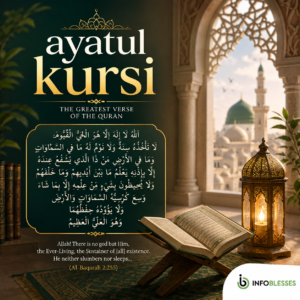
Ayat al-Kursi is verse 255 of Surah Al-Baqarah. It is widely recognized as one of the most powerful verses in the Quran because it beautifully describes Allah’s greatness, authority, knowledge, and everlasting power.
The verse reminds believers that Allah never sleeps, never becomes tired, and has complete control over everything in the heavens and the earth.
Why Is It So Powerful?
Ayat al-Kursi emphasizes several important beliefs:
- Allah is the only true God.
- Allah possesses complete knowledge.
- Allah protects all creation.
- Nothing happens without His permission.
- His authority has no limits.
Reciting this verse increases awareness of Allah’s greatness and strengthens a believer’s trust in Him.
Spiritual Benefits
Muslims throughout the world regularly recite Ayat al-Kursi because authentic Islamic teachings mention its great virtues.
Many believers recite it:
- After every obligatory prayer.
- Before sleeping.
- During times of fear.
- Before traveling.
- When asking Allah for protection.
Its regular recitation serves as a reminder that Allah alone provides ultimate safety and security.
Practical Lessons
Ayat al-Kursi encourages Muslims to:
- Depend on Allah instead of fear.
- Increase remembrance of Allah.
- Trust divine wisdom.
- Strengthen daily worship.
- Maintain confidence during challenges.
Applying Ayat al-Kursi Daily
Simple ways include:
- Memorize the verse.
- Reflect upon its meanings.
- Teach it to children.
- Recite it morning and evening.
- Include it in daily supplications.
The more believers understand its meaning, the stronger their relationship with Allah becomes.
Powerful Verse #3: The Last Two Verses of Surah Al-Baqarah – A Gift Filled with Mercy
A Special Gift from Allah
The final two verses of Surah Al-Baqarah are among the most beloved passages in the Quran. They contain beautiful prayers, reminders of Allah’s mercy, and reassurance that He never burdens a soul beyond its capacity.
These verses strengthen hope and encourage believers to place complete trust in Allah.
Key Messages
These verses teach:
- Faith in Allah.
- Belief in His angels.
- Acceptance of His prophets.
- Trust in divine wisdom.
- Hope in Allah’s forgiveness.
- Confidence in His mercy.
A Prayer Every Believer Can Learn
The concluding supplication asks Allah for:
- Forgiveness
- Mercy
- Protection
- Strength
- Victory over difficulties
It reminds Muslims that Allah understands every struggle and never abandons His servants.
Lessons for Everyday Life
Believers learn to:
- Stay patient during hardship.
- Seek forgiveness often.
- Depend upon Allah.
- Remain optimistic.
- Never lose hope.
Blessings of Reciting the Quran Every Day
Reading the Quran daily is one of the greatest habits a Muslim can develop. Even a few verses each day strengthen faith and bring continuous Barakah.
10 Amazing Benefits of Daily Quran Recitation
1. Strengthens Faith
Every verse reminds believers of Allah’s greatness and mercy.
2. Brings Inner Peace
The Quran calms anxious hearts and provides comfort during difficult times.
3. Increases Wisdom
Its guidance helps believers make better decisions.
4. Builds Good Character
The Quran encourages honesty, patience, generosity, and kindness.
5. Encourages Gratitude
Believers learn to appreciate every blessing from Allah.
6. Improves Family Life
Following Quranic manners strengthens relationships.
7. Inspires Charity
The Quran frequently reminds Muslims to care for those in need.
8. Gives Hope
Even during hardship, Allah promises that relief follows difficulty.
9. Encourages Consistency
Small acts of worship performed regularly become lifelong habits.
10. Draws Believers Closer to Allah
The greatest blessing is developing a stronger relationship with the Creator.
Tips for Building a Daily Quran Habit
| Habit | Benefit |
|---|---|
| Read after Fajr | Starts the day positively |
| Read before sleeping | Ends the day peacefully |
| Reflect on meanings | Deepens understanding |
| Memorize short Surahs | Improves Salah |
| Listen to recitation | Strengthens pronunciation |
| Study Tafsir | Expands knowledge |
| Share verses with family | Encourages learning together |
Frequently Asked Questions (FAQs)
1. What are Islamic blessings (Barakah) in the Quran?
Answer:
In Islam, Barakah means divine blessings, increase, and lasting goodness that Allah places in a person’s life. It is not limited to wealth but also includes peace of mind, good health, beneficial knowledge, righteous family, productive time, and success in both this life and the Hereafter. The Quran teaches that true blessings come from Allah and are granted to those who have faith, obey His commands, and remain grateful.
2. Which Quranic verse is considered the most powerful for protection?
Answer:
One of the most powerful verses for protection is Ayat al-Kursi (Surah Al-Baqarah 2:255). It highlights Allah’s greatness, knowledge, and authority over all creation. Muslims commonly recite it after the five daily prayers, before sleeping, and during times of difficulty, trusting in Allah’s protection and mercy.
3. Why is Surah Al-Fatihah called the greatest chapter of the Quran?
Answer:
Surah Al-Fatihah is known as “The Mother of the Book” (Umm al-Kitab) because it summarizes the core message of Islam. It praises Allah, acknowledges His mercy, affirms His sovereignty, and includes a sincere prayer for guidance. Every Muslim recites it in every unit of Salah, making it the most frequently recited chapter in the Quran.
4. How can I receive more Barakah in my daily life?
Answer:
You can increase Barakah by strengthening your relationship with Allah through sincere worship and good deeds. Practical ways include:
- Reciting and reflecting on the Quran daily.
- Performing the five daily prayers on time.
- Making regular dua (supplication).
- Giving charity (Sadaqah).
- Being honest in all dealings.
- Showing kindness to parents and others.
- Seeking halal earnings.
- Remaining grateful and patient in every situation.
These actions invite Allah’s blessings into your life.
5. Does reading the Quran every day bring blessings?
Answer:
Yes. Daily recitation of the Quran is one of the greatest acts of worship in Islam. It strengthens faith, brings peace to the heart, increases knowledge, and reminds believers of Allah’s guidance. Even reading a small portion consistently can have a positive impact on a person’s spiritual and personal life.
6. Can Quranic verses help during difficult times?
Answer:
Absolutely. The Quran provides comfort, hope, and encouragement during hardships. Verses about patience, trust in Allah (Tawakkul), and His mercy remind believers that every difficulty has wisdom and that Allah is always aware of their struggles. Reading and reflecting on these verses can bring reassurance and emotional strength.
7. What is the best time to read the Quran for maximum blessings?
Answer:
The Quran can be read at any time, but many Muslims prefer reading it after Fajr (dawn prayer) or before going to sleep, as these times are often peaceful and allow for greater reflection. The most important factor is consistency—reading the Quran regularly with sincerity and understanding brings lasting spiritual benefits.
8. How can I understand the meaning of Quranic verses better?
Answer:
To gain a deeper understanding of the Quran:
- Read a trusted English translation alongside the Arabic text.
- Study authentic Tafsir (Quranic commentary).
- Reflect on the verses and how they apply to your daily life.
- Attend Islamic classes or lectures.
- Ask knowledgeable scholars when you have questions.
- Make dua asking Allah to grant you wisdom and understanding.
Understanding the Quran helps believers apply its teachings and experience its blessings more fully.
Conclusion:
The Islamic Blessings from Quran are timeless gifts from Allah that guide believers toward faith, peace, wisdom, and success in both this world and the Hereafter. Every verse of the Quran carries a message of hope, mercy, and guidance, encouraging Muslims to strengthen their relationship with their Creator through sincere worship, patience, gratitude, and righteous actions. Whether it is the powerful lessons of Surah Al-Fatihah, the protection found in Ayat al-Kursi, or the comforting promises in the final verses of Surah Al-Baqarah, the Quran reminds us that Allah’s mercy is always near for those who seek Him with sincere hearts.
Making the Quran a part of your daily life is one of the greatest ways to invite Barakah (divine blessings) into your home, family, work, and personal journey. By reciting its verses regularly, reflecting on their meanings, and putting their teachings into practice, you can experience greater inner peace, stronger faith, and a deeper sense of purpose. Remember that true blessings are not measured only by material wealth but by the contentment, guidance, and mercy that Allah places in our lives. May Allah make the Quran the light of our hearts, the guide for our actions, and the source of endless blessings in this life and the next. Ameen.