1. Introduction to Islam
Islam is one of the world’s largest religions, with followers living in almost every country. Its teachings focus on faith in one God, compassion, justice, responsibility, peace, and good character. For Muslims, religion isn’t limited to rituals performed in places of worship. It also guides everyday choices, relationships, personal conduct, and the way people treat others.
The word Islam and Islam is commonly understood as referring to submission to God and finding peace through surrendering to His will. Muslims believe that God, known in Arabic as Allah, is the creator of the universe and the source of guidance for humanity. They seek to live according to divine instructions while maintaining kindness, patience, honesty, and humility.
Learning about Islam can help people understand Muslim communities, religious traditions, cultural practices, and historical contributions. It also encourages respectful discussion between people of different backgrounds. Although Muslims share important beliefs, their cultures, languages, customs, and lifestyles vary greatly.
Islam teaches that human beings have dignity and responsibility. People are encouraged to use their abilities wisely, care for their families, support those in need, and avoid actions that cause harm. Spiritual growth and practical goodness are connected.
Why Understanding Islam Matters
Learning about Islam is valuable for several reasons:
-
Religious understanding: It helps explain the beliefs and worship practices of Muslims.
-
Cultural awareness: It provides insight into Muslim traditions around the world.
-
Social harmony: Knowledge can reduce stereotypes and encourage peaceful relationships.
-
Personal development: Its teachings emphasize discipline, gratitude, patience, and self-improvement.
-
Historical knowledge: It helps readers appreciate the role of Muslim civilizations in world history.
Islam has influenced art, architecture, literature, education, science, law, philosophy, and community life across many centuries. Its teachings continue to shape how Muslims approach daily life and their relationship with the world.
2. What Is Islam?
Islam is a monotheistic religion based on the belief in one God. Muslims believe that God is unique, eternal, merciful, powerful, and beyond comparison with creation. Worship is directed toward God alone, and a person’s faith should be reflected in their actions.
The central message of Islam is that people should recognize their creator, worship Him sincerely, and live responsibly. Muslims believe that God sent prophets throughout history to guide humanity. These prophets taught faith, moral behavior, accountability, and compassion.
Islam recognizes many figures who are also important in Judaism and Christianity, including Adam, Noah, Abraham, Moses, and Jesus. Muslims honor these prophets and believe Muhammad was the final prophet in the line of prophetic guidance.
The Meaning of Submission to God
Submission in Islam doesn’t mean losing personal dignity or refusing to think. It means choosing to follow God’s guidance, recognizing that human knowledge is limited, and seeking to live with purpose.
This idea can influence a Muslim’s daily choices, such as:
-
Speaking truthfully, even when lying seems easier.
-
Avoiding unfair treatment of others.
-
Being patient during difficult situations.
-
Showing gratitude for blessings.
-
Helping people who are struggling.
-
Taking responsibility for mistakes.
Islam as a Way of Life
Islam encourages balance between spiritual and worldly responsibilities. Muslims may study, work, raise families, build businesses, participate in community activities, and enjoy lawful recreation. Religious practice is meant to guide these activities toward ethical and meaningful goals.
The faith encourages a person to develop both inner character and outward conduct. Sincerity, humility, and faith are important, but so are fairness, generosity, and respect.
3. Origins and History of Islam
Islam began in the seventh century CE in the Arabian Peninsula. Muslims believe that divine revelation was given to Prophet Muhammad through the angel Gabriel. These revelations began around 610 CE, when Muhammad was approximately 40 years old.
Muhammad was born in Mecca, a city that was an important trading and religious center. He became known for honesty and trustworthy conduct before receiving revelation. His teachings called people to worship one God, reject injustice, care for the poor, and live morally.
The Early Muslim Community
The first Muslims faced opposition in Mecca because their teachings challenged established beliefs and social practices. Some followers experienced persecution and hardship.
In 622 CE, Muhammad and his followers migrated from Mecca to Medina. This event, known as the Hijrah, marks the beginning of the Islamic calendar. In Medina, the Muslim community developed religious, social, and political institutions.
Over time, Islam spread throughout the Arabian Peninsula and beyond. After Muhammad’s death in 632 CE, Muslim communities expanded into parts of Asia, Africa, and Europe through a variety of processes, including trade, migration, scholarship, political expansion, and cultural exchange.
Development of Muslim Civilizations
Muslim societies contributed to many fields of human knowledge and culture. Different periods of history saw scholars and artists working in:
-
Mathematics and algebra
-
Medicine and hospitals
-
Astronomy and navigation
-
Philosophy and literature
-
Architecture and engineering
-
Geography and cartography
-
Education and libraries
These achievements were developed through contributions from people of diverse ethnic, linguistic, and religious backgrounds living in Muslim-led societies.
Islamic history is not a single uniform story. Different dynasties, regions, schools of thought, and communities shaped the faith’s historical development. Understanding this diversity provides a more complete picture of Islam and its global influence.
4. The Quran: Holy Book of Islam
The Quran is the central holy book of Islam. Muslims believe it is the word of God revealed to Prophet Muhammad in Arabic over approximately 23 years. It is the primary source of Islamic faith, worship, moral guidance, and spiritual reflection.
The Quran contains 114 chapters, known as surahs, which vary in length. Its verses discuss faith, worship, ethics, history, human nature, accountability, mercy, and the relationship between God and humanity.
Major Themes in the Quran
The Quran addresses several important themes:
-
Monotheism: Worship God alone.
-
Mercy: God is compassionate and forgiving.
-
Justice: People should act fairly and avoid oppression.
-
Accountability: Individuals are responsible for their choices.
-
Charity: Wealth should be used responsibly and shared.
-
Knowledge: Reflection and learning are encouraged.
-
Moral conduct: Truthfulness, patience, and humility are valued.
Muslims often recite the Quran during daily prayers, read it in private, study its meanings, and listen to its recitation. Memorizing parts or all of the Quran is also an important tradition.
The Importance of Understanding
Reading the Quran in Arabic is highly valued in Islam, but understanding its meaning is also important. Translations can help people who don’t speak Arabic learn about its teachings. However, Muslims generally consider translations to be interpretations of the meaning rather than the Quran itself in its original Arabic form.
The Quran is often read alongside explanations and scholarly interpretation to help readers understand historical context and practical guidance.
5. Six Articles of Faith in Islam
Islamic belief is often summarized through six articles of faith. These form a basic framework for understanding what Muslims believe.
| Article of Faith | Meaning |
|---|---|
| Belief in Allah | Faith in one God, the creator and sustainer |
| Belief in Angels | Faith in spiritual beings created by God |
| Belief in Revealed Books | Faith in divine scriptures and guidance |
| Belief in Prophets | Faith in messengers sent to humanity |
| Belief in the Last Day | Faith in resurrection and judgment |
| Belief in Divine Decree | Faith in God’s knowledge and decree |
Belief in One God
The foundation of Islam is the belief in one God. Muslims believe God has no partners, children, or equals. This belief shapes worship, personal values, and the understanding of life’s purpose.
Belief in Angels
Angels are believed to be beings created by God who fulfill different responsibilities. They aren’t worshipped; worship belongs to God alone.
Belief in Prophets and Scriptures
Muslims believe God sent prophets to guide people throughout history. They believe divine revelations were given to earlier prophets, including Moses and Jesus, and that the Quran is the final revelation.
Belief in Judgment and Accountability
Muslims believe life has moral significance and that people will be accountable for their actions. This belief encourages justice, compassion, and awareness of consequences.
Belief in Divine Decree
Belief in divine decree means recognizing God’s knowledge and power while understanding that humans are responsible for their choices. Muslims are encouraged to make good decisions, work toward their goals, and trust God when facing outcomes they cannot control.
6. The Five Pillars of Islam
The Five Pillars are the main acts of worship that structure Muslim religious life. They connect belief with practical actions and encourage discipline, devotion, and responsibility.
1. Shahada — Declaration of Faith
The Shahada is the declaration that there is no deity worthy of worship except Allah and that Muhammad is His messenger. It expresses the central belief of Islam and is the foundation of Muslim identity.
2. Salah — Daily Prayer
Muslims perform five obligatory prayers each day. These prayers help believers remember God throughout their daily activities and maintain a regular spiritual connection.
3. Zakat — Obligatory Charity
Zakat is a required form of giving for Muslims who meet specific financial conditions. It helps support eligible people in need and encourages responsibility toward society.
4. Sawm — Fasting in Ramadan
Muslims fast during the month of Ramadan from dawn until sunset. Fasting includes abstaining from food, drink, and other prohibited activities during fasting hours. It also encourages self-control, gratitude, and compassion.
5. Hajj — Pilgrimage to Mecca
Hajj is the pilgrimage to Mecca that Muslims are required to perform once in their lifetime if they are physically and financially able. It brings Muslims from many nations together in worship.
| Pillar | Main Purpose |
|---|---|
| Shahada | Faith and commitment |
| Salah | Regular worship and remembrance |
| Zakat | Social responsibility and support |
| Sawm | Self-discipline and spiritual growth |
| Hajj | Unity and devotion |
Together, these practices help Muslims maintain a consistent relationship with their faith and strengthen their sense of responsibility to others.
7. Prayer and Worship in Islam
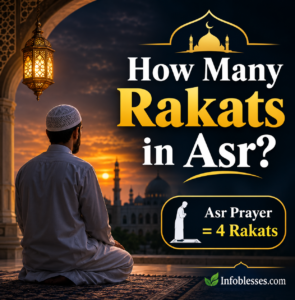
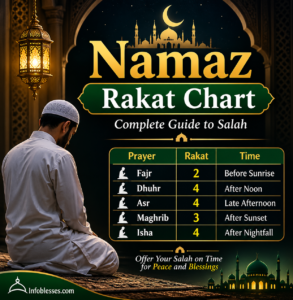
Prayer is an important part of Islam. Salah is performed five times daily at prescribed times: dawn, midday, afternoon, sunset, and night. These prayers include standing, bowing, prostrating, and reciting verses from the Quran.
The five prayers are called:
-
Fajr: Dawn prayer
-
Dhuhr: Midday prayer
-
Asr: Afternoon prayer
-
Maghrib: Sunset prayer
-
Isha: Night prayer
Why Prayer Is Important
Prayer provides moments of reflection during a busy day. It reminds Muslims that material success, work, and personal goals aren’t the only priorities in life.
Salah can encourage:
-
Discipline and punctuality
-
Spiritual awareness
-
Peace and reflection
-
Gratitude
-
Humility
-
A sense of belonging
Muslims may pray individually or together in a mosque. Congregational prayer creates a sense of unity, as people from different social and economic backgrounds stand together without distinctions of wealth or status.
Besides formal prayer, Muslims are encouraged to make personal supplications, known as dua. These may include asking for guidance, forgiveness, health, patience, or help during difficult times.
8. Ramadan and Fasting
Ramadan is the ninth month of the Islamic calendar and a special time of worship, reflection, fasting, and community. Muslims who are obligated to fast abstain from food, drink, and other things that invalidate fasting from dawn until sunset.
Fasting isn’t simply about avoiding meals. It encourages believers to improve their behavior, avoid harmful speech, practice patience, and become more aware of people who experience hunger and hardship.
Spiritual Benefits of Ramadan
Ramadan encourages Muslims to:
-
Strengthen their relationship with God.
-
Read and reflect on the Quran.
-
Practice self-control.
-
Give more charity.
-
Forgive others.
-
Avoid arguments and harmful behavior.
-
Spend meaningful time with family and community.
Meals before dawn are called suhoor, while the meal that breaks the fast at sunset is called iftar. Families, friends, and communities often share these meals.
People who are ill, traveling, pregnant, nursing, menstruating, or facing other recognized circumstances may have exemptions or accommodations depending on their situation and religious guidance. Islam recognizes that human health and hardship matter.
Ramadan ends with Eid al-Fitr, a joyful celebration that includes prayer, charity, family visits, and sharing food.
9. Charity, Compassion, and Social Responsibility
Charity is a major principle of Islam. Muslims are encouraged to care for the poor, support orphans, help travelers, assist neighbors, and protect people who are vulnerable.
Islam distinguishes between zakat, which is obligatory under specific conditions, and sadaqah, which refers to voluntary charity.
Zakat and Sadaqah
Zakat is often calculated as 2.5% of eligible accumulated wealth held for a lunar year, although the exact calculation depends on the type of wealth and relevant rules. It is not simply a tax on every person’s income.
Sadaqah can include financial donations, food, clothing, assistance, or even acts of kindness.
Examples of charity include:
-
Feeding hungry people.
-
Paying for someone’s essential medicine.
-
Helping a student access education.
-
Supporting a family in financial difficulty.
-
Donating to a community welfare project.
-
Offering time to assist someone in need.
The spirit of charity extends beyond money. Muslims are taught that a kind word, helping someone with a task, or removing something harmful from a path can also be acts of goodness.
These teachings promote a caring society where people don’t ignore the struggles of others.
10. Islamic Moral Values and Ethics
Islam places great importance on character. Religious knowledge and worship are expected to support ethical behavior and improve how people treat others.
Honesty and Trustworthiness
Honesty is considered a fundamental virtue. Muslims are encouraged to speak truthfully, fulfill promises, protect entrusted property, and avoid deception.
Respect and Kindness
Islam teaches respect toward parents, elders, children, neighbors, guests, and people in need. Kindness should not be limited to members of one’s own religious community.
Patience and Forgiveness
Patience is valued during hardship, and forgiveness is encouraged when appropriate. However, forgiveness doesn’t require accepting abuse or abandoning the right to seek justice and safety.
Justice and Fairness
Justice is a core value in Islamic teachings. People are encouraged to treat others fairly, even when doing so is difficult or when disagreements exist.
| Islamic Value | Everyday Example |
|---|---|
| Honesty | Telling the truth at work or school |
| Patience | Responding calmly under pressure |
| Compassion | Helping someone in distress |
| Respect | Listening without insulting others |
| Justice | Treating people fairly |
| Gratitude | Appreciating blessings |
| Humility | Avoiding arrogance |
These values show that Islam isn’t only about rituals. Ethical behavior is an important part of living according to the faith.
11. Women, Family, and Community Life in Islam
Family life holds an important place in Islam. Marriage, parenting, caring for relatives, maintaining family relationships, and respecting individual responsibilities are often considered meaningful parts of religious life.
Islamic teachings emphasize the dignity of women and men and their responsibility before God. The Quran includes teachings about marriage, inheritance, education, financial responsibility, personal conduct, and protection from injustice.
Women’s Rights and Responsibilities
Islamic teachings include principles concerning women’s rights to property, inheritance, financial ownership, education, and dignity. The details of how these principles are interpreted and applied can differ across legal traditions, cultures, and societies.
Muslim women have diverse experiences. Some are scholars, teachers, doctors, entrepreneurs, artists, parents, community leaders, and public officials. Their roles aren’t limited to a single cultural stereotype.
Family Relationships
Islam encourages respect for parents, care for children, and maintaining relationships with relatives. Parents are expected to nurture children with love, fairness, and responsibility.
A healthy Muslim family is ideally built on:
-
Mutual respect
-
Compassion and affection
-
Honesty and trust
-
Shared responsibilities
-
Patience and communication
-
Support during difficult times
Family traditions differ widely among Muslims. Cultural customs in Pakistan, Indonesia, Egypt, Türkiye, Nigeria, and the United States, for example, may look quite different even when families share the same basic religious beliefs.
12. Islamic Culture and Diversity Around the World
Islam is a global religion, not a single ethnic or national culture. Muslims live across Asia, Africa, Europe, the Americas, and Oceania. Indonesia has the largest Muslim population by country, while substantial Muslim communities also live in South Asia, the Middle East, Africa, and many other regions.
Cultural Differences Among Muslims
Muslim communities have different:
-
Languages
-
Clothing styles
-
Foods
-
Wedding customs
-
Music and artistic traditions
-
Architecture
-
Social practices
For example, traditional clothing in South Asia may include shalwar kameez, while in some Arab regions people may wear thobes or abayas. In other communities, Muslims commonly wear ordinary modern clothing.
Islamic art has also developed in many forms, including geometric patterns, calligraphy, ceramics, textiles, gardens, and architecture. Mosques around the world reflect regional materials, building styles, and artistic traditions.
Unity Through Shared Beliefs
Despite cultural differences, Muslims share core religious beliefs and practices. The Quran, daily prayer, fasting during Ramadan, and the pilgrimage to Mecca help connect Muslims across borders.
This diversity demonstrates how a common faith can exist alongside many languages and cultures.
13. Islam and Other Religions
Islam shares several beliefs and moral teachings with other major religions, especially Judaism and Christianity. All three are commonly described as Abrahamic religions because they connect their religious traditions with Abraham.
Muslims believe in one God and recognize many prophets who appear in Jewish and Christian scriptures. They also value prayer, charity, moral responsibility, and the importance of family.
Similarities
Common themes include:
-
Belief in God.
-
The importance of moral behavior.
-
Helping the poor.
-
Respect for parents.
-
Accountability for actions.
-
Prayer and spiritual reflection.
Differences
There are also important differences. Islam teaches that Muhammad is the final prophet and that the Quran is the final revelation. Islamic beliefs about Jesus differ from Christian beliefs: Muslims regard Jesus as a great prophet and the Messiah, but not as God or the Son of God in the Christian theological sense.
Understanding these similarities and differences can help people discuss religion respectfully. Dialogue doesn’t require everyone to agree; it requires listening, honesty, and respect.
14. Common Misconceptions About Islam
Many misunderstandings about Islam arise from limited information, political events, stereotypes, or treating the actions of individuals as representative of an entire religion.
Misconception 1: Islam Is Only for Arabs
Islam is a global faith. Most Muslims aren’t Arab, and Muslims speak hundreds of languages. Large Muslim populations live in South and Southeast Asia, Africa, and other parts of the world.
Misconception 2: Islam Promotes Violence
Islamic teachings contain principles about mercy, justice, protecting life, and avoiding oppression. Violent actions committed by particular individuals or groups shouldn’t automatically be attributed to all Muslims.
Historical and contemporary conflicts are complex and often involve political, social, economic, and ideological factors.
Misconception 3: Muslims Don’t Value Education
Learning and knowledge have played important roles in Muslim religious and cultural traditions. Muslim scholars have contributed to science, medicine, mathematics, literature, philosophy, and education across different historical periods.
Misconception 4: All Muslims Live the Same Way
Muslims differ in culture, religious practice, political views, language, and personal lifestyles. The Muslim world is diverse, and individual experiences cannot be reduced to one image.
A fair understanding of Islam separates religious teachings from cultural customs and individual behavior.
15. Islam in Modern Society
Islam continues to influence contemporary life in many ways. Muslims work in diverse professions, participate in civic life, study in universities, conduct research, run businesses, raise families, and contribute to communities.
Modern Muslims also discuss questions involving technology, healthcare, environmental protection, finance, education, human rights, and social change. Islamic ethical principles may be used to think about these topics, although scholars and communities sometimes disagree about particular applications.
Faith and Modern Challenges
Many Muslims try to balance religious commitments with modern responsibilities. This may involve:
-
Ethical business practices.
-
Responsible use of technology.
-
Environmental stewardship.
-
Community service.
-
Education and scientific inquiry.
-
Family and professional balance.
-
Respectful engagement with people of other faiths.
Islamic teachings about moderation, accountability, justice, and compassion can provide a framework for addressing these challenges.
The Importance of Dialogue
In multicultural societies, respectful dialogue helps communities build trust. Learning about Islam through credible sources, speaking with Muslims, and asking thoughtful questions can improve understanding.
Rather than relying on assumptions, people can explore the Quran, Islamic history, scholarly resources, and the experiences of ordinary Muslim communities.
For further reading, see Britannica’s overview of Islam, which provides additional background on its beliefs, history, and development.
16. Frequently Asked Questions (FAQs)
1. What is Islam in simple words?
Islam is a religion based on belief in one God and following His guidance. It teaches worship, honesty, compassion, justice, responsibility, and living a meaningful life.
2. Who is the founder of Islam?
Muslims believe Islam’s message comes from God and was taught by prophets throughout history. Prophet Muhammad is regarded as the final prophet, through whom the Quran was revealed beginning in the seventh century.
3. What do Muslims believe about Jesus?
Muslims believe Jesus (Isa) was a great prophet and the Messiah, born to Mary through a miraculous act of God. They honor him but don’t believe he is God.
4. What are the Five Pillars of Islam?
The Five Pillars are Shahada (faith), Salah (prayer), Zakat (obligatory charity), Sawm (fasting during Ramadan), and Hajj (pilgrimage to Mecca for those able).
5. Why do Muslims pray five times a day?
The five daily prayers are acts of worship that help Muslims remember God, maintain spiritual discipline, express gratitude, and seek guidance throughout the day.
6. What is the Quran?
The Quran is Islam’s holy book. Muslims believe it is the word of God revealed to Prophet Muhammad in Arabic through the angel Gabriel.
7. Does Islam teach peace?
Islam emphasizes mercy, justice, compassion, and peaceful conduct. Muslims are encouraged to respect others, avoid oppression, and act responsibly. As in any large community, individual actions may differ from religious ideals.
8. What is Ramadan?
Ramadan is the ninth month of the Islamic calendar. Muslims fast from dawn to sunset, increase worship, read the Quran, practice self-control, and give charity. The month concludes with Eid al-Fitr.
9. Do all Muslims follow the same traditions?
No. Muslims share fundamental beliefs and religious practices, but cultural traditions, languages, clothing, food, and some religious interpretations vary across communities and countries.
10. How can someone learn more about Islam?
A beginner can read a reliable translation of the Quran, explore introductory books on Islamic beliefs, study the history of the religion, consult qualified scholars, or speak respectfully with Muslims about their faith and experiences.
17. Conclusion:
Islam is a faith centered on belief in one God, divine guidance, worship, moral responsibility, and compassion toward humanity. Its teachings encourage people to develop a strong spiritual connection with God while treating others with honesty, fairness, patience, and kindness.
The Five Pillars provide a practical structure for religious life, while the Quran offers guidance on faith, ethics, human relationships, and accountability. Islamic traditions also emphasize charity, education, family responsibilities, justice, and personal growth.
Although Muslims share fundamental beliefs, they belong to diverse cultures and communities. Understanding this diversity is essential for appreciating Islam as a global religion rather than viewing it through a narrow cultural lens.
Learning about Islam can help build knowledge, reduce misconceptions, and encourage respectful relationships among people of different backgrounds. At its heart, the faith calls believers to worship God sincerely, live ethically, help others, and strive to become better human beings.

Welcome to Info Blesses I am Rana Ahtasham an AI Powered SEO and Content Writer With 3 year experience.I help websites rank highter, grow traffic, and look amazing. My goal is to make SEO and web design simple and effective for everyone.Lets achieve more togather!