Introduction to Asr Prayer
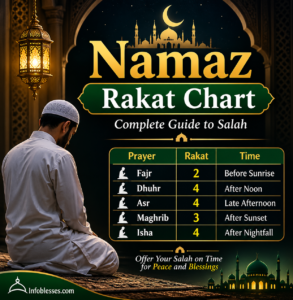
Asr is the afternoon prayer and the third of the five obligatory daily prayers in Islam. Muslims perform it every day after the Dhuhr prayer and before Maghrib. It holds an important place in Islamic worship because it reminds believers to remember Allah throughout their busy afternoon routines.
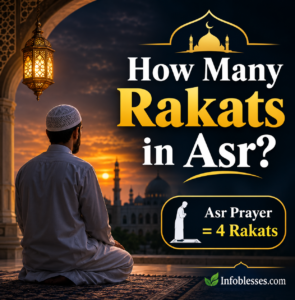
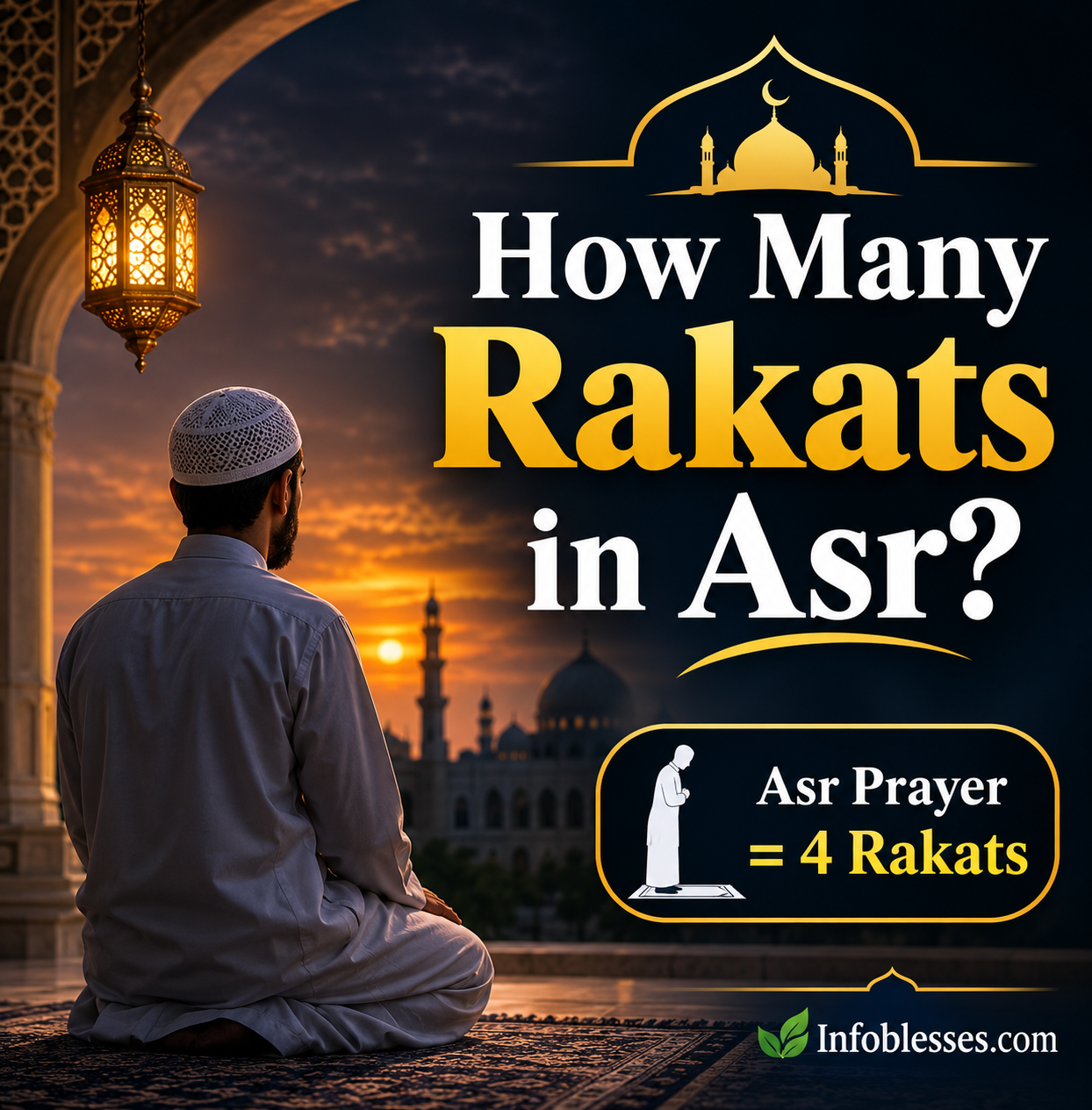
Many Muslims, especially beginners, ask an important question: how many rakats in Asr should they perform?
The simple answer is that Asr consists of four obligatory Fard rakats. There are also four optional Sunnah rakats that some Muslims perform before the obligatory prayer.
Understanding the difference between Fard and Sunnah prayers is important. It helps Muslims organize their Salah correctly and avoid confusion.
In this guide, we’ll explain:
-
The total number of Asr rakats.
-
The difference between Fard and Sunnah.
-
How to perform the four obligatory rakats.
-
When Asr prayer begins and ends.
-
Common mistakes to avoid.
-
Answers to frequently asked questions.
Whether you’re learning Salah for the first time or refreshing your knowledge, this guide will help you understand Asr prayer more clearly.
1. How Many Rakats in Asr?
The Asr prayer has four obligatory rakats. These four units are compulsory for Muslims who are required to perform daily Salah.
However, there is an optional Sunnah prayer that can be performed before the Fard prayer.
Here’s a simple breakdown:
| Prayer Type | Number of Rakats | Status |
|---|---|---|
| Sunnah before Asr | 4 | Optional, recommended |
| Fard Asr | 4 | Obligatory |
| Total | 8 | Including optional Sunnah |
The most important point is that the four Fard rakats must be performed.
The four Sunnah rakats before Asr are generally classified as Sunnah Ghayr Mu’akkadah (a non-emphasized Sunnah) in Hanafi jurisprudence.
This means Muslims can perform them to seek additional reward, but they aren’t obligatory.
Are Four Fard Rakats Compulsory?
Yes. The four obligatory rakats are the essential part of Asr Salah.
If someone performs only the four Fard rakats, they have performed the obligatory Asr prayer, provided all its conditions and requirements are fulfilled.
The Sunnah prayer is additional worship.
Why Do Some People Perform Eight Rakats?
Some Muslims perform four Sunnah rakats before the four obligatory rakats.
This is based on the practice of offering voluntary prayers before Asr.
A narration in Sunan Abu Dawood mentions the Prophet Muhammad (peace be upon him) praying for Allah’s mercy upon the person who prays four rakats before Asr.
Therefore, performing these additional rakats is a good voluntary practice.
2. Understanding the Four Fard Rakats
To understand Asr prayer properly, it’s useful to know what a rakat means.
A rakat is one complete unit of Salah. It includes standing, Quran recitation, bowing, and prostration.
The four obligatory rakats of Asr are performed in one prayer.
The following table provides an overview.
| Rakat | Main Actions |
|---|---|
| First | Standing, recitation, Ruku, two Sajdahs |
| Second | Standing, recitation, Ruku, two Sajdahs, Tashahhud |
| Third | Standing, recitation, Ruku, two Sajdahs |
| Fourth | Standing, recitation, Ruku, two Sajdahs, final Tashahhud and Salam |
First Rakat
Begin by making the intention in your heart to perform the four obligatory rakats of Asr.
Raise your hands and say Allahu Akbar to begin Salah.
Then:
-
Stand facing the Qiblah.
-
Recite the opening supplication according to your school of practice.
-
Recite Surah Al-Fatihah.
-
Recite another portion of the Quran.
-
Say Allahu Akbar and bow into Ruku.
-
Rise from Ruku.
-
Perform two Sajdahs.
This completes the first rakat.
Second Rakat
Stand for the second rakat.
Recite Surah Al-Fatihah and another portion of the Quran.
Then perform Ruku and two Sajdahs.
After completing the second Sajdah, sit and recite Tashahhud.
In a four-rakat obligatory prayer, you don’t finish Salah at this point.
Instead, stand for the third rakat.
Third Rakat
Stand and begin the third rakat.
According to the Hanafi method, recite Surah Al-Fatihah without adding another Surah in the obligatory third and fourth rakats.
Perform Ruku and two Sajdahs.
Then stand for the final rakat.
Fourth Rakat
The fourth rakat is the final unit of Asr Salah.
Recite Surah Al-Fatihah according to the Hanafi method.
Complete Ruku and two Sajdahs.
After the second Sajdah, sit and recite:
-
Tashahhud.
-
Durood Ibrahim.
-
The prescribed final supplications.
Finally, turn your head to the right and left while saying Salam.
Your four-rakat Asr prayer is complete.
Note: Some details of Salah differ among Islamic schools of jurisprudence. Follow a reliable teacher or scholar for the method practiced in your tradition.
3. Sunnah Prayer Before Asr
Besides the four obligatory rakats, Muslims can perform four voluntary Sunnah rakats before Asr.
These additional prayers offer an opportunity to increase worship and earn spiritual rewards.
Is Sunnah Before Asr Compulsory?
No. The four Sunnah rakats before Asr aren’t Fard.
A Muslim who performs the four obligatory rakats without the optional Sunnah has still performed the obligatory prayer.
However, performing voluntary prayers is encouraged.
How to Perform Four Sunnah Rakats
The four Sunnah rakats can be performed before the obligatory Asr prayer.
In the Hanafi tradition, they are generally performed as one four-rakat prayer, with the appropriate recitations and sitting positions.
The prayer includes:
-
First rakat.
-
Second rakat.
-
Sitting for Tashahhud.
-
Third rakat.
-
Fourth rakat.
-
Final Tashahhud and Salam.
Difference Between Sunnah and Fard
| Fard | Sunnah |
|---|---|
| Obligatory worship | Voluntary or recommended worship, depending on its classification |
| Four rakats in Asr | Four optional rakats before Asr |
| Must be performed | Not obligatory |
| Deliberately neglecting it is sinful | Its reward and legal status depend on the type of Sunnah |
It’s important not to confuse optional worship with obligatory Salah.
4. Importance of Asr Prayer in Islam
Asr prayer has a special position in Islam.
The Quran emphasizes the importance of maintaining prayers, including the middle prayer.
Allah says:
“Guard strictly your prayers, especially the middle prayer.” (Surah Al-Baqarah 2:238)
Many Islamic scholars identify the middle prayer mentioned in this verse as Asr.
This highlights its importance in a Muslim’s daily life.
Protection of Daily Worship
Asr takes place during a busy part of the day.
People may be working, studying, traveling, or handling family responsibilities.
Making time for Salah helps Muslims remember their relationship with Allah.
A Reminder of Accountability
Islam teaches that prayer is an essential responsibility.
Maintaining Asr prayer helps believers develop discipline and remain conscious of their religious duties.
Importance Mentioned in Hadith
The Prophet Muhammad (peace be upon him) emphasized the importance of protecting the Asr prayer.
Authentic narrations in Sahih al-Bukhari and Sahih Muslim warn against neglecting it.
This shows that Asr shouldn’t be treated as an ordinary or unimportant part of the day.
5. Correct Time for Asr Prayer
Knowing the correct time is just as important as knowing how many rakats in Asr must be performed.
Asr begins when its prescribed time enters after Dhuhr.
Its precise starting time depends on the method used to calculate the afternoon shadow.
When Does Asr Begin?
There are two widely recognized methods for determining the beginning of Asr.
Standard method: Asr begins when an object’s shadow reaches its original length plus the shadow it had at noon.
Hanafi method: Asr begins when an object’s shadow reaches twice its original length plus its noon shadow.
These methods explain why Asr prayer times can differ between mosques and Islamic prayer calendars.
When Does Asr End?
The time for Asr ends at sunset, when Maghrib begins.
However, Muslims should avoid unnecessarily delaying Asr until the sun becomes very low.
The best practice is to perform it within its proper time.
How to Check Asr Prayer Time
You can check your local prayer timetable through:
-
Your nearby mosque.
-
A reliable Islamic prayer timetable.
-
A trusted prayer-time application.
-
A recognized Islamic authority.
For additional guidance, visit the IslamQA Islamic knowledge website.
6. Step-by-Step Guide to Performing Asr Salah
If you’re new to Salah, following a simple sequence can make learning easier.
Here are the main steps for performing the four obligatory rakats.
Step 1: Make Your Intention
Make the intention in your heart to perform the four obligatory rakats of Asr.
You don’t need to say the intention aloud.
Step 2: Begin With Takbir
Raise your hands according to your school’s practice and say:
Allahu Akbar.
Place your hands in the appropriate position while standing.
Step 3: Recite Quran
Recite the opening supplication where applicable, followed by Surah Al-Fatihah.
In the first two obligatory rakats, recite another Surah or Quranic verses according to the Hanafi method.
Step 4: Perform Ruku
Say Allahu Akbar and bow.
Keep your back reasonably straight and recite the prescribed glorification.
Step 5: Perform Sajdah
Rise from Ruku and then prostrate.
Perform two Sajdahs with a brief sitting between them.
Step 6: Complete the Second Rakat
Repeat the standing, recitation, bowing, and prostration.
Sit after the second rakat and recite Tashahhud.
Step 7: Complete the Third and Fourth Rakats
Stand and complete the remaining two rakats.
Follow the recitation rules of your school of jurisprudence.
Step 8: Finish With Salam
After the final Sajdah, sit and recite the final prayers.
Turn your head to the right and left, saying Salam.
Your obligatory Asr Salah is complete.
7. Conditions Before Performing Asr Prayer
Before starting Salah, make sure the necessary conditions are fulfilled.
These conditions help ensure that your prayer is performed correctly.
Wudu
Perform ablution before Salah if you aren’t already in a state of ritual purity.
Wudu involves washing specific parts of the body in the prescribed manner.
Clean Clothes and Prayer Area
Your clothes and prayer area should be free from impurities.
Choose a clean place for Salah.
Facing the Qiblah
Face the direction of the Kaaba in Makkah.
If you’re unsure about the direction, use a reliable Qiblah compass or ask your local mosque.
Covering the Awrah
Wear clothing that fulfills the Islamic requirements for covering the body during prayer.
Entering Prayer Time
Make sure the Asr prayer time has begun before performing the obligatory prayer.
Praying before its prescribed time doesn’t count as performing that obligatory prayer.
8. Common Mistakes During Asr Prayer
Even people who have performed Salah for many years can sometimes make mistakes.
Being aware of common problems helps improve the quality of worship.
Delaying Asr Without a Valid Reason
One common mistake is delaying Asr until very close to sunset.
It’s better to perform the prayer earlier within its prescribed time.
Confusing Sunnah and Fard
Some people believe that all eight rakats are compulsory.
This isn’t correct.
The four obligatory rakats are Fard, while the four additional rakats are voluntary.
Rushing Through Salah
Salah should be performed calmly.
Take enough time for Ruku, standing after Ruku, Sajdah, and sitting positions.
Incorrect Recitation
Learning Surah Al-Fatihah and the essential recitations is important.
If you’re still learning Arabic, practice regularly with a qualified teacher.
Forgetting the Number of Rakats
If you’re uncertain about the number of rakats, Islamic rulings provide guidance for handling doubts.
The correct response can depend on the nature of the doubt and your school’s jurisprudence.
Ask a knowledgeable scholar if this happens frequently.
9. Benefits of Performing Asr on Time
Performing Asr regularly can bring many spiritual and personal benefits.
Strengthens Faith
Daily prayer helps Muslims maintain a strong connection with Allah.
It reminds believers that worship should remain part of everyday life.
Develops Discipline
Stopping daily activities to pray encourages better time management.
It also builds consistency and self-control.
Provides Spiritual Peace
Salah offers an opportunity to pause and remember Allah.
Many Muslims find comfort and peace through regular prayer.
Encourages Responsibility
Protecting the five daily prayers helps believers become more mindful of their commitments.
Asr is especially important because it takes place during a busy period of the day.
10. Asr Prayer According to Different Schools of Islamic Jurisprudence
Islamic scholars have explained the details of Salah through different schools of jurisprudence.
The four major Sunni schools are:
-
Hanafi.
-
Maliki.
-
Shafi’i.
-
Hanbali.
The obligatory Asr prayer consists of four rakats for a resident Muslim across these schools.
However, certain details differ.
For example, scholars differ regarding the calculation of Asr’s starting time.
There are also differences in hand placement, recitation, and certain prayer details.
Hanafi School
The Hanafi school recognizes four Fard rakats for Asr.
It also recognizes four non-emphasized Sunnah rakats before the obligatory prayer.
Shafi’i School
The Shafi’i school also requires four obligatory rakats.
Voluntary prayers before Asr are encouraged.
Maliki and Hanbali Schools
These schools likewise recognize four obligatory Asr rakats.
Some recommended prayer details and classifications differ.
These differences are part of established Islamic scholarship.
Muslims should avoid unnecessary arguments over legitimate differences in worship.
11. Making Up a Missed Asr Prayer
Sometimes a person may miss Asr because of sleep, forgetfulness, or another circumstance.
Islam provides guidance for making up missed obligatory prayers.
What Should You Do If You Miss Asr?
If you miss Asr, perform its Qada prayer as soon as you remember or are able to do so, observing the applicable rulings.
The missed obligatory prayer consists of four rakats for a resident.
Can You Perform Qada Asr After Maghrib?
The permissibility and timing details of making up missed prayers should be understood according to your school of jurisprudence.
In general, a missed obligatory prayer remains a responsibility and should be made up.
Certain restricted prayer times have specific rulings, so consult a reliable scholar for your circumstances.
What If You Miss Asr Accidentally?
If you miss the prayer because you genuinely forgot or slept through it, pray when you remember or wake up.
The Prophet Muhammad (peace be upon him) taught that a person who forgets a prayer should perform it when they remember.
12. Tips for Maintaining a Consistent Asr Prayer Routine
Maintaining regular prayer can become easier with a few practical habits.
Set a Daily Reminder
Use a prayer application or phone alarm to remind yourself when Asr begins.
Plan Your Afternoon
If you’re working or studying, schedule a short break for prayer.
This can help prevent unnecessary delays.
Find a Clean Prayer Space
Identify a suitable place at work, school, or home where you can perform Salah comfortably.
Pray With Others
When possible, join congregational prayer at your local mosque.
Praying with others can encourage consistency and strengthen community relationships.
Learn the Prayer Properly
Take time to learn the correct movements and recitations.
A qualified Islamic teacher can help you improve your Salah.
Frequently Asked Questions About Asr Prayer
1. How Many Rakats in Asr Are Obligatory?
There are four obligatory Fard rakats in Asr prayer. These four units must be performed by Muslims who are required to pray.
2. Is Asr Prayer Four or Eight Rakats?
The obligatory Asr prayer is four rakats. If you include the four optional Sunnah rakats before it, the total becomes eight.
3. Can I Pray Only Four Rakats of Asr?
Yes. Performing the four obligatory rakats fulfills the Fard requirement, provided the prayer is performed correctly and within its prescribed time.
4. Are Four Sunnah Rakats Before Asr Compulsory?
No. They aren’t obligatory. In Hanafi jurisprudence, they are classified as Sunnah Ghayr Mu’akkadah, meaning a non-emphasized Sunnah.
5. Can I Pray Asr Without the Sunnah?
Yes. You can perform the four obligatory rakats without praying the optional Sunnah beforehand.
6. Can I Pray Asr Immediately After Dhuhr?
No. You must wait until the prescribed Asr time begins. Its starting time depends on the recognized shadow-length calculation used by your school.
7. What Is the Last Time to Pray Asr?
Asr time ends at sunset when Maghrib begins. However, you shouldn’t deliberately delay it until the sun is close to setting.
8. Is Asr Prayer Silent or Loud?
Asr is a silent prayer. The Quranic recitation is generally performed quietly rather than aloud.
9. What Happens If I Miss Asr Prayer?
You should make up the missed obligatory prayer as soon as possible, following the relevant Islamic rulings.
10. How Many Rakats Are There in Asr for Travelers?
Under the recognized rules of travel prayer, a qualifying traveler shortens the four-rakat obligatory Asr prayer to two rakats. The exact conditions depend on the school of jurisprudence.
Conclusion:
Understanding how many rakats in Asr is essential for every Muslim who wants to perform daily Salah correctly.
The answer is straightforward: Asr consists of four obligatory Fard rakats. Muslims may also perform four optional Sunnah rakats before the Fard prayer.
Remember these important points:
-
Four Fard rakats are obligatory.
-
Four Sunnah rakats before Asr are optional.
-
Asr should be performed within its prescribed time.
-
The obligatory prayer is performed silently.
-
Proper preparation, concentration, and correct movements are important.
Most importantly, make Salah a consistent part of your daily routine. Whether you’re learning to pray or improving your existing practice, take things step by step and seek reliable Islamic knowledge.
May Allah accept your prayers, strengthen your faith, and make it easy for you to remain consistent in worship. Ameen.

Welcome to Info Blesses I am Rana Ahtasham an AI Powered SEO and Content Writer With 3 year experience.I help websites rank highter, grow traffic, and look amazing. My goal is to make SEO and web design simple and effective for everyone.Lets achieve more togather!