What Is Ayat al-Kursi?
Ayat al-Kursi is Quran 2:255, one of the most widely known and recited verses of the Quran. The verse appears in Surah Al-Baqarah, the second chapter of the Quran. Its central message is the absolute greatness, knowledge, authority, and sustaining power of Allah.
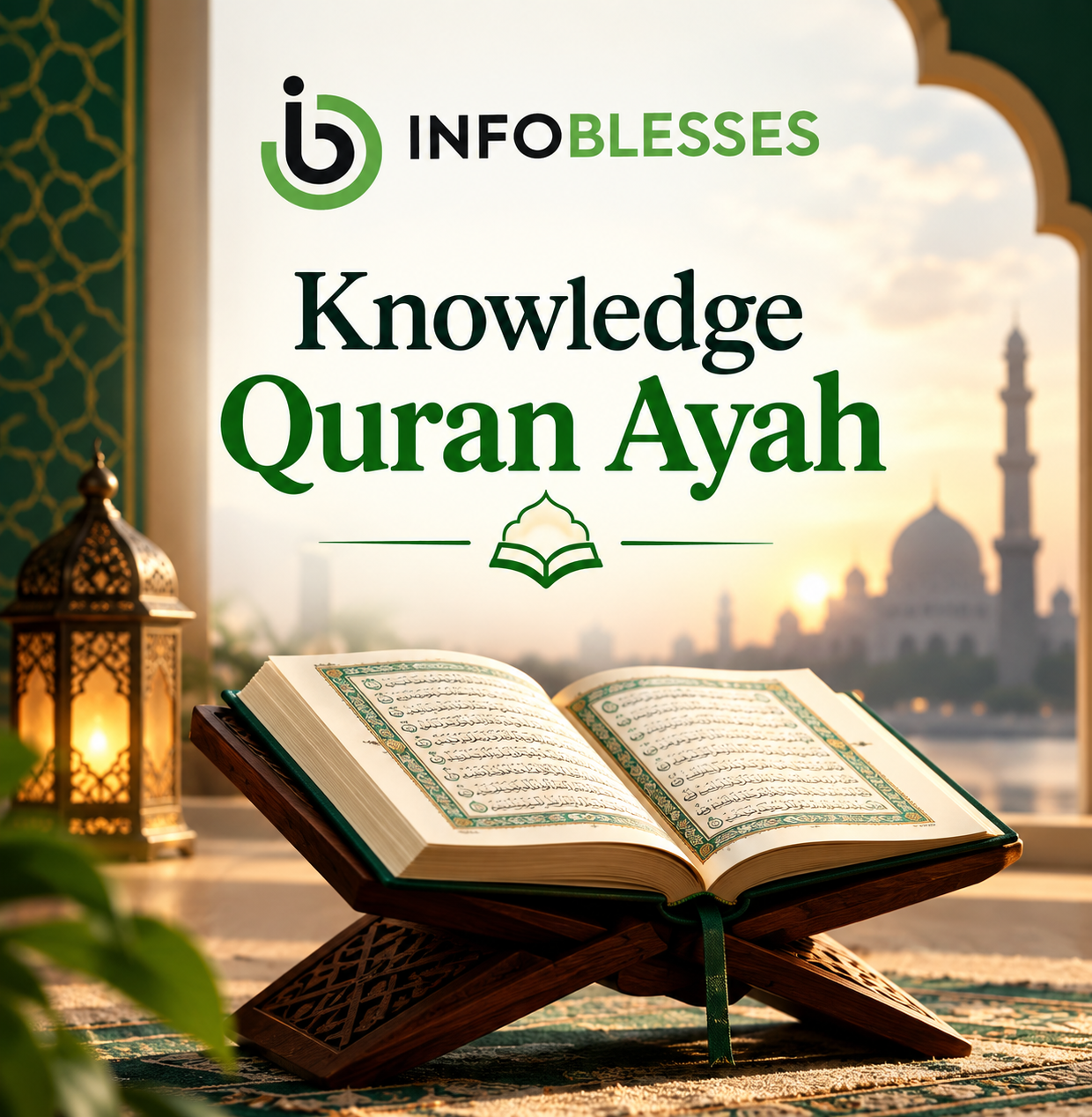
For anyone searching for Knowledge Quran Ayah, Ayat al-Kursi offers an especially rich example because a single verse brings together several major Islamic beliefs. It speaks about Allah’s oneness, His perfect life, His complete knowledge, His ownership of creation, His permission regarding intercession, and His preservation of the heavens and the earth.
The verse begins by declaring that Allah alone is worthy of worship. It then describes Him as Al-Hayy, the Ever-Living, and Al-Qayyum, the One who sustains and maintains creation. These names immediately establish an important contrast: human beings depend on Allah, while Allah does not depend on anyone.
Ayat al-Kursi also reminds readers that human knowledge is limited. People may discover remarkable things about the universe, nature, history, and themselves, but their knowledge remains dependent and incomplete. Allah’s knowledge, by contrast, is presented as encompassing what is before and behind creation.
This combination of theology and reflection makes the verse more than something to memorize. It can become a framework for thinking about worship, humility, responsibility, fear, hope, and trust.
Where Ayat al-Kursi Appears in the Quran
Ayat al-Kursi is found in Surah Al-Baqarah, verse 255. It comes within a section of the surah that contains teachings about faith, worship, law, community life, and the relationship between human beings and Allah.
The verse is commonly identified by its opening phrase, “Allahu la ilaha illa Huwa”, meaning that Allah is the only deity worthy of worship.
Because the verse is so well known, people sometimes refer to it simply as “Ayat al-Kursi.” However, it is important to remember that it is one ayah, or verse, rather than a separate surah.
Why It Is Called Ayat al-Kursi
The name comes from the word Kursi, which appears near the end of the verse. The verse states that Allah’s Kursi encompasses the heavens and the earth.
The term has received attention in classical Quranic commentary. Scholars have discussed its meaning and how it should be understood in relation to Allah’s majesty and transcendence.
A careful approach is important here. Muslims affirm what the Quran says while recognizing that the reality of divine attributes cannot simply be reduced to human physical experience. The word should therefore be approached with reverence rather than by imagining Allah in human terms.
Understanding the Meaning of Ayat al-Kursi
A powerful way to study Ayat al-Kursi is to examine its major statements one by one. Each phrase adds another dimension to the picture of Allah presented by the verse.
The ayah does not describe divine power in isolation. Instead, it connects power with life, knowledge, ownership, permission, and preservation. That balance is significant.
Allah Is the Only One Worthy of Worship
The verse opens with one of the clearest statements of Tawhid, the Islamic belief in the oneness of Allah.
Allah is not presented as one powerful being among many. Rather, He alone is worthy of worship.
This has practical consequences. If Allah alone deserves worship, then a believer’s ultimate dependence, hope, fear, gratitude, and obedience should be directed toward Him.
This principle can also reshape everyday priorities. Wealth, reputation, career success, social approval, and possessions can all become important, but none of them deserves the place that belongs to Allah.
In that sense, Ayat al-Kursi begins by correcting the direction of the human heart.
Al-Hayy and Al-Qayyum
The verse describes Allah as Al-Hayy, the Ever-Living, and Al-Qayyum, often translated as the Self-Sustaining or the One who sustains and maintains all things.
These two names are deeply connected.
Human life is fragile. People need food, water, sleep, shelter, relationships, and countless other forms of support. Even the strongest person depends on conditions outside their control.
Allah, however, is not described as dependent on creation. Instead, creation depends upon Him.
This can encourage humility. It can also provide reassurance. When circumstances change, the believer’s ultimate source of stability has not changed.
Allah Never Sleeps
Ayat al-Kursi states that neither drowsiness nor sleep overtakes Allah.
For human beings, sleep is necessary. We become tired, lose concentration, and need periods of rest. Our awareness is limited by our physical condition.
The verse contrasts this limitation with Allah’s perfect sustaining care.
The lesson isn’t that people should avoid sleep or try to imitate divine qualities. Rather, it teaches that Allah’s care over creation is never interrupted.
That idea can be deeply comforting during periods of uncertainty. A person may not know what is happening at every moment, but Islamic belief holds that Allah’s knowledge and authority are not limited by human weaknesses.
Ownership of the Heavens and Earth
The verse declares that everything in the heavens and on earth belongs to Allah.
This statement places human ownership into perspective.
People may own houses, land, businesses, books, vehicles, or other possessions in a legal and practical sense. Yet those forms of ownership are temporary and limited.
Islamic teachings therefore encourage responsible stewardship. Possessions are not merely opportunities for personal enjoyment; they can also involve obligations toward family, neighbors, society, and those in need.
When a believer understands ownership as ultimately belonging to Allah, gratitude and responsibility can grow together.
The Wisdom Behind Ayat al-Kursi
Ayat al-Kursi is especially valuable because it doesn’t merely tell believers what to believe. It encourages a particular way of seeing reality.
The verse shifts attention away from human limitations and toward divine perfection.
Human Knowledge Has Limits
One of the verse’s most important statements concerns knowledge.
It teaches that people do not encompass Allah’s knowledge except for what He wills.
This is a powerful lesson in intellectual humility.
Modern people have access to enormous amounts of information. Search engines, scientific instruments, libraries, databases, and artificial intelligence can provide knowledge at an extraordinary speed. Yet having more information doesn’t eliminate uncertainty.
There will always be questions that remain unanswered.
For a believer, recognizing the limits of human knowledge isn’t an excuse to stop learning. Quite the opposite: it can encourage curiosity without arrogance.
A person can study science, history, language, philosophy, and the natural world while remembering that human understanding remains finite.
Divine Knowledge Is Complete
The verse describes Allah as knowing what is before and behind creation.
This emphasizes comprehensive knowledge. Nothing important is hidden from Allah.
That idea has ethical implications. A person’s public behavior and private behavior are both known to Allah. Therefore, Islamic morality isn’t simply about appearing good before other people.
It encourages sincerity.
A person who remembers divine knowledge may become more careful about intentions, private actions, promises, and responsibilities.
The Meaning of Kursi
The word Kursi has generated extensive discussion among Muslim scholars and commentators.
Some traditional explanations discuss it in relation to a created reality distinct from the Throne (‘Arsh), while other explanations have emphasized meanings connected with authority, knowledge, or dominion. Interpretive details vary across classical works.
For ordinary reflection, the central point remains clear: the verse uses the Kursi to communicate the vastness of Allah’s authority and the incomparable scale of His dominion.
It should not be treated as an invitation to imagine Allah as a human ruler sitting on a physical chair. Islamic theology emphasizes Allah’s uniqueness and transcendence.
Why Muslims Recite Ayat al-Kursi
Ayat al-Kursi has a special place in Muslim devotional practice. Its words are recited during personal worship, remembrance, teaching, and reflection.
The importance of the verse is also connected to hadith literature. Classical Quran commentaries record reports describing Ayat al-Kursi as a particularly great verse of the Quran.
For a believer, however, the value of recitation isn’t only in repeating sounds. Understanding the meaning can make recitation more reflective.
A person who recites the verse while thinking about Allah’s knowledge, power, mercy, ownership, and protection may experience the words differently from someone who has memorized them without considering their meaning.
Ayat al-Kursi Before Sleep
Reciting Ayat al-Kursi before sleeping is a well-known Islamic devotional practice associated with a hadith reported in Sahih al-Bukhari concerning protection through the night.
The practice is often understood as an expression of trust in Allah before entering a state in which human awareness becomes inactive.
It is important, however, to avoid treating the verse like a magical formula. Islamic remembrance is rooted in faith, worship, and reliance upon Allah.
The deeper lesson is that a believer begins and ends the day by remembering the One who never becomes tired, unaware, or absent.
Ayat al-Kursi in Daily Life
Ayat al-Kursi can be incorporated into a broader routine of Quran reading and remembrance.
For example, a person might:
- Read it slowly after a daily prayer.
- Study one phrase at a time.
- Review its translation.
- Reflect on one divine name mentioned in the verse.
- Recite it before sleep.
- Teach its meaning to children in age-appropriate language.
- Use it as a reminder to practice Tawhid throughout the day.
The goal isn’t simply repetition. The goal is to allow the message to shape one’s understanding of Allah.
10 Powerful Lessons From Ayat al-Kursi
Ayat al-Kursi contains many lessons, but ten themes stand out for everyday reflection.
1. Worship Belongs to Allah Alone
The verse begins with Tawhid. A believer’s ultimate worship shouldn’t be divided among competing objects of devotion.
2. Allah Is Ever-Living
Human life changes constantly. Allah’s life is not comparable to human existence.
3. Creation Depends on Allah
Every person has needs. Recognizing dependence can produce humility rather than pride.
4. Allah’s Care Does Not Become Exhausted
The verse emphasizes that preserving the heavens and earth does not burden Allah. Divine care is not subject to human fatigue.
5. Human Knowledge Is Limited
Knowing one’s limits is a form of wisdom. Humility can make learning more productive.
6. Divine Knowledge Is Complete
The verse reminds believers that nothing is truly hidden from Allah.
7. Allah Owns Everything
Temporary possession should lead to gratitude and responsible stewardship.
8. Intercession Is Under Divine Permission
The verse teaches that no one can intercede with Allah independently of His permission. This reinforces divine authority.
9. Allah’s Greatness Exceeds Human Comparison
The scale of the verse moves from the individual human being to the heavens and earth. It directs the mind toward the vastness of creation and the greatness of its Creator.
10. Trust Should Be Built on Knowledge
Ayat al-Kursi doesn’t encourage blind optimism. It gives reasons for trust: Allah is living, sustaining, knowing, sovereign, and powerful.
These lessons can become practical principles rather than abstract ideas. For instance, when facing uncertainty, a believer can remember divine knowledge. When experiencing success, the believer can remember divine ownership. When feeling vulnerable, the believer can remember divine preservation.
Ayat al-Kursi and Spiritual Protection
Ayat al-Kursi is often discussed in connection with spiritual protection. Islamic tradition includes reports about its recitation and protection, particularly before sleep.
However, a balanced understanding matters.
The verse isn’t a superstition, lucky charm, or object with independent supernatural power. In Islamic belief, Allah is the source of protection.
Reciting Quran is an act of worship and remembrance. Its spiritual benefit should therefore be understood within faith in Allah rather than through magical thinking.
Protection Without Superstition
There is an important difference between reliance on Allah and superstition.
Superstition may treat an object, number, sound, or ritual as having an independent power that isn’t grounded in revelation.
Faith in Allah is different. A believer may recite Quran while asking Allah for protection, knowing that all benefit and harm ultimately remain under His authority.
This distinction keeps devotional practices connected to Tawhid.
How to Reflect on Ayat al-Kursi
Memorizing Ayat al-Kursi is valuable, but understanding its message can make memorization more meaningful.
One simple method is to divide the verse into themes.
Read Slowly
Instead of rushing through the verse, pause at each major statement.
Ask:
- What does this teach me about Allah?
- What does this reveal about human limitations?
- How should this change my attitude?
- Is there something in my life that I’m trusting more than I should?
This approach turns recitation into reflection.
Connect the Ayah to Daily Life
Suppose you’re worried about the future. The verse’s emphasis on divine knowledge can remind you that uncertainty for humans doesn’t mean uncertainty for Allah.
Suppose you’re proud of an achievement. The verse’s emphasis on divine ownership can encourage gratitude.
Suppose you’re experiencing loneliness. The verse’s description of Allah’s sustaining care can remind you that dependence upon Allah is not weakness.
Suppose you’re overwhelmed by the scale of world events. The verse redirects attention toward the One whose authority encompasses the heavens and earth.
This is where Quranic reflection becomes practical.
Common Questions About Ayat al-Kursi
Is Ayat al-Kursi a Surah?
No. Ayat al-Kursi is a single verse, specifically Quran 2:255 in Surah Al-Baqarah.
Which Surah Contains Ayat al-Kursi?
It is found in Surah Al-Baqarah, the second surah of the Quran.
What Does “Kursi” Mean?
Kursi is an Arabic term commonly translated as “Seat” or “Footstool” in translations of the verse. Classical Muslim scholarship contains different discussions about its precise meaning and nature. It should be understood in accordance with Islamic teachings about Allah’s uniqueness and transcendence rather than through a simplistic human image.
When Should Ayat al-Kursi Be Recited?
Muslims recite it at various times as part of Quran recitation and remembrance. A particularly well-known practice is reciting it before sleep, based on a hadith recorded in Sahih al-Bukhari.
Why Is Ayat al-Kursi Important?
Its importance comes from its concentrated description of central Islamic beliefs: Allah’s oneness, life, sustaining power, knowledge, sovereignty, and greatness. Classical hadith and tafsir literature also discuss its special virtue.
Does Ayat al-Kursi Teach Tawhid?
Yes. The verse begins with an explicit declaration that there is no deity worthy of worship except Allah. Tawhid is therefore foundational to its message.
What Is the Main Message of Ayat al-Kursi?
A concise summary is this: Allah alone is worthy of worship, His life and power are perfect, His knowledge is complete, His authority encompasses creation, and nothing can operate independently of His permission.
Can Children Learn Ayat al-Kursi?
Absolutely. Children can begin with memorization and gradually learn the meanings of important phrases. Teaching the verse with simple explanations can help children understand that Quran memorization and Quran comprehension belong together.
Is Ayat al-Kursi a Dua?
Strictly speaking, Ayat al-Kursi is a Quranic verse rather than a conventional supplication. However, reciting Quran is an act of worship, and believers may experience the verse as a source of comfort, remembrance, and reliance upon Allah.
Where Can I Read Ayat al-Kursi Online?
A useful reference is Quran.com, where readers can view the Arabic text, translations, and selected tafsir resources for Quran 2:255.
Final Reflection
The search for Knowledge Quran Ayah should ultimately lead beyond collecting facts. Quranic knowledge is meant to shape how a person understands Allah, creation, and their own place in the world.
Ayat al-Kursi is a remarkable example of this approach.
In one verse, the Quran calls attention to Allah’s exclusive right to worship, His perfect life, His sustaining authority, His complete knowledge, His ownership of the heavens and earth, and His unmatched greatness.
Its message is both vast and personal.
It can remind a student to remain humble about knowledge. It can remind a successful person to remain grateful. It can remind someone facing uncertainty that Allah’s knowledge is not limited by human uncertainty. And it can remind every believer that ultimate security does not come from controlling everything; it comes from recognizing the One who has complete authority over everything.
The most fruitful way to approach Ayat al-Kursi is therefore not merely to memorize it, but to read it, understand it, reflect upon it, and allow its message of Tawhid to influence everyday life.
That is where the real wisdom of a Quran ayah begins: not simply in knowing its words, but in allowing those words to deepen faith and transform perspective.

Welcome to Info Blesses I am Rana Ahtasham an AI Powered SEO and Content Writer With 3 year experience.I help websites rank highter, grow traffic, and look amazing. My goal is to make SEO and web design simple and effective for everyone.Lets achieve more togather!