1. Introduction to Tattoos in Islam
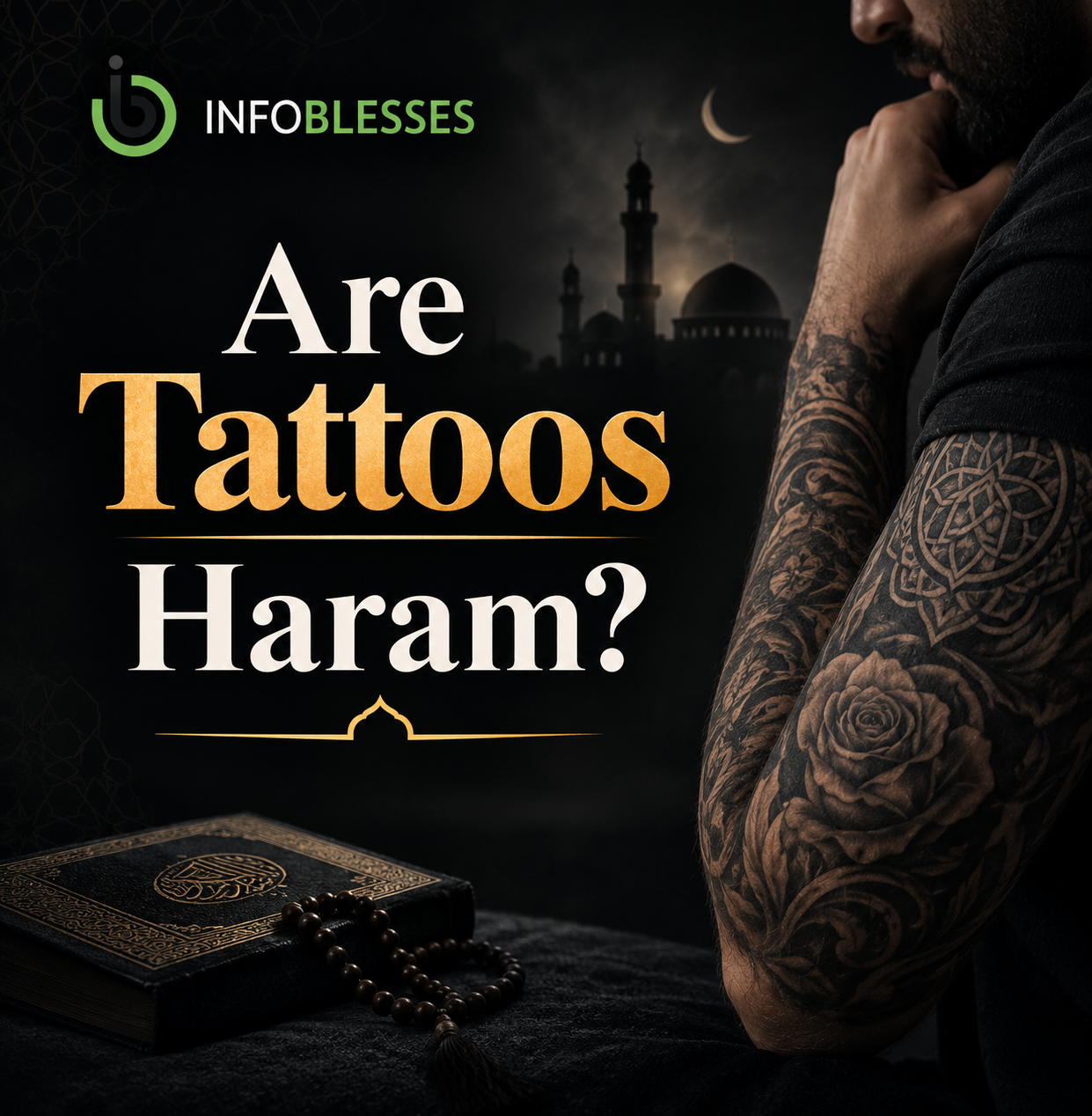
Tattoos have become increasingly popular around the world. People get tattoos for different reasons, including personal expression, fashion, cultural traditions, memories, and emotional connections. Some people choose meaningful words, while others prefer beautiful artwork, names, religious symbols, or designs that represent important moments in their lives. Although tattoos are widely accepted in many modern societies, Muslims often wonder whether getting a tattoo is permissible according to Islamic teachings. Questions such as Are tattoos haram in Islam?, Can Muslims have tattoos, and Does a tattoo affect prayer? are common among people who want to understand the relationship between modern beauty trends and Islamic principles.
Islam provides guidance about personal appearance, cleanliness, modesty, and caring for the body. These teachings help Muslims make decisions about everyday activities, including fashion and personal decoration. When discussing tattoos, it is important to understand that Islamic scholars distinguish between permanent tattoos and temporary skin decorations. Traditional permanent tattoos involve inserting ink beneath the skin using needles, whereas temporary designs usually sit on the skin’s surface and gradually disappear. These two methods do not necessarily have the same Islamic ruling.
The majority of Islamic scholars consider traditional permanent tattoos prohibited because of authentic hadith concerning tattooing. However, temporary decorations such as henna are generally permissible under appropriate conditions. Understanding the difference can help Muslims avoid confusion and make informed decisions. In this guide, we will explore Quranic teachings, authentic hadith, scholarly opinions, tattoo removal, and the effect of tattoos on Islamic worship.
2. What Does Islam Say About Tattoos?
Islam teaches Muslims to respect the human body and avoid unnecessary actions that contradict the guidance of Allah. The human body is considered a trust, and Muslims are encouraged to maintain it responsibly. This principle is important when discussing permanent tattoos because the traditional tattooing process involves piercing the skin repeatedly and placing permanent coloring underneath it. Although some people consider tattoos harmless decorations, Islamic scholars examine the practice through religious texts rather than fashion trends or personal preferences.
According to the majority of classical Islamic scholars, traditional permanent tattooing is haram for both men and women. This ruling is supported by authentic narrations in which Prophet Muhammad (peace be upon him) prohibited tattooing and condemned the practice. The prohibition is not simply connected to the size, color, or artistic design of the tattoo. Instead, it concerns the actual procedure of permanently tattooing the body.
However, temporary skin decorations require a separate discussion. Henna, washable body art, and certain removable designs are not automatically treated like permanent tattoos. Their permissibility depends on factors such as ingredients, possible harm, modesty, and whether the product creates a barrier that prevents water from reaching the skin during ablution. A scholarly study published in the University of Malaya’s Jurnal Fiqh also discusses the distinction between permanent and temporary tattooing.
The Difference Between Permanent and Temporary Tattoos
Permanent tattoos use needles to deposit pigment beneath the outer layer of the skin. Because the ink remains inside the skin, the design generally lasts for many years and may require medical procedures for removal. Temporary tattoos, on the other hand, usually involve applying color to the surface of the skin. Some disappear after washing, while others fade naturally over several days or weeks.
This difference matters when determining the Islamic ruling. A removable decoration that behaves like henna is generally treated differently from traditional needle-based tattooing. However, products advertised as temporary tattoos can sometimes use techniques that penetrate the skin and last for months or years. Therefore, the product’s marketing description is not enough to establish whether it is permissible.
3. What Does the Quran Say About Tattoos?
The Quran does not mention modern tattooing by its specific name. However, it contains broader guidance about following Allah’s commands and avoiding actions that involve disobedience. One verse frequently discussed in relation to changing Allah’s creation is Surah An-Nisa (4:119), where Shaytan describes how he will encourage people to alter Allah’s creation.
This verse is often mentioned in Islamic discussions about permanent tattoos, cosmetic alterations, and other changes to the human body. Scholars use it alongside authentic hadith to explain why traditional tattooing is prohibited. However, it is important to understand that the Quranic verse should not be interpreted independently of the Sunnah. Islamic rulings are established through the Quran, authentic prophetic teachings, and scholarly interpretation.
The Quran also teaches Muslims that Allah has created human beings in an honorable form. In Surah At-Tin (95:4), Allah says that He created human beings in the best form. This reminds believers to appreciate the body they have been given and avoid unnecessary practices that contradict Islamic guidance.
Does this mean every change to the body is forbidden? No. Islam allows many forms of grooming, hygiene, treatment, and decoration. Cutting hair, wearing permissible jewelry, using henna, and receiving necessary medical treatment are examples of activities that are not automatically prohibited. The Islamic ruling depends on the nature, purpose, method, and consequences of an action.
For this reason, the prohibition of permanent tattooing should be understood through the combination of Quranic principles and the specific hadith addressing tattooing.
4. What Does the Prophet Muhammad (PBUH) Say About Tattoos?
One of the strongest pieces of evidence concerning tattoos in Islam comes from authentic hadith. Prophet Muhammad (peace be upon him) explicitly condemned tattooing and the practice of receiving tattoos. This teaching is recorded in major collections of hadith, including Sahih al-Bukhari and Sahih Muslim.
A narration from Abdullah ibn Mas’ud (RA) explains that the Prophet (PBUH) condemned women who tattoo others and those who receive tattoos, along with certain other beauty practices. The narration connects these actions with changing Allah’s creation.
This hadith is especially important because it directly addresses the practice rather than relying only on general interpretations about appearance. Islamic scholars have used this authentic narration as a primary basis for prohibiting permanent tattoos. The ruling applies to the traditional tattooing procedure, regardless of whether someone chooses a small design, a large image, or a meaningful personal message.
Reference: Sahih al-Bukhari, Hadith 5936, and Sahih Muslim, Hadith 2125, in commonly used numbering systems. Numbering may differ between editions.
Understanding the Hadith About Tattooing
The hadith makes an important distinction between the person performing the tattoo and the person requesting it. Both are included in the warning. This means that someone cannot assume that getting tattooed is permissible simply because another person performs the procedure.
Some people argue that tattoos should be acceptable if they are beautiful, meaningful, or connected to personal memories. However, the Islamic ruling is not determined only by the individual’s intention. A good intention does not automatically make a prohibited action permissible.
At the same time, the hadith should not be used to make people who already have tattoos feel hopeless or unwelcome in Islam. A Muslim who made a mistake can seek forgiveness and return to Allah through sincere repentance. Islam encourages believers to recognize their mistakes, correct their behavior, and maintain hope in Allah’s mercy.
For anyone researching this subject, reading the original hadith and consulting a qualified Islamic scholar is more helpful than relying on social media discussions or unsupported religious claims.
5. Why Are Permanent Tattoos Considered Haram?
There are several reasons Islamic scholars discuss when explaining why permanent tattoos are prohibited. The most important reason is that authentic prophetic teachings explicitly condemn the practice. Other explanations help Muslims understand the wisdom behind the ruling.
First, traditional tattooing permanently changes the appearance of the skin by introducing pigment beneath it. This is one reason scholars connect tattooing with the broader discussion of changing Allah’s creation. Unlike ordinary decoration, the procedure creates a lasting mark that is difficult to reverse.
Second, traditional tattooing involves repeatedly piercing the skin. This can cause pain, bleeding, inflammation, allergic reactions, and infections, particularly when equipment is not properly sterilized. Islam discourages unnecessary harm to the body. Although the possibility of medical complications is not the only basis for the prohibition, it provides another reason to approach the procedure carefully.
Third, permanent tattoos are often chosen for decoration, fashion, or personal expression. These intentions do not remove the religious prohibition established by the hadith. Whether someone chooses a name, date, flower, animal, or abstract pattern, the traditional permanent tattooing procedure remains prohibited according to the majority scholarly position.
It is also important to avoid assuming that every tattoo has the same meaning or that everyone who has one follows the same beliefs. People make different decisions for different reasons. Islamic guidance focuses on the action and its circumstances rather than encouraging Muslims to insult or judge others.
6. Are Temporary Tattoos Haram in Islam?
Temporary tattoos are not necessarily haram. Their Islamic ruling depends on how they are applied, what substances they contain, how long they remain, and whether they cause harm. Many temporary designs simply place color on the surface of the skin without piercing it. These are generally compared with ordinary skin decoration rather than traditional permanent tattooing.
For example, washable body art and ordinary henna designs are generally permissible when their ingredients are clean and safe. They should also avoid prohibited images, inappropriate symbols, and designs that violate Islamic principles of modesty.
However, the term temporary tattoo can sometimes be misleading. Certain cosmetic procedures are marketed as temporary even though they involve needles and pigment deposited inside the skin. Lip blushing, semi-permanent eyebrow tattooing, and similar procedures may remain visible for months or years. Such procedures require a separate scholarly assessment and should not automatically be treated like henna.
Another important consideration is water and ablution. If a temporary product forms a physical waterproof layer over the skin, it may prevent water from reaching the required areas during wudu. If it only leaves color without forming a barrier, it does not create the same issue.
A useful academic discussion of this distinction appears in the University of Malaya’s research on Islamic rulings concerning tattooing. The study explains that temporary decorations may be permissible when they are harmless and do not prevent water from reaching the skin.
fiqh.um.edu.my+1
Is Henna Allowed in Islam?
Yes, ordinary henna decoration is generally permissible in Islam. Henna has been used for centuries in Muslim communities, particularly for weddings, celebrations, and personal grooming. Unlike traditional permanent tattoos, henna usually colors the surface of the skin and gradually disappears.
Women commonly use henna on their hands and feet for decoration. It can also be used to color hair, subject to the relevant Islamic guidelines. Men may use henna for certain purposes, such as hair or beard coloring, although decorative use on the hands and feet is treated differently by many scholars.
There are some conditions to consider when using henna. The ingredients should be safe and free from prohibited substances. The decoration should not contain inappropriate imagery or religious symbols that contradict Islamic beliefs. Women should also observe the Islamic guidelines regarding displaying adornment before non-mahram men.
Another important issue is the difference between a henna stain and a coating. Ordinary henna leaves color after the paste is removed, meaning it generally does not prevent water from touching the skin. If a product leaves a waterproof film, however, that coating must be considered separately when performing wudu.
7. Are Tattoos Haram for Men and Women?
The majority of Islamic scholars consider traditional permanent tattoos prohibited for both Muslim men and Muslim women. The religious prohibition is not limited to one gender. A man cannot assume that permanent tattooing is allowed simply because he is not following a particular beauty practice associated with women.
Similarly, women cannot assume that a permanent tattoo becomes permissible because it is intended to improve appearance. The authentic hadith concerning tattooing addresses both the person performing the procedure and the person receiving it.
However, temporary decoration has additional gender-related considerations. For example, henna is widely accepted as permissible decoration for women under appropriate conditions. Men using decorative henna on their hands or feet may face different rulings depending on the scholarly school and cultural context. Some scholars consider such decoration impermissible for men because it resembles feminine adornment.
It is also important to remember that religious guidance should be applied fairly. Muslims should not use the issue of tattoos to shame women or men. The purpose of learning Islamic rulings is to understand religious responsibilities and make better decisions.
If someone is uncertain about a particular cosmetic procedure, consulting a knowledgeable scholar from their preferred school of Islamic jurisprudence can provide more specific guidance.
8. Are Small Tattoos Also Haram?
Yes, according to the majority scholarly position, the prohibition applies to small permanent tattoos as well as large ones. The size of a tattoo does not automatically change its Islamic ruling. Whether someone gets a tiny heart, a small initial, a date, or a large decorative design, the traditional permanent tattooing procedure remains prohibited.
Some people believe that a small tattoo should be acceptable because it does not significantly change their appearance. Others argue that a tattoo containing only a few letters or a simple symbol should be treated differently from a large body design. However, the authentic hadith concerning tattooing does not establish an exception based on size.
The same principle applies to tattoos placed in hidden areas. A tattoo does not become permissible simply because other people cannot see it. The religious ruling concerns the act itself rather than only whether the design is publicly visible.
There is also a difference between a permanent tattoo and a temporary mark. A washable design, henna decoration, or removable sticker may be permissible under the conditions discussed earlier. Therefore, Muslims should identify the actual method before deciding whether a particular product is allowed.
When in doubt, choosing a non-permanent and harmless form of decoration is a safer option for someone who wants to respect Islamic teachings while expressing personal style.
9. Do Tattoos Affect Wudu, Salah, and Ghusl?
One of the most common questions Muslims ask is whether having a tattoo affects wudu, salah, or ghusl. This question is particularly important for people who already have permanent tattoos and want to make sure their daily worship remains valid.
The good news is that a traditional tattoo generally does not prevent water from reaching the skin during ablution. This is because tattoo pigment is deposited beneath the skin rather than forming a waterproof layer on its surface. Therefore, an existing permanent tattoo does not automatically invalidate wudu or ghusl.
A Muslim with an existing tattoo can perform the five daily prayers normally, provided all other requirements of prayer are fulfilled. The presence of tattoo pigment underneath the skin does not mean that the person must stop praying or avoid religious activities.
However, there is an important distinction between pigment beneath the skin and a substance covering the skin. If someone applies a waterproof cosmetic product, adhesive decoration, or another physical coating, that coating may prevent water from reaching the required area. In that situation, it may need to be removed before wudu or ghusl.
| Situation | General Islamic guidance |
|---|---|
| Existing permanent tattoo | Does not normally invalidate wudu |
| Tattoo ink beneath the skin | Does not block water |
| Henna stain | Generally does not affect wudu |
| Waterproof temporary tattoo sticker | May need removal before wudu |
| Waterproof cosmetic coating | Must be assessed for water permeability |
| Existing tattoo during salah | Does not automatically invalidate prayer |
Muslims should not allow embarrassment or uncertainty about an existing tattoo to stop them from praying. Islamic worship remains important, and people should continue fulfilling their religious obligations while seeking guidance about repentance and removal.
10. Can Muslims Get Tattoos Before Converting to Islam?
Yes. A person who converts to Islam does not need to have a completely tattoo-free body before accepting the religion. This is an important point because many people considering Islam worry that their previous lifestyle, appearance, or personal decisions might prevent them from becoming Muslim.
Islam recognizes that people come from different backgrounds. Some may have permanent tattoos, piercings, or other body modifications before discovering Islam. Others may have followed religious traditions different from Islamic teachings. Becoming Muslim is an opportunity to begin a new spiritual chapter.
The Prophet Muhammad (PBUH) taught that accepting Islam wipes away previous sins. This principle gives new Muslims hope and encourages them to focus on their relationship with Allah rather than feeling trapped by their past.
A person who converts with permanent tattoos should not delay accepting Islam because of concerns about tattoo removal. The priority is embracing the faith sincerely. After conversion, the person can learn about Islamic responsibilities and seek advice about what to do with existing tattoos.
If tattoo removal is medically safe and reasonably possible, some scholars advise removing it. However, if removal would cause significant harm, permanent scarring, or unreasonable hardship, the person is not required to injure themselves. They should seek forgiveness and move forward with their religious life.
The important message is simple: Your past does not prevent you from becoming a Muslim. Allah’s mercy is greater than the mistakes of human beings.
11. What Should Muslims Do If They Already Have Tattoos?
Discovering that something you did in the past is prohibited can create feelings of regret, confusion, and disappointment. However, Islam does not teach Muslims to lose hope when they recognize a mistake. Instead, believers are encouraged to turn toward Allah through sincere repentance, known as Tawbah.
If someone already has a permanent tattoo, the first step is to understand the Islamic ruling without becoming overwhelmed by guilt. A person may have received a tattoo before learning about the prohibition. Someone else may have obtained one during childhood or before becoming religiously observant. Their circumstances are not necessarily identical to those of someone who knowingly chooses to continue the practice.
Sincere repentance generally involves recognizing the mistake, feeling genuine regret, asking Allah for forgiveness, and making a sincere commitment not to repeat the prohibited action. A Muslim should also continue praying, fasting, giving charity, and fulfilling other religious responsibilities.
It is equally important not to judge someone simply because they have a visible tattoo. You cannot know another person’s complete circumstances, intentions, or relationship with Allah. A tattoo is not a reason to assume that someone is outside Islam or that their prayers are automatically rejected.
Here are some practical steps to consider:
-
Learn the correct Islamic ruling from reliable sources.
-
Make sincere Tawbah and ask Allah for forgiveness.
-
Avoid getting additional permanent tattoos.
-
Consult a qualified scholar about whether removal is necessary.
-
Continue performing daily prayers and other acts of worship.
Islam encourages personal improvement, patience, and hope. A person’s religious journey should not end because of one mistake.
12. Is Tattoo Removal Necessary in Islam?
Tattoo removal is an issue that requires careful consideration. Although the majority of scholars prohibit traditional permanent tattooing, they also recognize that removing an existing tattoo can involve medical risks, pain, expense, and physical complications.
Some scholars state that a person should remove a prohibited tattoo if it can be removed safely without causing significant harm. However, if removal is dangerous, extremely painful, financially unreasonable, or likely to leave serious damage, repentance may be sufficient.
Modern laser tattoo removal is one commonly used method. It uses specialized laser technology to break down tattoo pigments so that the body can gradually eliminate them. Depending on the tattoo’s size, color, age, and depth, several treatment sessions may be required.
However, laser treatment is not suitable for everyone. It can cause burns, pigmentation changes, scarring, allergic reactions, and other complications. Anyone considering removal should consult a qualified dermatologist or medical professional before undergoing treatment.
Islamic teachings do not require people to harm themselves unnecessarily. The principle of avoiding harm is important when evaluating medical procedures. Therefore, someone with a tattoo should not attempt dangerous home-removal methods or use harsh chemicals simply because they feel religious pressure.
A helpful distinction is:
| Circumstance | General guidance |
|---|---|
| Tattoo can be removed safely | Removal is advised by many scholars |
| Removal creates serious medical risks | Repentance may be sufficient |
| Tattoo removal is extremely difficult | Consult a qualified scholar |
| Person cannot afford safe treatment | Should not resort to harmful methods |
| Tattoo was obtained before Islam | Conversion does not depend on removal |
For a personal ruling, it is best to discuss the situation with a trusted Islamic scholar and an appropriately qualified medical professional.
13. Are Eyebrow Tattoos and Microblading Halal?
Eyebrow tattoos and microblading have become popular cosmetic procedures, particularly among people who want fuller-looking eyebrows. However, their Islamic ruling depends on the actual method used.
Traditional eyebrow tattooing deposits pigment beneath the skin using needles. Microblading typically uses a small handheld tool with fine blades to create tiny cuts in the skin and deposit pigment. Both procedures can create results that last for an extended period.
Many Islamic scholars consider these procedures prohibited when they involve tattooing or similar permanent pigment implantation for beautification. The fact that the design looks natural or gradually fades does not automatically make the procedure permissible.
There is also an important distinction between medical treatment and cosmetic enhancement. Someone who has lost eyebrows because of an accident, illness, or medical condition may have a different situation from someone seeking ordinary cosmetic decoration. Islamic scholars sometimes consider genuine medical needs under different principles.
Temporary eyebrow makeup is another option. Products such as eyebrow pencils, powders, and washable cosmetics generally do not involve permanently changing the skin. However, waterproof products may need to be removed before wudu if they form a barrier to water.
Anyone considering microblading should understand the procedure rather than relying only on advertising terms such as semi-permanent, natural, or painless.
14. Are Cosmetic Tattoos and Permanent Makeup Allowed?
Permanent makeup includes cosmetic procedures designed to create the appearance of eyeliner, lip color, or fuller eyebrows. These treatments are often marketed as convenient alternatives to applying makeup every morning.
Although they may look similar to ordinary cosmetics, their application methods can be very different. Traditional makeup sits on the skin’s surface and can usually be washed away. Permanent makeup involves introducing pigments into the skin using specialized equipment.
Because these procedures resemble traditional tattooing, many Islamic scholars consider them impermissible when performed purely for beautification. A cosmetic procedure does not automatically become permissible simply because it is advertised as a beauty treatment.
However, medical circumstances can require a more detailed discussion. For example, reconstructive pigmentation following surgery, an accident, or a medical condition may be assessed differently depending on the purpose, technique, and necessity.
It is also important to consider whether a cosmetic product prevents water from reaching the skin during wudu. Ordinary makeup that can be removed is generally easier to assess than procedures that permanently introduce pigment beneath the skin.
Before choosing permanent makeup, Muslims should research the technique, ingredients, medical risks, and religious ruling. Consulting a knowledgeable scholar who understands modern cosmetic procedures can help avoid confusion.
15. What About Tattoo Designs With Islamic Symbols?
Some people choose tattoo designs that contain Arabic calligraphy, Quranic verses, Allah’s name, or other Islamic symbols. They may believe that such designs represent their faith, spirituality, or connection with Islam.
However, using religious words does not change the ruling on traditional permanent tattooing. If the procedure involves permanently tattooing the skin through needles, the majority scholarly position remains that it is prohibited.
There is also a separate concern regarding respect for sacred words. Quranic verses and the name of Allah deserve special respect. Placing them on parts of the body that may be exposed to disrespect, impurity, or inappropriate situations raises additional religious concerns.
For Muslims who want to express their faith through personal decoration, there are other options. Islamic calligraphy can be displayed in homes, written in artwork, printed on permissible clothing, or used in decorative designs that respect religious guidelines.
Meaningful reminders from the Quran and Sunnah can also be kept in journals, wall art, and personal accessories. These alternatives allow believers to express their spiritual connection without choosing a prohibited permanent tattoo.
The purpose of Islamic decoration should be to encourage remembrance of Allah while maintaining respect for religious teachings.
16. Conclusion:
So, are tattoos haram in Islam? According to the majority of Islamic scholars, traditional permanent tattoos are haram for both men and women. This ruling is supported by authentic hadith found in Sahih al-Bukhari and Sahih Muslim, which explicitly condemn tattooing and receiving tattoos.
However, not every type of body decoration has the same ruling. Temporary decorations such as ordinary henna are generally permissible when they meet Islamic requirements, do not cause harm, and do not prevent water from reaching the skin during wudu.
For Muslims who already have tattoos, there is no reason to abandon prayer or lose hope in Allah’s mercy. They should sincerely repent, avoid getting additional permanent tattoos, and seek guidance about safe removal. If removal would cause significant harm, many scholars recognize that repentance is sufficient.
Islam teaches balance, modesty, and respect for the body. Understanding these principles helps Muslims make informed decisions about beauty, fashion, and personal appearance. Rather than following every popular trend, believers should consider whether their choices align with their faith.
Ultimately, the best approach is to learn authentic Islamic teachings, consult knowledgeable scholars when necessary, and remember that Allah is Most Merciful and Most Forgiving.
17–20. Frequently Asked Questions (FAQs)
1. Are tattoos haram in Islam for both men and women?
Yes. According to the majority of Islamic scholars, traditional permanent tattoos are prohibited for both Muslim men and women. The ruling is based on authentic hadith in which Prophet Muhammad (PBUH) condemned tattooing and receiving tattoos. The prohibition generally applies regardless of the tattoo’s size, color, location, or design.
2. Can Muslims pray with a permanent tattoo?
Yes. A person with an existing permanent tattoo can perform salah normally. Tattoo ink is located beneath the skin and does not normally prevent water from reaching the skin during wudu. Having a tattoo does not automatically invalidate prayer, although the person should sincerely repent if the tattoo was obtained knowingly in violation of Islamic teachings.
3. Is henna halal in Islam?
Yes. Ordinary henna decoration is generally permissible in Islam. It temporarily colors the skin rather than permanently inserting pigment beneath it. However, the ingredients should be safe, the designs should follow Islamic guidelines, and the decoration should not create a waterproof barrier that prevents water from reaching the skin during wudu.
4. Does Allah forgive someone who has tattoos?
Yes. Allah’s mercy is not limited to people who have never made mistakes. Muslims who have permanent tattoos can sincerely repent, ask Allah for forgiveness, and make a commitment not to repeat the prohibited action. They should continue praying and fulfilling their Islamic responsibilities. No one should lose hope in Allah’s forgiveness.
5. Do Muslims need to remove tattoos before performing Hajj?
No. An existing tattoo does not prevent a Muslim from performing Hajj or Umrah. Islamic scholars explain that tattoos are not a barrier to pilgrimage. A person should continue fulfilling their religious obligations and seek guidance about repentance and possible removal if it can be done safely.
Welcome to Info Blesses I am Rana Ahtasham an AI Powered SEO and Content Writer With 3 year experience.I help websites rank highter, grow traffic, and look amazing. My goal is to make SEO and web design simple and effective for everyone.Lets achieve more togather!