1. Understanding Tattoos in Islam
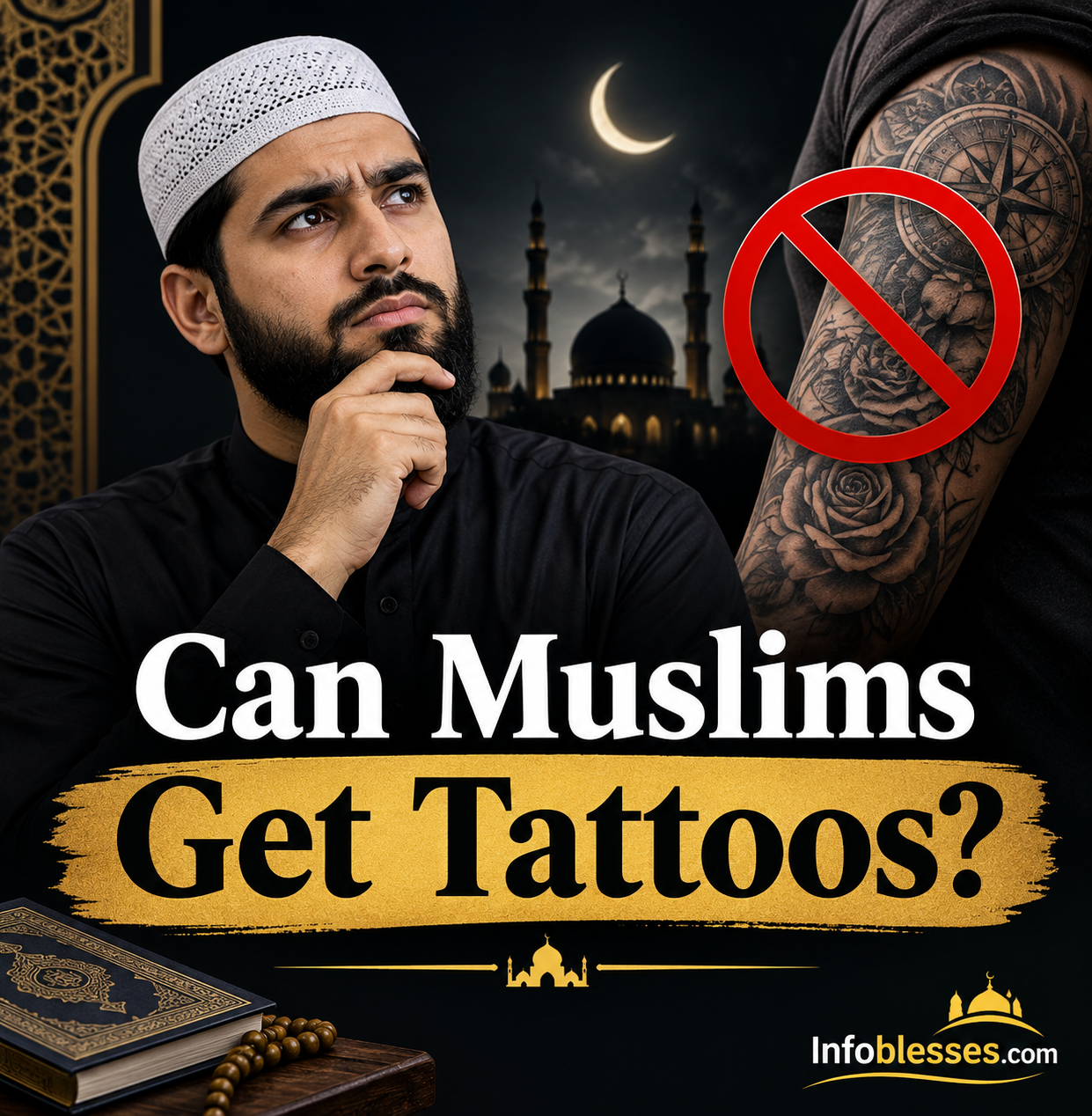
Tattoos have become increasingly popular around the world. People get tattoos for different reasons, including personal expression, beauty, memories, cultural traditions, or simply because they like a particular design. Some people choose small symbols, while others cover large areas of their bodies with colorful artwork. But when it comes to Muslims, an important question often comes up: Can Muslims get tattoos according to Islamic teachings? Understanding the answer requires looking beyond modern fashion trends and exploring what Islamic sources teach about permanent body modifications.
In Islamic terminology, permanent tattooing is generally called washm. It involves inserting colored ink beneath the skin using needles, creating a design that remains for a long time. This is different from applying henna or temporary color to the surface of the skin. The distinction matters because Islamic scholars discuss these practices under different rulings. Muslims are encouraged to take care of their bodies, maintain cleanliness, and avoid prohibited forms of beautification. Therefore, before choosing a tattoo, it is important to understand the religious guidance and the reasons behind it.
2. Are Tattoos Haram in Islam?
According to the mainstream Sunni Islamic scholarly position, permanent tattoos are haram (prohibited). This ruling is based primarily on authentic Hadith reports in which Prophet Muhammad (peace be upon him) prohibited tattooing and condemned both the person performing it and the person receiving it. The ruling generally applies regardless of whether someone chooses a small tattoo, a large design, a meaningful symbol, or a decorative pattern. The intention of remembering someone or expressing personal feelings does not automatically make permanent tattooing permissible.
Islamic teachings provide guidance about many aspects of everyday life, including personal appearance and beauty. Muslims can enjoy looking attractive and taking care of themselves, but beautification should remain within religious boundaries. A person should not assume that something becomes halal simply because it is fashionable or widely accepted in society. It is also important to understand that committing a prohibited action does not automatically make someone a non-Muslim. A Muslim who has a tattoo can still pray, worship Allah, and seek forgiveness.
What Does the Quran Say About Tattoos?
The Quran does not mention modern tattooing by name in a specific verse. However, Islamic scholars discuss tattooing in connection with broader Quranic teachings about obeying Allah, following the Messenger, and avoiding prohibited alterations to Allah’s creation. One verse frequently discussed in this context is Surah An-Nisa (4:119), which mentions Satan’s promise to encourage people to change Allah’s creation.
Scholars have interpreted this verse alongside relevant Hadith when discussing permanent tattooing and other forms of bodily alteration. However, it is important not to claim that the Quran explicitly says, word for word, that tattoos are forbidden. The specific prohibition is established through authentic Prophetic teachings. In Islam, the Sunnah is an essential source of religious guidance alongside the Quran. Muslims therefore consider both sources when understanding Islamic rulings.
What Does Prophet Muhammad (PBUH) Say About Tattoos?
One of the strongest pieces of evidence concerning tattoos comes from an authentic narration recorded in Sahih al-Bukhari and Sahih Muslim. The narration reports that the Prophet Muhammad (peace be upon him) condemned women who perform tattooing and those who ask to be tattooed. This Hadith is the foundation of the mainstream Sunni ruling against permanent tattooing.
Although the narration specifically mentions women, classical Sunni scholars generally understand the prohibition to apply to men as well. The religious ruling is not limited to a particular tattoo design or body part. Whether the tattoo is placed on the arm, hand, shoulder, back, or another area, the same general prohibition applies to permanent tattooing. This is why Muslims are advised to avoid getting permanent tattoos, even when the design appears simple or harmless.
3. Why Are Permanent Tattoos Prohibited in Islam?
There are several reasons Islamic scholars explain when discussing the prohibition of permanent tattoos. The first is the direct Prophetic prohibition mentioned in authentic Hadith. The second concerns the permanent alteration of the body for beautification. Traditional Islamic scholarship distinguishes between ordinary decoration, such as applying henna, and tattooing, which involves inserting pigment beneath the skin. Permanent tattooing is therefore not treated as an ordinary cosmetic activity. Muslims are encouraged to respect their bodies as a trust from Allah and to avoid actions that contradict established religious teachings.
Another important consideration is that permanent tattoos can involve unnecessary pain, skin injuries, and health risks. The process uses needles to introduce pigment beneath the skin, which can sometimes lead to infections, allergic reactions, or scarring. These medical concerns are separate from the religious prohibition but provide additional reasons to think carefully before undergoing the procedure. Islam does not prohibit every form of beauty treatment, and it recognizes that people naturally want to look attractive. However, personal preferences do not override clear religious guidance. For Muslims following the mainstream Sunni position, avoiding permanent tattoos is the appropriate choice.
4. Are Temporary Tattoos Halal or Haram?
Temporary tattoos are different from permanent tattoos because they do not necessarily involve inserting ink beneath the skin. Some temporary designs are applied using stickers, cosmetic products, or skin dyes that disappear after several days. Their Islamic ruling depends on the ingredients, design, purpose, duration, and whether the product creates a physical barrier over the skin. A temporary decoration that simply colors the skin without permanently changing it is generally treated differently from traditional permanent tattooing.
Many scholars permit certain temporary decorations, provided they do not contain prohibited substances, cause harm, imitate religious symbols associated with prohibited practices, or involve inappropriate imagery. For example, a simple decorative design that fades naturally may be permissible. However, not every product advertised as a temporary tattoo is automatically halal. Some products use adhesives that prevent water from reaching the skin, while others may contain questionable ingredients. Muslims should check what they are applying and understand whether it affects purification.
5. Is Henna Considered a Tattoo in Islam?
Henna is a popular form of body decoration in many Muslim communities, especially in Pakistan, India, Bangladesh, and other parts of the world. Women commonly apply henna to their hands and feet during weddings, Eid celebrations, and family gatherings. Unlike permanent tattooing, traditional henna colors the outer surface of the skin and gradually fades away. It does not normally involve needles or inserting pigment underneath the skin, which makes it fundamentally different from permanent tattooing.
Henna is generally permissible in Islam, provided it is used in an appropriate way and contains no harmful or prohibited ingredients. Its use for decoration is recognized in traditional Muslim cultures, and it is not treated as the same prohibited practice as permanent tattooing. Another important detail concerns wudu. Once henna dries and leaves only its color on the skin, that remaining color does not normally prevent water from reaching the skin. However, if a thick physical substance remains on the body and blocks water, it should be removed before performing wudu.
6. Can Muslims Pray With Tattoos?
Yes, a Muslim who already has a permanent tattoo can still perform Salah. Having a tattoo does not automatically make someone impure, remove their Muslim identity, or prevent them from worshipping Allah. This is an important point because some people mistakenly believe that anyone with a tattoo cannot pray until it has been removed. That understanding is incorrect according to the mainstream Sunni scholarly guidance.
The important distinction is between committing a prohibited action and the validity of worship. A person may have committed a sin in the past, but that does not mean they should abandon their daily prayers. Muslims are encouraged to continue performing Salah, making dua, reading the Quran, and seeking forgiveness regardless of their past mistakes. If someone has a tattoo, they should not feel that Allah’s mercy is beyond their reach. Instead, they should sincerely repent and continue improving their religious practice.
7. Do Tattoos Affect Wudu and Ghusl?
One of the most frequently asked questions is whether tattoos prevent water from reaching the skin during wudu or ghusl. The answer depends on how a tattoo is made. A traditional permanent tattoo places pigment beneath the outer layer of skin, leaving the surface itself exposed. Because the pigment is underneath the skin rather than forming a waterproof layer on top, it does not normally prevent water from reaching the skin during purification.
This means that a person with an existing permanent tattoo can generally perform wudu and ghusl normally. Their purification is not invalid simply because tattoo pigment remains beneath the skin. However, temporary tattoo stickers, waterproof cosmetic coatings, and certain decorative products can create a physical barrier. If a substance prevents water from reaching the required area, it must generally be removed before wudu or ghusl. Muslims should distinguish between the color left by a tattoo and a physical substance covering the skin.
8. What If Someone Already Has a Tattoo?
If someone already has a permanent tattoo, there is no reason to lose hope or believe that they cannot become a better Muslim. People sometimes get tattoos when they are young, without understanding the Islamic ruling. Others may receive them before becoming practicing Muslims or before learning about the relevant Hadith. Islamic teachings emphasize repentance, personal improvement, and the mercy of Allah. A past mistake should not become a reason to stop worshipping or feel permanently disconnected from religion.
The first step is to recognize the Islamic ruling and sincerely decide not to get additional prohibited tattoos. The next step is to seek forgiveness from Allah through sincere Tawbah. A person should also consider whether the existing tattoo can be removed safely. If removal is straightforward and does not cause significant harm, many scholars recommend or require removing it. If removal involves serious medical risks, severe pain, or substantial damage, a person is generally not required to harm themselves merely to eliminate the remaining tattoo.
9. Is Tattoo Removal Necessary in Islam?
Tattoo removal is an important subject because many Muslims who regret their tattoos want to know what they should do next. According to many mainstream Sunni scholars, a person who has a permanent tattoo should remove it if doing so is reasonably possible without causing significant harm. Modern tattoo removal methods include laser treatments and certain medical procedures. However, the suitability of these treatments depends on the tattoo’s size, color, location, depth, and the individual’s skin condition.
Islam does not require people to put themselves through serious injury to correct a previous mistake. If removing a tattoo could cause permanent scarring, significant tissue damage, or other substantial medical complications, the person may leave it and sincerely repent. The Permanent Committee for Scholarly Research and Ifta has also addressed cases in which removal requires harmful surgery, explaining that repentance is sufficient when removal would cause harm. Anyone considering removal should consult a qualified dermatologist and a knowledgeable Islamic scholar before making a decision.
10. Can Muslims Get Tattoos Before Converting to Islam?
A person who has tattoos before accepting Islam should not worry that their previous tattoos will prevent them from becoming Muslim. Islam welcomes people regardless of their background, previous lifestyle, or past mistakes. When someone sincerely accepts Islam, their previous sins are forgiven through the blessing of entering the faith. This principle is supported by the teachings of Prophet Muhammad (peace be upon him), who explained that accepting Islam wipes away what came before it.
A new Muslim does not need to remove every existing tattoo before taking the Shahadah. Their first priority should be embracing Islam, learning its teachings, and developing a relationship with Allah. After becoming Muslim, they should avoid getting additional permanent tattoos according to the mainstream Sunni ruling. They can also consider removing existing tattoos if doing so is medically safe. If removal would cause significant harm, they should not put their health at risk. Islam is a religion of mercy, and a person’s past should not prevent them from moving toward a better future.
11. Are Tattoos Haram for Both Men and Women?
Many people ask whether the Islamic prohibition of tattoos applies equally to men and women. The answer according to mainstream Sunni scholarship is yes. Although the authentic Hadith specifically mentions women who perform tattooing and those who receive it, scholars generally apply the prohibition to both genders. The ruling is based on the nature of permanent tattooing rather than the gender of the person receiving it.
Some men believe that tattoos are acceptable if they are small, masculine, or connected to sports, fitness, or personal achievements. Similarly, some women consider tiny decorative tattoos harmless because they are not easily noticeable. However, the size and visibility of a permanent tattoo do not change the general Sunni ruling. Whether a person chooses a name, a date, a religious-looking symbol, or an artistic design, permanent tattooing remains prohibited under this mainstream interpretation. Muslims should therefore seek permissible alternatives when they want to decorate their bodies or express their personalities.
12. What About Cosmetic and Medical Tattoos?
Cosmetic tattooing has become popular in modern beauty treatments. Procedures such as permanent eyebrow makeup, lip pigmentation, and microblading are sometimes advertised as convenient ways to improve appearance. However, these treatments need to be evaluated carefully because they do not all work in the same way. Some involve inserting pigment into the skin, while others use temporary surface products. Under the mainstream Sunni ruling, cosmetic procedures that constitute permanent tattooing are generally prohibited for beautification.
Medical situations may require a different discussion. For example, someone who has undergone surgery, suffered an injury, or experienced a medical condition may need treatment to restore appearance or function. Scholars distinguish between unnecessary beautification and treatments intended to correct a genuine defect or address a medical need. The ruling can depend on the procedure, its benefits, the available alternatives, and potential harm. Anyone considering medical tattooing should consult a qualified Islamic scholar and medical professional rather than assuming that every cosmetic or medical procedure has the same ruling.
13. What Should Muslims Do Instead of Getting Tattoos?
Muslims who enjoy body art and decoration have several alternatives that do not require permanent tattooing. Henna is one of the most familiar options, especially for people who appreciate floral patterns and traditional designs. Temporary skin decorations can also be considered when their ingredients and application methods meet Islamic requirements. These alternatives allow people to enjoy personal expression without necessarily undergoing a permanent body modification.
Another option is to express meaningful memories through permissible accessories, clothing, artwork, or personalized items. Someone who wants to remember a family member could keep a photograph, wear an appropriate piece of jewelry, or create a meaningful decorative object. People who enjoy artistic designs can explore calligraphy, paintings, and digital artwork. The goal is not to remove creativity from life but to find ways of enjoying it within Islamic boundaries. Beauty and faith do not have to conflict when people make informed choices about their appearance.
14. Common Misunderstandings About Tattoos in Islam
There are several misunderstandings about tattoos that can create unnecessary confusion among Muslims. One common belief is that a person with a tattoo cannot enter a mosque or perform Salah. This is not correct. An existing tattoo does not automatically invalidate a person’s purification or prevent them from worshipping Allah. Another misunderstanding is that every form of temporary body decoration is prohibited. In reality, temporary dyes such as traditional henna are treated differently from permanent tattooing.
Some people also believe that a tattoo becomes permissible if it contains Quranic verses, Allah’s name, or an Islamic symbol. However, choosing a religious design does not automatically make a prohibited procedure permissible. In fact, permanently placing sacred words on the body can raise additional concerns about respect and cleanliness. Another misconception is that tattoos are only prohibited for women because the Hadith specifically mentions women. Mainstream Sunni scholars generally apply the prohibition to men as well. Understanding these differences helps Muslims avoid incorrect assumptions and make decisions based on reliable Islamic teachings.
15. How to Repent After Getting a Tattoo
A Muslim who regrets getting a tattoo should remember that Allah’s mercy is greater than any mistake a person may have made. Islam encourages sincere repentance and does not teach that someone should give up hope after committing a sin. The door of Tawbah remains open, and a person can always return to Allah with honesty and determination. Feeling regret is a meaningful first step because it shows that someone recognizes their mistake and wants to improve.
Sincere Tawbah generally involves three important elements: stopping the prohibited action, feeling genuine regret, and making a firm intention not to repeat it. In the case of permanent tattoos, a person should avoid getting additional tattoos and consider safe removal where possible. If removal would cause significant harm, they can leave the existing tattoo and seek forgiveness. They should continue praying, fasting, giving charity, and performing other good deeds. Most importantly, they should never believe that one mistake has permanently closed the door to Allah’s forgiveness.
16. Conclusion:
So, can Muslims get tattoos? According to the mainstream Sunni Islamic scholarly position, permanent tattoos are haram because authentic Hadith prohibit tattooing and those who request it. This ruling generally applies to both Muslim men and women, regardless of the tattoo’s size, design, or meaning. However, temporary decorations such as traditional henna are treated differently and may be permissible when they meet Islamic requirements.
If someone already has a tattoo, they should not stop praying or lose hope in Allah’s mercy. They should sincerely repent, avoid repeating the action, and consider safe removal if it does not cause significant harm. A permanent tattoo underneath the skin does not normally prevent water from reaching the skin, so it does not automatically invalidate wudu or ghusl. Islam teaches Muslims to balance personal choices with religious responsibilities. By understanding the evidence and seeking knowledgeable guidance, Muslims can make better decisions while maintaining their faith and confidence in Allah’s forgiveness.
17. Frequently Asked Questions
1. Can Muslims get small tattoos?
According to the mainstream Sunni Islamic ruling, even small permanent tattoos are prohibited. The ruling does not depend on the size, color, or design of the tattoo. A tiny symbol on the wrist is treated under the same general ruling as a large tattoo on the back or arm. Muslims who want small decorative designs can consider permissible alternatives, such as traditional henna.
2. Are temporary tattoos halal in Islam?
Some temporary tattoos may be permissible because they do not permanently change the skin. However, their ingredients, designs, and application methods matter. A temporary decoration should not contain prohibited substances, cause harm, or create a waterproof barrier that prevents water from reaching the skin during wudu. It is best to check the product before using it.
3. Can I perform Salah if I have a permanent tattoo?
Yes. Having an existing permanent tattoo does not automatically invalidate Salah. The tattoo pigment is normally underneath the skin and does not prevent water from reaching it during wudu. A Muslim with a tattoo should continue performing all five daily prayers and sincerely seek forgiveness for the prohibited action.
4. Is henna halal for Muslim women?
Yes, traditional henna is generally permissible for Muslim women as a form of decoration. It is different from permanent tattooing because it colors the skin’s surface without inserting pigment beneath it. Henna is commonly used during weddings, Eid celebrations, and other special occasions. The remaining color does not normally affect wudu once the physical paste has been removed.
5. Will Allah forgive someone who has tattoos?
Yes. Allah is Most Merciful and accepts sincere repentance. A person who has received a permanent tattoo should regret the action, stop repeating it, and sincerely ask Allah for forgiveness. They should consider safe removal when possible, but serious harm is not required to prove repentance. No Muslim should lose hope in Allah’s mercy because of a past mistake.
18. Additional Islamic Guidance
The Islamic ruling on tattoos should always be understood through reliable religious sources rather than social media opinions. Different Islamic legal traditions can have different interpretations of certain tattoo-related questions, so Muslims should consult scholars who understand their particular school of thought. The mainstream Sunni position prohibits permanent tattooing, while some contemporary Ja’fari/Shia authorities have different rulings. This distinction is important when writing about the subject for a broad Muslim audience.
19. Important Sources and References
For readers who want to explore this topic further, the following references provide useful information:
-
Sahih al-Bukhari – Hadith and Islamic teachings
-
Islam Question & Answer – Ruling on temporary tattoos
-
Islamweb – Repentance for being tattooed
-
Permanent Committee – Islamic rulings on tattoos
-
Jordan General Iftaa Department – Wudu and substances on the skin
20. Final Thoughts for Muslim Readers
Making religiously informed decisions is an important part of a Muslim’s everyday life. Fashion trends change, beauty standards evolve, and new cosmetic procedures become popular, but understanding Islamic guidance helps believers make thoughtful choices. Whether someone is considering a tattoo or already has one, learning the correct ruling is more beneficial than judging others or spreading misinformation.
Remember that Islam encourages both personal responsibility and compassion. A person should avoid prohibited actions while also treating those who have made mistakes with kindness. Sincere repentance, continued worship, and the intention to improve are important parts of a Muslim’s journey toward Allah.
Welcome to Info Blesses I am Rana Ahtasham an AI Powered SEO and Content Writer With 3 year experience.I help websites rank highter, grow traffic, and look amazing. My goal is to make SEO and web design simple and effective for everyone.Lets achieve more togather!