Introduction: Understanding the Powerful Meaning of Allahu Akbar
Islam contains many beautiful expressions that help Muslims remember Allah and strengthen their relationship with their Creator. Among these expressions, Allahu Akbar holds a particularly important place.
Muslims around the world say these words during their daily prayers, religious celebrations, moments of happiness, and times when they want to express their faith.
But what does Allahu Akbar mean, and why is this short Arabic phrase so powerful?
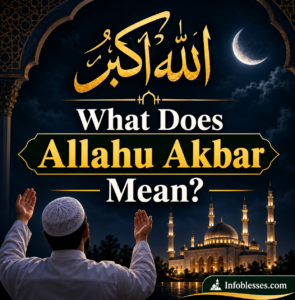
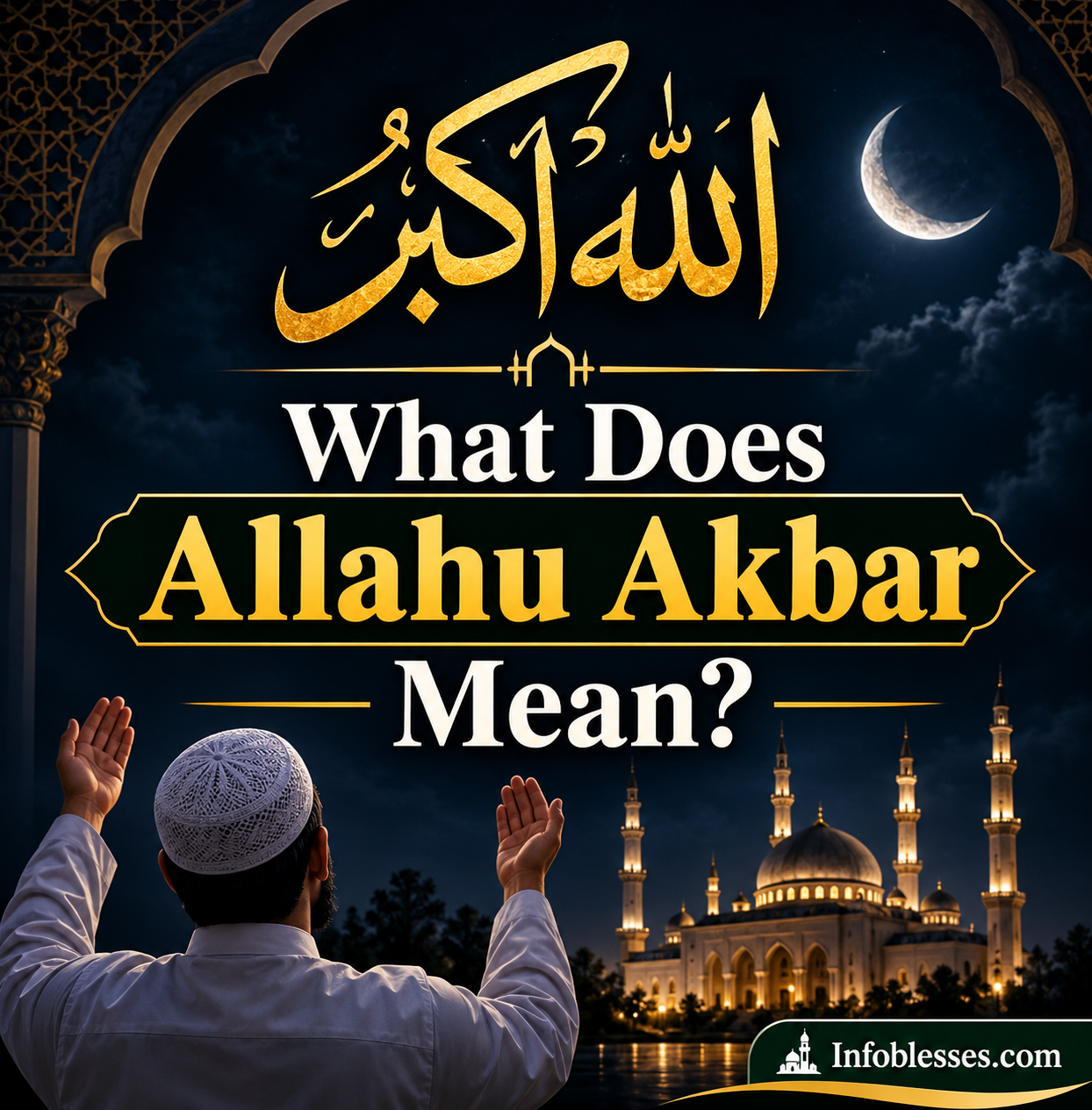
The phrase Allahu Akbar (الله أكبر) translates into English as “Allah is the Greatest” or “Allah is Greater.”
It expresses the belief that Allah’s greatness is above everything in existence. No person, object, power, or worldly achievement can compare with the greatness of the Creator.
For Muslims, these words are more than a simple religious expression. They represent faith, humility, gratitude, trust, and complete recognition of Allah’s supreme power.
Understanding this phrase also helps people appreciate Islamic traditions and the spiritual meaning behind Muslim worship.
Let’s explore its meaning and significance in detail.
1. What Does Allahu Akbar Mean? Arabic Meaning and English Translation
The phrase Allahu Akbar consists of two Arabic words. Together, they communicate one of the central beliefs of Islam: Allah is greater than everything.
1.1 The Arabic Translation of Allahu Akbar
The original Arabic expression is:
الله أكبر
Allahu Akbar
Allah is the Greatest
Here is a simple breakdown:
| Arabic Word | English Meaning |
|---|---|
| Allah (الله) | God |
| Akbar (أكبر) | Greater or greatest |
When combined, these words express the greatness and superiority of Allah.
The phrase isn’t simply saying that Allah is powerful. It communicates that His greatness exceeds all human understanding and everything found in the universe.
1.2 Understanding the Word Allah
Allah is the Arabic word for God.
Muslims believe that Allah is the one and only Creator, Sustainer, and Lord of the universe.
Allah is not limited by time, space, or human characteristics. He is eternal, all-knowing, and all-powerful.
Interestingly, Arabic-speaking Christians also use the word Allah when referring to God. Therefore, the word isn’t limited to Muslims, even though it has a central role in Islamic belief.
1.3 Understanding the Word Akbar
Akbar comes from the Arabic root K-B-R, which relates to greatness and size.
In this expression, it communicates Allah’s supreme greatness.
It reminds Muslims that:
-
Allah’s power is unlimited.
-
Allah’s knowledge covers everything.
-
Allah is greater than worldly difficulties.
-
No human achievement compares with His greatness.
-
Every created thing depends on Him.
This understanding gives the phrase a deep spiritual meaning.
1.4 Why Is Allahu Akbar So Important?
The phrase reminds Muslims to keep their priorities in the right order.
People often become worried about money, careers, relationships, education, and personal problems. Although these matters are important, they aren’t greater than Allah.
When Muslims say Allahu Akbar, they’re reminded that worldly concerns should never become more important than their faith and relationship with their Creator.
2. The Religious Significance of Allahu Akbar in Islam
Allahu Akbar has a special place in Islamic teachings and religious practices.
It expresses Tawhid, the belief that Allah is one and has no partner. It also reminds believers that Allah alone deserves ultimate worship and devotion.
2.1 Allah’s Greatness Is Beyond Human Understanding
Islam teaches that Allah is unlike anything in creation.
Human beings have limitations. They need food, water, sleep, and protection. Allah, however, doesn’t depend on anything.
The Quran describes Allah’s greatness and knowledge in Surah Al-Baqarah:
“And He is the Most High, the Most Great.” — Quran 2:255
This verse appears in Ayat al-Kursi, which is one of the most widely recited passages of the Quran.
The message connects closely with the meaning of Allahu Akbar.
2.2 Allahu Akbar Encourages Humility
One important lesson behind this phrase is humility.
People sometimes become proud of their wealth, knowledge, physical strength, or social position. However, recognizing Allah’s greatness reminds believers that every blessing ultimately comes from Him.
For example:
-
A successful student remembers that knowledge is a blessing.
-
A wealthy person remembers that wealth is temporary.
-
A healthy person expresses gratitude for good health.
-
A powerful leader remembers that ultimate authority belongs to Allah.
This attitude encourages kindness, responsibility, and gratitude.
2.3 Allahu Akbar and the Concept of Tawhid
Tawhid is the foundation of Islamic belief.
It means believing that Allah is one, unique, and without partners.
The phrase Allahu Akbar reinforces this belief by recognizing that Allah’s greatness is unmatched.
It reminds Muslims that no created being should receive the worship and devotion that belong to Allah alone.
2.4 A Reminder During Difficult Times
Life isn’t always easy. People experience sadness, financial difficulties, illness, disappointment, and uncertainty.
During these moments, saying Allahu Akbar can help believers remember that their problems aren’t greater than Allah’s power.
This doesn’t mean ignoring difficulties or refusing to seek solutions.
Instead, it encourages Muslims to combine faith with patience, prayer, and practical effort.
3. Allahu Akbar in the Quran and Islamic Teachings
The Quran repeatedly emphasizes Allah’s greatness, power, wisdom, and authority.
Although the familiar phrase Allahu Akbar is especially associated with Islamic worship and the Sunnah, its central meaning is supported throughout the Quran.
3.1 Quranic References to Allah’s Greatness
Several Quranic verses describe Allah as the Most Great.
| Quranic Reference | Main Message |
|---|---|
| Surah Al-Baqarah 2:255 | Allah is the Most High and Most Great |
| Surah Al-Isra 17:111 | Allah is far above all partners and limitations |
| Surah Al-Hajj 22:37 | Allah is the One who guides people |
| Surah Al-Ankabut 29:45 | Remembering Allah is of great importance |
| Surah Al-A’la 87:1 | Glorify the name of your Lord, the Most High |
These teachings help Muslims understand why recognizing Allah’s greatness is central to their religion.
3.2 The Importance of Takbir
The Arabic term Takbir refers to declaring Allah’s greatness by saying Allahu Akbar.
Takbir is an important part of Islamic worship.
Muslims use it during:
-
The five daily prayers.
-
Eid celebrations.
-
Special voluntary prayers.
-
Religious gatherings.
-
Certain moments of remembrance and reflection.
Takbir reminds believers that worship is directed toward Allah alone.
3.3 Allahu Akbar in the Sunnah
The Sunnah contains the teachings, actions, and traditions of Prophet Muhammad (peace be upon him).
Islamic prayer practices include Takbir at several important stages.
The Prophet Muhammad (peace be upon him) taught Muslims how to perform Salah, including the opening Takbir and the Takbirs associated with prayer movements.
These practices are preserved in authentic Hadith collections, including Sahih al-Bukhari and Sahih Muslim.
3.4 The Connection Between Faith and Remembrance
Remembering Allah is known as Dhikr.
Dhikr includes several expressions, such as:
-
SubhanAllah.
-
Alhamdulillah.
-
Allahu Akbar.
-
La ilaha illallah.
Each expression carries a different meaning.
Together, they help Muslims remember Allah throughout their daily lives.
4. The Importance of Allahu Akbar in Daily Muslim Prayers
One of the most recognizable uses of Allahu Akbar is in Salah, the Islamic prayer.
Muslims perform five obligatory prayers every day. These prayers provide regular opportunities to remember Allah and strengthen their faith.
4.1 Takbir al-Ihram: Beginning the Prayer
Every obligatory Salah begins with a special declaration called Takbir al-Ihram.
The worshipper raises their hands according to the established prayer practice and says:
Allahu Akbar.
This marks the beginning of Salah.
After this Takbir, certain ordinary actions become restricted because the worshipper has entered the formal state of prayer.
It symbolizes leaving everyday distractions behind and turning attention toward Allah.
4.2 Allahu Akbar During Ruku
Ruku means bowing during Salah.
Muslims say Allahu Akbar when moving into the bowing position.
During Ruku, worshippers glorify Allah and recognize His greatness.
A commonly recited expression is:
Subhana Rabbiyal Adheem
Meaning: Glory be to my Lord, the Most Great.
4.3 Allahu Akbar During Sujood
Sujood means prostration.
Muslims say Allahu Akbar when moving into prostration.
During this position, the forehead, nose, hands, knees, and toes are placed on the ground according to the prescribed form of prayer.
It represents humility and submission before Allah.
One commonly recited supplication is:
Subhana Rabbiyal A’la
Meaning: Glory be to my Lord, the Most High.
4.4 Why Does Salah Include Repeated Takbir?
Repeated Takbir reminds Muslims that Allah is greater than everything happening in their lives.
Whether they’re standing, bowing, or prostrating, worshippers continually acknowledge His greatness.
This repetition also helps maintain the structure and rhythm of Salah.
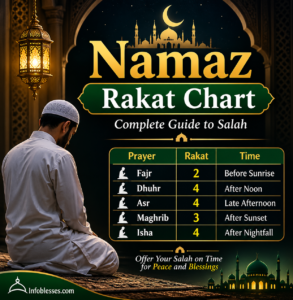
4.5 The Five Daily Prayers
| Prayer | General Time |
|---|---|
| Fajr | Before sunrise |
| Dhuhr | After midday |
| Asr | Afternoon |
| Maghrib | After sunset |
| Isha | Night |
Each prayer includes Takbir as part of its prescribed movements.
5. When Do Muslims Say Allahu Akbar?
Allahu Akbar isn’t restricted to formal prayer.
Muslims say it in many situations as an expression of faith, gratitude, and remembrance.
5.1 During Religious Celebrations
During Eid al-Fitr and Eid al-Adha, Muslims frequently recite Takbir.
The words express gratitude and recognition of Allah’s greatness.
Eid celebrations bring families and communities together through prayer, charity, visiting relatives, and sharing meals.
5.2 When Experiencing Happiness
A Muslim may say Allahu Akbar when receiving good news or witnessing something wonderful.
For example:
-
Hearing that a loved one has recovered.
-
Achieving an important goal.
-
Seeing the beauty of nature.
-
Receiving unexpected blessings.
-
Experiencing a moment of gratitude.
The expression reminds believers to thank Allah for their blessings.
5.3 During Difficult Situations
Muslims may also say Allahu Akbar during challenging moments.
For example, someone facing a difficult examination, financial pressure, or a personal problem might use Takbir as a reminder of faith.
However, saying the phrase doesn’t replace practical action.
Muslims are encouraged to work toward solutions while trusting Allah.
5.4 During the Call to Prayer
The Adhan is the Islamic call to prayer.
It announces the time for Salah and invites Muslims to worship Allah.
The phrase Allahu Akbar appears repeatedly at the beginning of the Adhan and again toward its conclusion.
This makes it one of the most recognizable sounds in Muslim communities worldwide.
5.5 During Hajj and Umrah
Muslims performing Hajj and Umrah also recite Takbir.
The pilgrimage includes many acts of worship and remembrance.
Muslims may declare Allah’s greatness while reflecting on the spiritual importance of the journey.
6. Seven Powerful Spiritual Benefits of Saying Allahu Akbar
The meaning of Allahu Akbar can influence how Muslims think, behave, and approach daily life.
Here are seven important spiritual lessons connected with this expression.
6.1 Strengthens Faith
Regular remembrance helps Muslims maintain awareness of Allah.
When believers repeatedly acknowledge His greatness, they reinforce their commitment to Islamic teachings.
6.2 Encourages Gratitude
People sometimes focus more on what they don’t have than what they already possess.
Saying Allahu Akbar can remind believers that every blessing deserves gratitude.
6.3 Reduces Excessive Attachment to Worldly Things
Money, possessions, popularity, and professional success are temporary.
Recognizing Allah’s greatness encourages Muslims to avoid making worldly achievements the center of their lives.
6.4 Develops Patience
Life brings unexpected challenges.
Remembering Allah can help believers develop patience and maintain hope during difficult circumstances.
6.5 Promotes Humility
The phrase reminds people that human abilities are limited.
This understanding can reduce arrogance and encourage respectful behavior toward others.
6.6 Creates a Stronger Connection With Allah
Dhikr is an important part of Islamic spirituality.
Regular remembrance encourages Muslims to become more conscious of their relationship with their Creator.
6.7 Inspires Positive Actions
True faith should influence behavior.
Remembering Allah’s greatness should encourage honesty, kindness, justice, generosity, and responsibility.
An important point: The spiritual benefits of Takbir are connected with sincere belief and remembrance, not simply repeating words without understanding their meaning.
7. Cultural and Social Importance of Allahu Akbar
Allahu Akbar is deeply connected with Muslim culture and identity.
Although Muslims live in different countries and speak different languages, this Arabic expression is recognized across the Islamic world.
7.1 A Shared Expression Across Muslim Communities
Muslims in Pakistan, Saudi Arabia, Indonesia, Turkey, Egypt, Nigeria, the United Kingdom, and other countries use the same phrase.
Even though their cultures and languages differ, Takbir provides a shared expression of Islamic belief.
7.2 Its Role in Family Life
Parents often teach children to say Allahu Akbar from an early age.
Children learn the phrase while observing their parents praying and participating in religious activities.
This helps introduce them to Islamic beliefs and traditions.
7.3 Its Importance During Eid
Eid celebrations are among the most joyful occasions in the Islamic calendar.
Takbir is commonly recited during these celebrations.
It reminds Muslims that happiness, celebration, and gratitude should remain connected with their faith.
7.4 A Symbol of Islamic Worship
The phrase is frequently heard in mosques, Islamic lectures, religious programs, and community gatherings.
Its presence reflects the importance of remembering Allah in Muslim life.
8. Common Misunderstandings About Allahu Akbar
Despite its simple translation, Allahu Akbar is sometimes misunderstood.
Understanding its religious context helps prevent confusion.
8.1 Is Allahu Akbar a Threatening Expression?
No.
Allahu Akbar is a normal Islamic declaration of faith and praise.
Muslims use it during prayer, celebrations, and everyday remembrance.
Its meaning is not violent or threatening.
Like other religious expressions, its meaning should be understood through the words themselves and the context in which they’re used.
8.2 Is Allahu Akbar Only Used During Prayer?
No.
Although it’s an essential part of Salah, Muslims also use Takbir during religious celebrations, the Adhan, and other forms of worship and remembrance.
8.3 Do Only Arabs Say Allahu Akbar?
No.
Muslims worldwide use this phrase regardless of their native language.
A Muslim doesn’t need to speak Arabic fluently to understand or recite it.
8.4 Does Allahu Akbar Mean Allah Is Physically Bigger?
No.
The phrase expresses Allah’s supreme greatness, power, and majesty.
It isn’t a statement about physical size.
Islam teaches that Allah isn’t comparable to His creation.
8.5 Can Non-Muslims Say Allahu Akbar?
Anyone can learn or pronounce the Arabic phrase.
However, its religious significance comes from its use as an expression of belief and recognition of Allah’s greatness.
9. Difference Between Allahu Akbar and Other Islamic Phrases
Islam includes several expressions of remembrance.
Although they may sound similar, each has a distinct meaning.
| Islamic Phrase | English Meaning | Main Purpose |
|---|---|---|
| Allahu Akbar | Allah is the Greatest | Declaring Allah’s greatness |
| SubhanAllah | Glory be to Allah | Praising Allah’s perfection |
| Alhamdulillah | All praise belongs to Allah | Expressing gratitude |
| Astaghfirullah | I seek forgiveness from Allah | Asking for forgiveness |
| MashaAllah | What Allah has willed | Expressing admiration and recognition of Allah’s will |
| La ilaha illallah | There is no god worthy of worship except Allah | Declaring Islamic monotheism |
9.1 Allahu Akbar vs. SubhanAllah
Allahu Akbar declares Allah’s greatness.
SubhanAllah glorifies Allah and declares Him free from imperfection.
Both expressions are important forms of Dhikr.
9.2 Allahu Akbar vs. Alhamdulillah
Alhamdulillah is used to express praise and gratitude.
Allahu Akbar emphasizes Allah’s greatness.
Muslims often use both expressions throughout their daily lives.
9.3 Allahu Akbar vs. MashaAllah
MashaAllah is commonly said when appreciating something good or beautiful.
Allahu Akbar declares Allah’s greatness.
Both expressions remind believers that blessings ultimately come from Allah.
10. How to Pronounce Allahu Akbar Correctly
Learning the pronunciation of Allahu Akbar is relatively simple.
The Arabic phrase is written as:
الله أكبر
Its commonly used transliteration is:
Allahu Akbar
A simple pronunciation guide is:
-
Al-laa-hu
-
Ak-bar
Together:
Al-laa-hu Ak-bar
10.1 Pronunciation Tips for Beginners
-
Start with the word Allahu.
-
Pronounce the two syllables clearly.
-
Continue with Akbar.
-
Avoid rushing the words together.
-
Listen to experienced Arabic speakers for guidance.
Arabic pronunciation includes sounds that may be unfamiliar to English speakers.
Therefore, listening and practicing can help improve accuracy.
10.2 Why Understanding the Meaning Matters
Correct pronunciation is important, but understanding the meaning is equally valuable.
When Muslims say Allahu Akbar with awareness, they recognize the greatness of Allah rather than simply repeating familiar words.
11. Teaching Children the Meaning of Allahu Akbar
Teaching children Islamic expressions helps them develop an early understanding of their faith.
Parents and teachers can introduce Allahu Akbar through simple explanations and everyday examples.
11.1 Use Simple Language
Explain that Allahu Akbar means Allah is greater than everything.
Children can understand this as a reminder that Allah created the world and has unlimited power.
11.2 Teach Through Daily Prayer
Children often learn by observing adults.
When parents perform Salah, they can explain why Takbir is recited at different stages.
11.3 Connect the Phrase With Gratitude
Encourage children to remember Allah when they experience happiness.
For example, when they receive a gift or achieve something meaningful, parents can teach them to express gratitude.
11.4 Make Learning Interactive
Some simple activities include:
-
Learning the Arabic spelling.
-
Practicing pronunciation.
-
Memorizing the English translation.
-
Listening to the Adhan.
-
Learning about the five daily prayers.
-
Understanding the meaning of other Islamic expressions.
The goal isn’t simply memorization. Children should understand why Muslims say Allahu Akbar and what it teaches them.
12. Frequently Asked Questions About Allahu Akbar
Here are answers to eight commonly asked questions about the meaning and significance of Allahu Akbar.
FAQ 1: What does Allahu Akbar mean in English?
Allahu Akbar means “Allah is the Greatest” or “Allah is Greater” in English. It is an Arabic expression that declares the supreme greatness and power of Allah.
FAQ 2: What does Allahu Akbar mean in Arabic?
Allahu Akbar is written in Arabic as الله أكبر. Allah means God, while Akbar means greater or greatest. Together, the phrase expresses Allah’s unmatched greatness.
FAQ 3: Why do Muslims say Allahu Akbar?
Muslims say Allahu Akbar to declare Allah’s greatness and remember Him. It’s used during daily prayers, the Adhan, Eid celebrations, and other occasions of Islamic worship.
FAQ 4: Is Allahu Akbar mentioned in the Quran?
The Quran repeatedly teaches that Allah is the Most Great and emphasizes His supreme power. For example, Quran 2:255 describes Allah as the Most High and Most Great. The familiar Takbir is also established in Islamic worship and Sunnah.
FAQ 5: How many times do Muslims say Allahu Akbar during prayer?
There are multiple Takbirs during each prayer. Their number depends on the prayer’s structure and whether the opening Takbir is included. A common five-prayer daily total is 94 Takbirs when counting the prescribed movement Takbirs and opening Takbirs in the usual prayer format, excluding additional congregational or voluntary recitations.
FAQ 6: What is the difference between Allahu Akbar and SubhanAllah?
Allahu Akbar means Allah is the Greatest, while SubhanAllah means Glory be to Allah. The first declares Allah’s greatness, while the second glorifies Him and declares Him free from imperfection.
FAQ 7: Can Muslims say Allahu Akbar outside prayer?
Yes. Muslims can say Allahu Akbar outside Salah as a form of Dhikr, gratitude, and remembrance. It’s also commonly recited during Eid and other religious occasions.
FAQ 8: What is the importance of Allahu Akbar in Islam?
Allahu Akbar is important because it expresses the central Islamic belief that Allah is greater than everything. It encourages humility, strengthens faith, and reminds Muslims to place their trust in Allah.
Conclusion:
Understanding what Allahu Akbar means helps explain one of the most important expressions in Islam.
The phrase Allahu Akbar (الله أكبر) means “Allah is the Greatest.” It represents the belief that Allah’s greatness, power, and knowledge are beyond comparison.
For Muslims, these words are a reminder of faith, gratitude, patience, humility, and devotion.
Whether recited during daily Salah, the Adhan, Eid celebrations, or personal moments of remembrance, Allahu Akbar encourages believers to recognize the greatness of their Creator.
Ultimately, its message is simple yet profound: no worldly possession, achievement, difficulty, or human power is greater than Allah.
By understanding its meaning and practicing its lessons, Muslims can develop a stronger connection with their faith and approach life with greater gratitude and hope.

Welcome to Info Blesses I am Rana Ahtasham an AI Powered SEO and Content Writer With 3 year experience.I help websites rank highter, grow traffic, and look amazing. My goal is to make SEO and web design simple and effective for everyone.Lets achieve more togather!