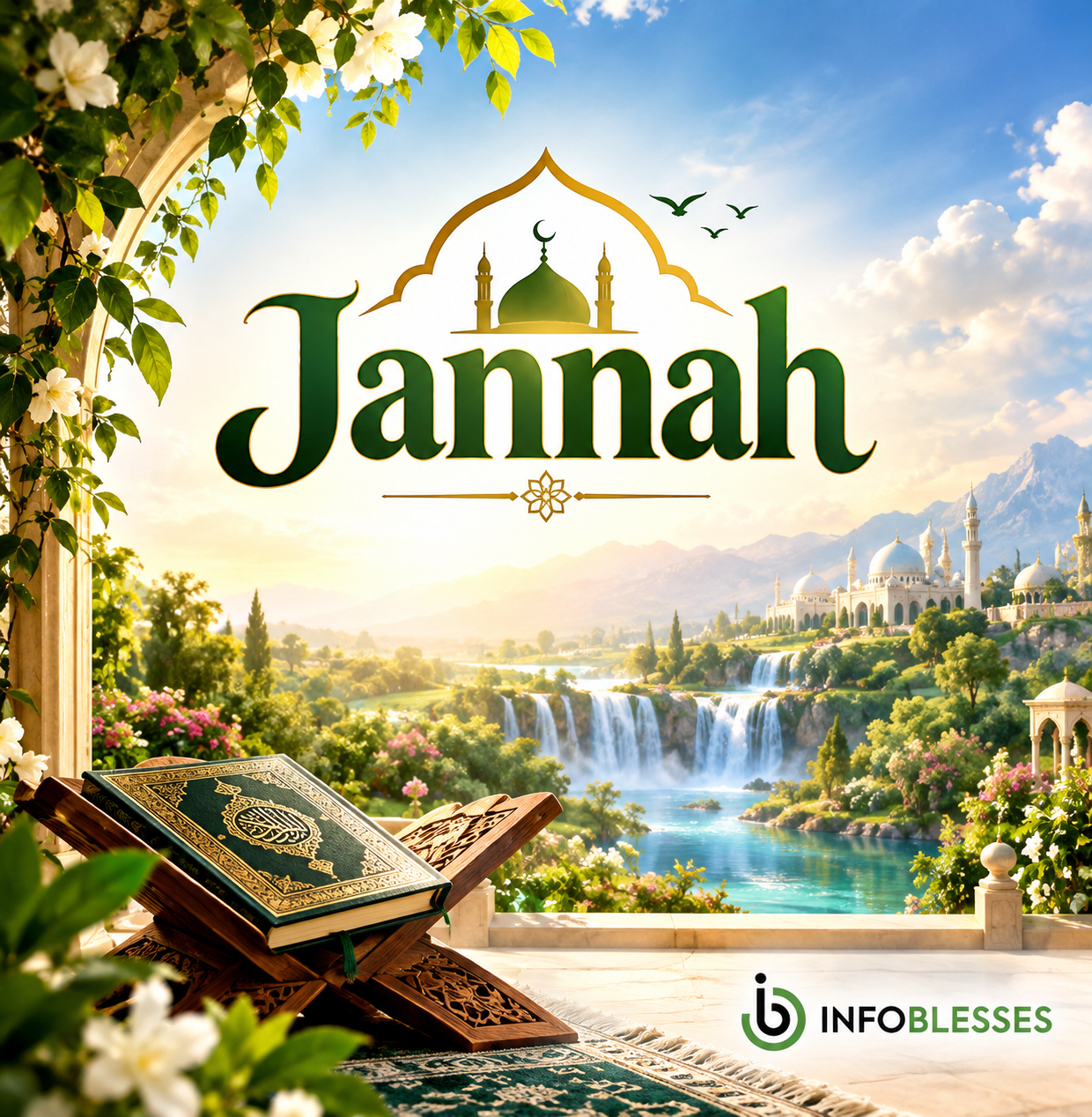
Jannah is one of the most beautiful and meaningful concepts in Islam. It represents Paradise, the eternal home promised by Allah to those who believe in Him and strive to live righteous lives. The Quran describes it as a place of extraordinary beauty, flowing rivers, lush gardens, delicious food, peaceful companionship, and happiness without end.
For Muslims, belief in Jannah is more than a hope for a wonderful life after death. It is an essential part of Islamic faith that shapes how people understand their purpose, make moral decisions, and approach their relationship with Allah. It encourages kindness, patience, gratitude, generosity, and perseverance through life’s challenges.
The Arabic word Jannah is associated with the idea of something concealed or covered. In the Islamic context, it refers to a garden or Paradise, with descriptions that evoke abundant greenery, shade, and tranquility. The Quran uses many descriptions to help people understand its beauty, although the full reality of Paradise is beyond human imagination.
The promise of Jannah also offers comfort during difficult times. Muslims believe that worldly struggles are temporary, while the rewards of the Hereafter are everlasting. This belief encourages hope without denying the reality of suffering or the importance of working to improve life in this world.
In this guide, we’ll explore the meaning of Jannah, its descriptions in the Quran, the different levels and gates of Paradise, and the qualities associated with those who enter it. We’ll also look at practical ways Muslims can seek Allah’s pleasure and prepare for the Hereafter.
1. Understanding the Meaning of Jannah
What Does Jannah Mean in Islam?
The word Jannah comes from the Arabic root associated with concealment. In everyday Arabic, related words can describe a garden with dense vegetation that covers the ground. In Islamic teachings, however, Jannah has a much deeper meaning: it is the eternal home of reward, peace, and closeness to Allah.
The Quran frequently describes Paradise using images of gardens beneath which rivers flow. These descriptions convey beauty, abundance, and comfort. They also provide a way for people to imagine a reality that is greater than anything they have experienced in earthly life.
Jannah is not simply a beautiful location. It is also the fulfillment of a spiritual promise. Muslims believe that its greatest blessing is not material comfort but the pleasure of Allah and the opportunity to enjoy an everlasting relationship with Him.
The Importance of Believing in Paradise
Belief in the Hereafter is a central part of Islamic faith. The Quran repeatedly connects belief in Allah with belief in the Last Day, when people will be held accountable for their actions and receive the consequences of their choices.
This belief gives life a wider perspective. Everyday decisions, including seemingly small acts of kindness, honesty, and patience, have spiritual significance. It also reminds Muslims that wealth, status, and worldly success are temporary.
For example, someone who chooses honesty despite the possibility of losing money may be motivated by the belief that pleasing Allah is more important than immediate financial gain. Likewise, a person who forgives someone who has caused harm may hope for Allah’s forgiveness and reward.
The hope of entering Jannah can therefore inspire positive behavior, although Islamic teachings also emphasize sincerity and love of Allah rather than treating worship as a simple transaction.
Jannah and the Purpose of Human Life
According to the Quran, human beings were created to worship Allah. Worship in Islam includes formal acts such as prayer and fasting, but it also encompasses good conduct, fulfilling responsibilities, and treating others fairly.
Seeking Jannah gives these actions a lasting spiritual purpose. A Muslim’s daily routine can become an opportunity to demonstrate faith through service, compassion, and responsibility.
The Quran also reminds believers that the life of this world is temporary. This does not mean that Muslims should neglect their families, education, health, or communities. Rather, Islamic teachings encourage people to balance their worldly responsibilities with their spiritual obligations.
The Difference Between Worldly Life and Paradise
Worldly life includes both happiness and hardship. People experience love, friendship, achievement, illness, disappointment, and loss. Even the happiest moments are temporary.
By contrast, Jannah is described as a place where suffering, fear, and grief have no lasting presence. The Quran presents it as a home of security and enduring joy.
| Worldly life | Jannah |
|---|---|
| Happiness is temporary. | Happiness is everlasting. |
| People experience illness and pain. | The inhabitants enjoy freedom from suffering. |
| Wealth and possessions can disappear. | Rewards are permanent. |
| People experience fear and grief. | The Quran describes peace and security. |
| Life ends in death. | Life in Paradise is eternal. |
These contrasts help explain why Jannah holds such an important place in Islamic belief. It represents the ultimate fulfillment of the promise of divine reward.
2. Jannah in the Quran: A Beautiful Description of Paradise
The Quranic Vision of Paradise
The Quran provides numerous descriptions of Jannah, using imagery that helps readers understand its extraordinary beauty. Gardens, flowing rivers, abundant fruits, comfortable dwellings, and peaceful gatherings appear throughout these passages.
One well-known description appears in Surah Muhammad (47:15), which refers to gardens promised to the righteous and mentions rivers of water, milk, wine, and purified honey. These descriptions communicate abundance and perfection, while reminding believers that the actual nature of Paradise exceeds ordinary human experience.
Another important passage is found in Surah Al-Baqarah (2:25), which describes gardens beneath which rivers flow and mentions purified spouses and everlasting residence.
These Quranic passages provide a foundation for understanding the Islamic concept of Paradise. They are not merely poetic images; within Islamic belief, they describe a real existence in the Hereafter, although its complete nature remains beyond human knowledge.
Gardens and Flowing Rivers
Gardens are among the most familiar images associated with Jannah. They represent freshness, fertility, shade, and a sense of peaceful abundance.
The Quran repeatedly refers to gardens beneath which rivers flow. In a world where access to water and fertile land can be difficult, this image conveys exceptional comfort and security.
The rivers described in the Quran also have distinctive qualities. Surah Muhammad (47:15) mentions several kinds of rivers, including water that does not become stagnant and milk whose taste does not change.
These descriptions invite reflection on the difference between earthly resources, which are limited and subject to change, and the blessings of Paradise, which are everlasting.
The Promise of Eternal Peace
Peace is another essential feature of the Quranic description of Jannah. In Surah Yunus (10:25), Allah invites people toward the Home of Peace and guides whom He wills to a straight path.
The concept of peace extends beyond a beautiful environment. It includes freedom from the emotional burdens that affect human life, such as fear, resentment, jealousy, and grief.
Surah Al-Hijr (15:47) describes the removal of ill feelings from the hearts of the inhabitants of Paradise. This is a particularly meaningful description because it presents Jannah as a place where relationships are free from the conflicts that can damage worldly happiness.
Eternal Life and Divine Reward
The Quran emphasizes that the rewards of Paradise will not end. Believers who enter it will not face another death or fear that their happiness will eventually disappear.
In Surah Al-Kahf (18:107–108), the Quran describes the gardens of Paradise as a welcoming home for those who believe and do righteous deeds. It also emphasizes that they will remain there forever.
The promise of eternity distinguishes Jannah from all earthly experiences. Even the most wonderful moments in this life are limited by time. Paradise, in contrast, represents lasting fulfillment.
Understanding the Limits of Human Imagination
Although the Quran provides descriptions of Jannah, Muslims are taught that its full reality cannot be completely imagined from worldly experience.
A well-known hadith in Sahih al-Bukhari and Sahih Muslim describes Paradise as containing blessings that no eye has seen, no ear has heard, and no human heart has fully imagined.
This teaching encourages believers to appreciate the Quranic descriptions without assuming that they reveal every detail of the Hereafter.
Readers can explore these passages in the
. Reading the verses in their surrounding context can provide a deeper understanding of the spiritual themes associated with Paradise.
3. The Seven Amazing Wonders of Jannah
The Quran and authentic Islamic traditions describe many blessings associated with Paradise. These descriptions provide a picture of a place where beauty, comfort, companionship, and spiritual fulfillment come together.
The following seven features highlight some of the most memorable aspects of Jannah.
1. Magnificent Gardens and Natural Beauty
The gardens of Jannah are among its most prominent features. They are described as places of exceptional beauty, with lush greenery, abundant shade, and flowing rivers.
Unlike earthly gardens, which require care and are affected by seasons, weather, and the passage of time, the gardens of Paradise are part of an eternal reward.
Their beauty also has spiritual meaning. They symbolize the fulfillment of divine promises and the peace that believers hope to experience in the Hereafter.
2. Rivers of Pure and Abundant Blessings
The rivers of Jannah are described in several Quranic passages. They are associated with pure water, milk, honey, and a form of wine that Islamic descriptions distinguish from intoxicating earthly drinks.
These rivers represent abundance without scarcity. Their descriptions also reflect the broader theme of perfection in Paradise: the inhabitants will not experience the inconvenience, contamination, or disappointment associated with worldly resources.
The image of flowing water is especially powerful because water is essential for life and is often associated with renewal, cleanliness, and relief.
3. Beautiful Homes and Magnificent Dwellings
Islamic traditions describe the dwellings of Paradise as extraordinary. The Quran refers to elevated chambers and beautiful homes, while hadith literature includes descriptions of magnificent structures and dwellings prepared for the righteous.
These descriptions communicate comfort, security, and honor. Unlike worldly homes, which can be lost through financial difficulty, disaster, or the passage of time, the homes of Jannah are part of an everlasting reward.
The exact appearance and construction of these dwellings are matters of the unseen. Therefore, descriptions should be understood through the religious sources rather than treated as architectural specifications.
4. Delicious Food and Endless Abundance
The Quran mentions a variety of fruits and foods in its descriptions of Paradise. Surah Al-Waqi’ah (56:20–21), for example, refers to fruits of the inhabitants’ choosing and the meat of birds they desire.
Food in Jannah is associated with pleasure and abundance. People will not have to worry about hunger, food shortages, or the effort required to obtain nourishment.
The Quran also describes fruits that will be readily available. These images offer a contrast with earthly life, where access to good food can depend on financial resources, geography, and environmental conditions.
5. Eternal Peace and Freedom from Suffering
One of the most important blessings of Jannah is freedom from suffering. The Quran describes the inhabitants as experiencing neither fear nor grief and presents Paradise as a home of lasting security.
Surah Fatir (35:34–35) describes the inhabitants praising Allah for removing sorrow and allowing them to dwell in a place where they will not experience exhaustion or weariness.
This promise is especially significant for people who have experienced hardship, loss, or emotional pain. It reflects the Islamic belief that the Hereafter brings a form of peace that worldly circumstances cannot provide.
6. Loving Companionship and Pure Relationships

Islamic teachings describe Jannah as a place where people enjoy good companionship and relationships free from harmful conflict.
The Quran mentions spouses and righteous family members among the blessings associated with Paradise. Surah Ar-Ra’d (13:23) refers to the entry of righteous people into gardens of lasting residence, together with their righteous family members.
These descriptions provide hope for reunion and companionship. However, Islamic scholars distinguish between what the religious sources explicitly promise and questions about the individual circumstances of particular people.
The broader message is that Paradise is not a place of loneliness, hostility, or heartbreak. It is a place of lasting contentment and harmonious relationships.
7. The Pleasure and Good Pleasure of Allah
The greatest blessing of Jannah is the pleasure of Allah. Although gardens, rivers, food, and beautiful dwellings are frequently mentioned, Islamic teachings place spiritual fulfillment above material enjoyment.
Surah At-Tawbah (9:72) describes gardens of Paradise and the good pleasure of Allah, emphasizing that divine approval is a tremendous blessing.
This belief shapes how Muslims understand the purpose of worship. The ultimate goal is not merely to obtain a reward but to live in accordance with faith and seek the pleasure of the Creator.
For believers, this represents the highest form of fulfillment: knowing that Allah is pleased with them and that their relationship with Him will continue forever.
4. The Levels and Gates of Jannah
The Different Levels of Paradise
Islamic teachings describe Paradise as having different ranks and degrees. These levels reflect the distinction between the rewards Allah grants to His servants, although the precise nature of every rank is part of the unseen.
A well-known hadith recorded in Sahih al-Bukhari describes one hundred degrees in Paradise prepared by Allah for those who strive in His cause. The distance between two degrees is described as being like the distance between heaven and earth.
The Quran also refers to different ranks and rewards. Surah Al-An’am (6:132) states that everyone will have degrees according to what they have done, while Surah Al-Isra (17:21) refers to differences in rank in the Hereafter.
These teachings encourage Muslims to seek spiritual growth and to avoid becoming complacent about their actions.
Jannat al-Firdaws: The Highest Paradise
Jannat al-Firdaws is especially important in Islamic teachings. The Prophet Muhammad (peace be upon him) encouraged Muslims to ask Allah for Al-Firdaws, describing it as the highest and most central part of Paradise, above which is the Throne of the Most Merciful.
This teaching appears in Sahih al-Bukhari. It encourages believers to make ambitious supplications while recognizing that admission to Paradise and the granting of its rewards ultimately depend on Allah’s mercy.
The Quran also mentions Al-Firdaws in Surah Al-Kahf (18:107), describing it as a welcoming home for those who believe and do righteous deeds.
The Gates of Jannah
Islamic tradition describes eight gates of Paradise. Each gate is associated with a category of righteous conduct or worship.
A hadith recorded in Sahih al-Bukhari and Sahih Muslim describes the gate of prayer, the gate of charity, and the gate of fasting, among others. The gate of fasting is known as Ar-Rayyan.
These descriptions illustrate the many paths through which Muslims can demonstrate faith and devotion. They also encourage believers to cultivate a range of good deeds rather than focusing on one form of worship alone.
The following table summarizes some of the commonly discussed gates and their associated acts:
| Gate | Associated worship or quality |
|---|---|
| As-Salah | Regular prayer |
| As-Sadaqah | Giving charity |
| Ar-Rayyan | Fasting |
| Al-Jihad | Striving in Allah’s cause |
The descriptions of these gates should be approached through reliable hadith sources and scholarly explanations. Not every name sometimes circulated online is established by an equally reliable narration.
Why the Levels of Jannah Matter
The different ranks of Paradise remind Muslims that spiritual life involves ongoing effort. Faith, worship, patience, and good character are not simply isolated actions. They are qualities to develop throughout a lifetime.
However, Muslims also believe that good deeds alone do not guarantee entry into Paradise independently of Allah’s mercy. The Prophet Muhammad (peace be upon him) taught that no one enters Paradise solely through their deeds, but through Allah’s mercy.
The combination of striving and reliance on divine mercy is therefore central to the Islamic understanding of the Hereafter.
5. Who Will Enter Jannah?
Faith in Allah and the Last Day
The Quran repeatedly connects belief in Allah with the promise of Paradise. Faith is a central foundation of Islamic belief, and it involves recognizing Allah’s oneness, accepting His guidance, and seeking to live in accordance with His commands.
Surah Al-Baqarah (2:82) refers to those who believe and do righteous deeds as the companions of Paradise, where they will remain forever.
This passage highlights two important themes: faith and action. Islamic teachings emphasize that belief should influence how a person behaves, including how they treat their family, neighbors, and wider community.
Righteous Deeds and Good Character
Righteous deeds are an important part of the Islamic path toward Paradise. These include obligatory acts of worship as well as voluntary acts that benefit other people.
Examples include:
-
Performing the five daily prayers.
-
Giving obligatory and voluntary charity.
-
Fasting during Ramadan.
-
Treating parents with kindness and respect.
-
Supporting people experiencing hardship.
-
Speaking truthfully and fulfilling promises.
-
Avoiding injustice and harmful behavior.
-
Seeking forgiveness after making mistakes.
Good character is especially important. The Prophet Muhammad (peace be upon him) emphasized the significance of excellent manners and encouraged believers to treat others with kindness.
The Quran also highlights justice, generosity, patience, and forgiveness as important qualities. These values are not restricted to religious gatherings; they are meant to guide everyday interactions.
Repentance and Allah’s Mercy
Islam recognizes that human beings make mistakes. The path to Allah remains open to those who sincerely repent and seek forgiveness.
Surah Az-Zumar (39:53) tells people who have wronged themselves not to despair of Allah’s mercy, emphasizing that Allah forgives sins.
Sincere repentance, known as tawbah, involves recognizing wrongdoing, feeling genuine remorse, stopping the sinful action, and resolving not to return to it. When the wrongdoing involves another person’s rights, making amends is also important.
This teaching gives Muslims hope while reminding them that repentance should lead to meaningful change.
The Importance of Sincerity
In Islam, the value of an action is closely connected to the intention behind it. A good deed performed to impress others is not the same as one performed sincerely for Allah.
Sincerity helps transform ordinary activities into meaningful acts of worship. For example, earning a lawful living to support one’s family can become a spiritually rewarding action when done with a sincere intention.
Similarly, helping a neighbor without seeking public recognition can reflect a genuine commitment to Islamic values.
Allah’s Mercy and the Promise of Paradise
Islamic teachings maintain a balance between hope and accountability. Muslims are encouraged to strive for righteousness while recognizing that their ultimate fate rests with Allah.
This belief prevents spiritual arrogance. A person should not assume that a particular action guarantees Paradise, nor should someone who has sinned assume that divine forgiveness is impossible.
The Quran and Sunnah encourage believers to combine sincere effort, repentance, supplication, and trust in Allah.
6. What Is Life Like in Jannah?
Eternal Happiness Without Fear
The Quran presents Jannah as a place of complete security. Its inhabitants will not fear losing their blessings or experience the uncertainty that often accompanies worldly happiness.
In Surah Al-A’raf (7:43), the Quran describes the inhabitants of Paradise as praising Allah for guiding them and states that they will be called upon to enter the gardens because of what they used to do.
Other passages describe the removal of sorrow and the absence of exhaustion. These promises reflect the belief that Paradise is not simply an improved version of earthly life, but an entirely different kind of existence.
No Illness, Aging, or Death
Islamic descriptions of Jannah include freedom from many forms of suffering experienced in worldly life. Authentic hadith describe the inhabitants as enjoying lasting health and vitality, without the effects of aging and death.
This is an important distinction between the Hereafter and earthly existence. In this life, even good health is temporary, and people may experience physical limitations or illness.
The promise of lasting well-being in Paradise offers hope that these difficulties will not define a believer’s eternal future.
Joyful Gatherings and Meaningful Companionship
Jannah is described as a place of peaceful companionship and mutual happiness. The Quran refers to people reclining on couches and enjoying the company of their companions.
In Surah At-Tur (52:21), the Quran mentions the joining of believing descendants with their believing parents, spouses, and children under specific conditions.
These descriptions offer a vision of family and friendship in which the hardships of earthly relationships are replaced by peace and joy.
Spiritual Fulfillment
The blessings of Jannah include more than material comforts. Islamic teachings emphasize that the inhabitants will experience a profound sense of fulfillment, contentment, and divine approval.
The greatest blessing, according to widely accepted Islamic belief, is the vision of Allah granted to the believers in the Hereafter. The Quran refers to radiant faces looking toward their Lord in Surah Al-Qiyamah (75:22–23). Authentic hadith further discuss this blessing.
This teaching occupies an important place in Islamic theology because it highlights the spiritual dimension of Paradise. The ultimate purpose of the believer’s journey is not only to enjoy a beautiful environment but also to attain closeness to Allah.
7. How to Prepare for Jannah
Establish a Consistent Relationship With Allah
Preparing for Jannah begins with strengthening one’s relationship with Allah. Daily prayer is a central part of Islamic life and provides regular opportunities for remembrance, gratitude, and supplication.
Consistency matters. Rather than treating worship as an occasional activity, Muslims are encouraged to develop steady habits that support their faith.
Useful daily practices include:
-
Performing the five obligatory prayers.
-
Reading or listening to the Quran.
-
Making sincere supplications.
-
Remembering Allah throughout the day.
-
Reflecting on one’s actions and seeking forgiveness.
These practices help believers maintain spiritual awareness while managing their everyday responsibilities.
Practice Kindness and Charity
Islam encourages Muslims to care for people who are vulnerable or experiencing hardship. Charity is an important form of worship and includes both financial support and acts of kindness.
The Prophet Muhammad (peace be upon him) taught that even a kind word can be an act of charity. This illustrates that the opportunity to do good is not limited to people with significant financial resources.
A person can support others by sharing food, assisting a neighbor, helping a student, visiting someone who is lonely, or offering practical assistance to a family in need.
Such actions help build compassionate communities and reflect the values that Islamic teachings associate with righteousness.
Develop Patience and Gratitude
Patience, known as sabr, is a major theme in the Quran. It includes remaining committed to what is right, controlling harmful reactions, and persevering through hardship.
Gratitude, or shukr, involves recognizing blessings and using them responsibly. Muslims are encouraged to express gratitude to Allah and to show appreciation toward other people.
Both qualities can strengthen a person’s spiritual life. Patience helps people respond thoughtfully to difficulties, while gratitude encourages them to recognize the good in their lives without taking it for granted.
Avoid Harmful Behavior and Seek Forgiveness
Preparing for the Hereafter also requires attention to actions that can harm others or weaken one’s relationship with Allah.
Islamic teachings warn against dishonesty, injustice, arrogance, backbiting, and violating other people’s rights. These behaviors can damage relationships and create serious moral responsibilities.
When mistakes happen, repentance and efforts to repair the harm are essential. Seeking forgiveness should involve more than words; it should include a sincere intention to change.
Make Supplication for Paradise
Muslims are encouraged to ask Allah for Jannah and protection from the punishment of the Hereafter. Supplication is an important expression of humility and trust.
One well-known supplication asks Allah for Al-Firdaws, the highest level of Paradise. Another asks Allah for goodness in this world and the Hereafter.
A person can make these supplications in their own words or use authentic prayers from the Quran and Sunnah. The important qualities are sincerity, humility, and an ongoing commitment to righteous action.
Frequently Asked Questions About Jannah
1. What is Jannah in Islam?
Jannah is the eternal Paradise promised by Allah to those who are granted entry into it. The Quran describes it as a place of beautiful gardens, flowing rivers, abundant blessings, peace, and everlasting happiness. Its greatest blessing is the pleasure of Allah and, according to Islamic teachings, the vision of Him granted to the believers.
2. How many levels are there in Jannah?
Authentic hadith mention one hundred degrees in Paradise, while the Quran also refers to different ranks and rewards. Jannat al-Firdaws is described in hadith as the highest part of Paradise. The exact nature and distribution of all the ranks are matters of the unseen.
3. How many gates does Jannah have?
Authentic Islamic traditions describe eight gates of Paradise. The hadith literature mentions gates associated with acts of worship, including prayer, charity, and fasting. One of the best-known is Ar-Rayyan, which is associated with those who fast.
4. Can a person enter Jannah through good deeds alone?
Islamic teachings emphasize that faith and righteous deeds are essential, but entry into Paradise ultimately depends on Allah’s mercy. The Prophet Muhammad (peace be upon him) taught that no one enters Paradise solely because of their deeds. Muslims are therefore encouraged to work toward righteousness while sincerely seeking Allah’s forgiveness and mercy.
5. Will people recognize their family members in Jannah?
The Quran describes the joining of righteous family members in Paradise, including in Surah At-Tur (52:21) and Surah Ar-Ra’d (13:23). These passages provide hope for family reunion in the Hereafter. The specific circumstances of each person, however, are part of the unseen and should not be assumed beyond what the religious sources establish.
6. Will there be sadness or suffering in Jannah?
The Quran describes Jannah as a place where the inhabitants will experience lasting peace and will not be burdened by grief, fear, or exhaustion. Surah Fatir (35:34–35) describes Allah removing sorrow from their hearts and granting them a lasting home. These teachings present Paradise as a place of complete and enduring happiness.
7. What is the greatest reward in Jannah?
Islamic scholars commonly identify the pleasure of Allah and the vision of Him as the greatest blessings of Paradise. While the Quran describes many material and social rewards, such as gardens, rivers, and companionship, the spiritual fulfillment of attaining Allah’s pleasure holds a central place in Islamic belief.
8. How can Muslims increase their chances of entering Jannah?
Muslims are encouraged to strengthen their faith, fulfill their obligatory acts of worship, perform righteous deeds, develop good character, repent sincerely, and treat others with justice and compassion. They are also encouraged to make supplication for Paradise and seek Allah’s mercy. Islamic teachings stress that these efforts should be accompanied by sincerity and humility rather than a sense of entitlement.
Conclusion: The Eternal Promise of Jannah
Jannah is a central part of the Islamic understanding of life, death, and the Hereafter. Its Quranic descriptions of beautiful gardens, flowing rivers, abundant blessings, and everlasting peace provide believers with hope and a vision of life beyond worldly hardship.
However, the meaning of Jannah goes far beyond its physical descriptions. It represents the fulfillment of Allah’s promise, the reward of faith and righteous action, and the ultimate spiritual success of those granted entry into Paradise.
The teachings about its different levels and gates also remind Muslims that there are many opportunities to pursue goodness through worship, charity, patience, sincerity, and compassion. At the same time, the emphasis on divine mercy encourages humility and gives hope to those who sincerely seek forgiveness.
Ultimately, belief in Jannah offers a meaningful perspective on everyday life. It reminds Muslims that their choices matter, that kindness and justice have lasting significance, and that difficulties do not have to define their future.
For anyone seeking a deeper understanding of Paradise, reading the Quran, studying authentic hadith, and consulting knowledgeable Islamic scholars can provide valuable guidance. The promise of Jannah remains an enduring source of hope, encouraging believers to pursue a life of faith, good character, and devotion to Allah.

Welcome to Info Blesses I am Rana Ahtasham an AI Powered SEO and Content Writer With 3 year experience.I help websites rank highter, grow traffic, and look amazing. My goal is to make SEO and web design simple and effective for everyone.Lets achieve more togather!