
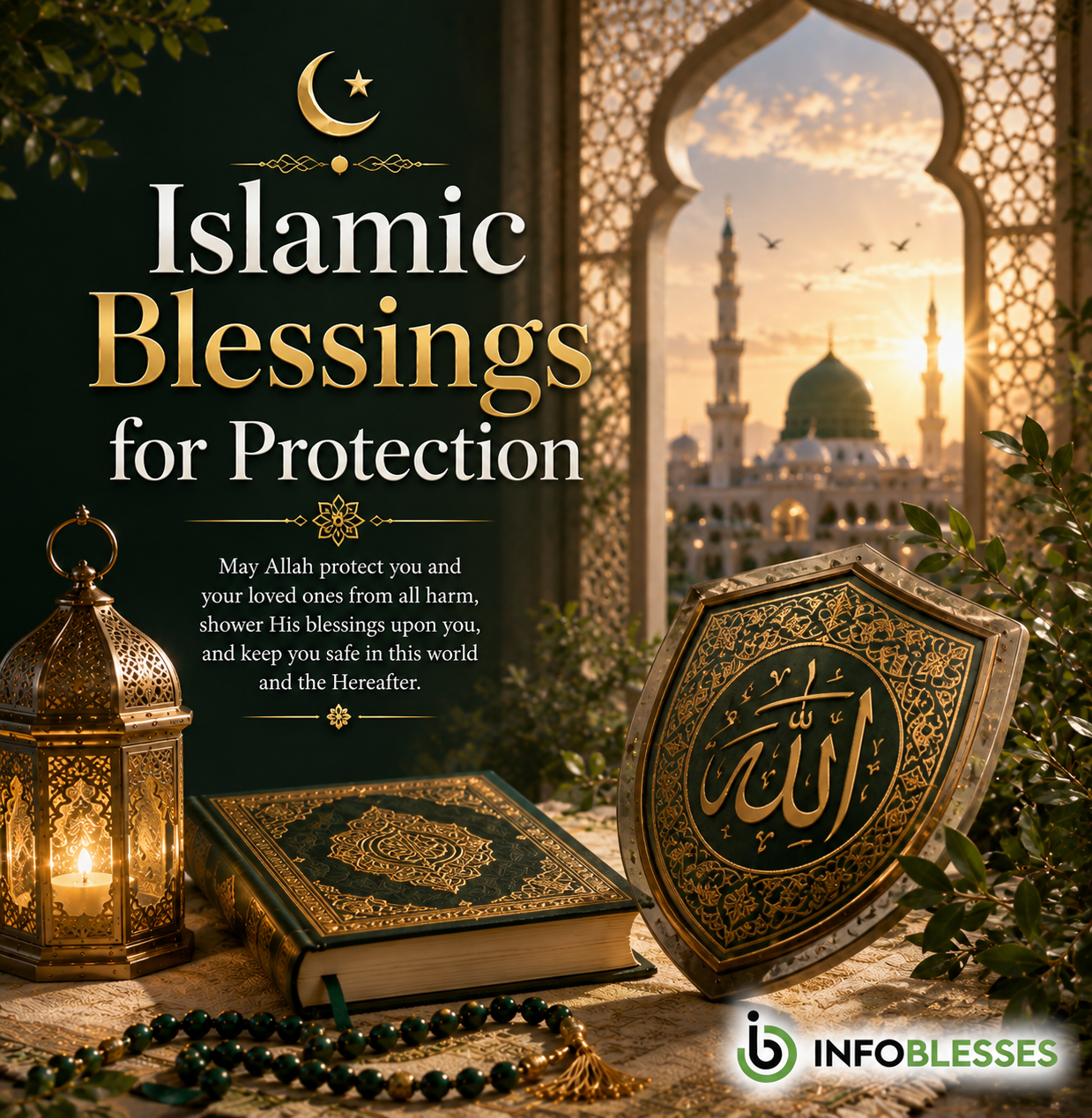
Islamic blessings for protection can bring comfort, strengthen faith, and remind believers that true safety ultimately comes from Allah. In Islam, protection is not only about asking to be kept safe from physical harm. It also includes seeking refuge from fear, anxiety, evil, harmful influences, temptation, and anything that may weaken one’s connection with Allah.
The Qur’an encourages believers to remember Allah and place their trust in Him. As stated in Surah Ar-Ra’d, hearts find reassurance through the remembrance of Allah.
Whether you’re beginning your morning, preparing for sleep, traveling, facing uncertainty, or simply looking for greater peace, sincere dua, Qur’an recitation, dhikr, and trust in Allah can become meaningful parts of your daily routine.
Understanding Islamic Protection and Divine Blessings

What Protection Means in Islam
Islam teaches believers to turn toward Allah in times of fear, difficulty, uncertainty, and hope. Protection is therefore closely connected with tawakkul, or placing one’s trust in Allah while also taking responsible action.
A person may ask Allah for protection from physical danger, harmful people, fear, temptation, illness, accidents, and spiritual difficulties. At the same time, Islam encourages believers to use wisdom and practical means to stay safe.
This balance is important. Trusting Allah does not mean ignoring sensible precautions. Rather, a believer can make dua while taking appropriate steps to protect themselves and others.
For example, someone traveling may pray for a safe journey while also checking the vehicle, following traffic laws, carrying necessary documents, and planning the route. Someone concerned about their family may pray for their safety while also creating a secure and caring home environment.
Why Faith and Trust Bring Inner Peace
Fear can become overwhelming when a person feels completely alone with their problems. Faith offers another perspective: difficulties are not outside Allah’s knowledge.
The Qur’an repeatedly directs believers toward remembrance and reliance upon Allah. Surah Ar-Ra’d 13:28 teaches that hearts find reassurance through the remembrance of Allah.
This doesn’t mean a believer will never feel afraid. Instead, remembrance can help a person respond to fear with patience, hope, and spiritual strength.
A simple routine can make a difference:
- Begin the day with gratitude.
- Remember Allah regularly.
- Read Qur’anic verses with understanding.
- Make sincere dua.
- Ask Allah for guidance and protection.
- Avoid actions that knowingly place yourself or others in unnecessary danger.
- Maintain hope during difficult moments.
In other words, spiritual protection is also about developing a heart that knows where to turn.
The Role of Dua and Dhikr
Dua is a personal conversation of supplication with Allah. A believer can ask for protection using authentic supplications from the Qur’an and Sunnah or make sincere personal requests in their own words.
The Qur’an says, “Call upon Me; I will respond to you” in Surah Ghafir 40:60.
Dhikr, or remembrance of Allah, is another important part of Islamic spiritual life. It can include phrases of praise, glorification, gratitude, and seeking refuge in Allah.
Protection therefore isn’t limited to one special moment. It can become part of everyday worship.
A person can remember Allah while beginning work, leaving home, traveling, preparing for sleep, spending time with family, or facing an uncertain situation.
A Balanced Understanding of Safety
It’s also important to avoid treating every difficulty as proof of a supernatural problem. Islam encourages wisdom, patience, prayer, and responsible action.
If someone is dealing with a real-world danger, they should seek appropriate practical help. Dua should accompany responsible action rather than replace it.
The most beautiful approach is balanced: pray sincerely, trust Allah deeply, and take wise steps.
Powerful Qur’anic Verses for Protection and Peace

Ayat al-Kursi
Ayat al-Kursi is Qur’an 2:255, from Surah Al-Baqarah. It describes Allah’s absolute authority, knowledge, greatness, and sustaining power.
Its meaning directs the heart toward Allah’s sovereignty. The verse reminds believers that Allah does not experience tiredness or sleep and that His knowledge encompasses creation.
For Muslims who include Ayat al-Kursi in their daily worship, reciting it can be a meaningful way to remember Allah and seek His protection.
Read Ayat al-Kursi on Quran.com
Rather than viewing the verse as a magical formula, it is better understood through faith, worship, reflection, and reliance upon Allah.
Surah Al-Falaq
Surah Al-Falaq is the 113th chapter of the Qur’an. It begins with a direct instruction to seek refuge in the Lord of daybreak.
The Surah asks Allah for refuge from various forms of harm, including the harm that may come through darkness, harmful influences, envy, and other dangers.
Its short length makes it practical for regular recitation and memorization.
For many Muslims, Surah Al-Falaq is especially meaningful when thinking about protection from external harm.
Surah An-Nas
Surah An-Nas is the 114th and final chapter of the Qur’an. It teaches believers to seek refuge in the Lord, King, and God of humanity.
Its focus is particularly powerful because it addresses harmful whispers and influences that can affect the human heart and mind.
Together, Surah Al-Falaq and Surah An-Nas are commonly remembered as the Mu’awwidhatayn, the two chapters through which believers seek refuge.
These chapters encourage an important spiritual habit: when something frightens or troubles you, turn toward Allah rather than allowing fear to control your heart.
Surah Al-Ikhlas
Surah Al-Ikhlas focuses on the oneness and uniqueness of Allah. Although it is not simply a “protection prayer,” its emphasis on tawhid makes it spiritually significant.
Understanding Allah’s oneness can strengthen faith and remind believers that ultimate dependence belongs to Him alone.
Reading Qur’an should not be reduced to a checklist. Take a moment to understand the message, reflect upon it, and allow it to shape your character.
A Simple Qur’anic Protection Routine
A peaceful routine might include:
- Begin with sincere intention.
- Recite Ayat al-Kursi.
- Recite Surah Al-Ikhlas.
- Recite Surah Al-Falaq.
- Recite Surah An-Nas.
- Make personal dua for yourself and your family.
- End with trust in Allah.
The exact routine a person follows should be based on authentic Islamic teachings and, where necessary, guidance from a trusted qualified scholar.
Daily Islamic Blessings for Protection

Morning Protection
Morning is a beautiful time to begin the day with remembrance. Before becoming overwhelmed by messages, work, responsibilities, and daily worries, take a few quiet moments for Allah.
You might begin with:
“Alhamdulillah” — All praise belongs to Allah.
Then make a sincere request:
“O Allah, protect me throughout this day, guide my decisions, keep me away from harm, and strengthen my faith.”
Morning remembrance can help establish a positive spiritual direction for the hours ahead.
The goal isn’t to rush through words. Slow down and think about what you’re asking for.
Evening Protection
Evening is another natural opportunity to reconnect with Allah.
After a busy day, the heart may carry stress, disappointment, or uncertainty. Dhikr and Qur’an recitation can create a quiet transition between daytime responsibilities and nighttime rest.
Consider spending a few minutes reviewing your day:
- What blessings did I receive?
- What mistakes should I seek forgiveness for?
- Whom should I forgive?
- What should I improve tomorrow?
- What am I worried about that I need to entrust to Allah?
This type of reflection turns ordinary time into an opportunity for spiritual growth.
Protection Before Sleeping
Bedtime can be an especially meaningful moment for remembrance.
Instead of ending the day with endless scrolling or worry, create a simple routine that includes prayer, remembrance, and reflection.
Many Muslims recite Qur’anic passages and established supplications before sleep. Ayat al-Kursi and the last three Surahs—Al-Ikhlas, Al-Falaq, and An-Nas—are commonly included in bedtime remembrance.
The purpose is not simply to “perform protection” mechanically. It is to end the day remembering Allah.
Protection While Traveling
Travel brings excitement, but it can also bring uncertainty. Islamic tradition includes supplications for travel, encouraging believers to remember Allah while journeying.
A traveler can ask:
“O Allah, make my journey safe, protect me from harm, guide me toward what is good, and return me safely to my loved ones.”
At the same time, practical preparation matters.
Check your vehicle, follow safety rules, carry essential items, monitor weather conditions, and plan appropriately. Faith and responsibility work together.
Building a Consistent Routine
Consistency is often more valuable than trying to create an extremely complicated schedule.
A simple daily plan could look like this:
| Time | Spiritual Practice |
|---|---|
| Morning | Gratitude, dhikr, protection supplications |
| After prayers | Short remembrance and personal dua |
| During stress | Pause and remember Allah |
| Evening | Qur’an, dhikr, reflection |
| Before sleep | Established bedtime remembrance |
| Before travel | Travel supplication and practical preparation |
The key is sincerity and consistency.
Heartfelt Islamic Blessings, Duas and Messages

Short Protection Blessings
Sometimes a short message is all someone needs.
Here are original Islamic-inspired messages you can share with family and friends:
May Allah surround you with His mercy, strengthen your faith, and protect you from every form of harm. Ameen.
May Allah place peace in your heart, light in your path, and blessings in every step you take.
May Allah keep you safe wherever you go and bring you home with peace and gratitude.
May Allah protect your heart from fear, your mind from despair, and your life from unnecessary harm.
May your days be filled with faith, patience, mercy, and the blessings of Allah.
Blessings for Family and Loved Ones
Praying for loved ones is a beautiful way to express care.
You can send:
May Allah protect my family, strengthen our love for one another, forgive our shortcomings, and keep our home filled with peace and faith. Ameen.
Another message could be:
May Allah guard your family, bless your home, increase your happiness, and guide every member of your family toward what is good.
For children, parents may say:
May Allah guide you, protect you, give you beneficial knowledge, surround you with righteous people, and keep your heart close to Him. Ameen.
These messages can be used in text messages, greeting cards, Islamic social media posts, or personal prayers.
Messages for Peace and Safety
When someone is facing a difficult situation, avoid making unrealistic promises about what will happen. Instead, offer hope and prayer.
For example:
May Allah make your difficult situation easier, protect you from harm, give you patience, and open doors of goodness that you cannot yet see.
Or:
May Allah replace your fear with calm, your uncertainty with guidance, and your hardship with relief. Keep faith and keep making dua.
Islamic Blessings for Someone Traveling
May Allah accompany you on your journey, protect you on every road, make your travel easy, and return you safely to those who love you. Ameen.
Islamic Blessings for a New Beginning
May Allah bless this new chapter of your life, protect you from what is harmful, guide you toward what is beneficial, and fill your future with peace and barakah.
Islamic Blessings During Difficult Times
May Allah give you strength when you feel weak, patience when life becomes difficult, and hope when the road ahead seems unclear. May He protect you and guide you toward ease. Ameen.
These messages are best shared with sincerity. The words matter, but the intention behind them matters too.
FAQs About Islamic Blessings for Protection

What is the best Islamic prayer for protection?
There isn’t one single sentence that should be treated as a universal formula for every situation. Muslims can use authentic supplications from the Qur’an and Sunnah and make sincere personal dua to Allah.
Ayat al-Kursi, Surah Al-Falaq, and Surah An-Nas are particularly well known in discussions of remembrance and seeking refuge.
The most important qualities are sincerity, correct understanding, faith, and reliance upon Allah.
Which Surahs are commonly recited for protection?
Surah Al-Falaq and Surah An-Nas are especially associated with seeking refuge in Allah. Surah Al-Ikhlas is also commonly recited alongside them, while Ayat al-Kursi from Surah Al-Baqarah is widely remembered as an important verse.
The Qur’an itself presents refuge-seeking as a spiritual act of turning toward Allah.
Can I make dua for someone else’s protection?
Yes. You can sincerely ask Allah to protect your parents, children, spouse, friends, relatives, neighbors, and the wider Muslim community.
For example:
“O Allah, protect those I love, guide them toward what is good, keep them away from harm, and grant them faith, health, peace, and righteous company.”
You can also make dua for people who are facing hardship or danger.
What should I recite before sleeping?
Muslims commonly include established bedtime remembrance in their nighttime routine. Ayat al-Kursi and the final three Surahs—Al-Ikhlas, Al-Falaq, and An-Nas—are frequently included.
It’s beneficial to learn the authentic wording and practice it consistently rather than relying on random social-media claims about supposedly guaranteed spiritual effects.
How can I make protection part of my daily routine?
Keep it simple.
Choose a few established practices for morning and evening, recite Qur’an regularly, make personal dua, perform your prayers, and remember Allah throughout the day.
Consistency matters. A short sincere routine that you maintain is often easier than creating an elaborate routine that you abandon after a few days.
Does Islamic protection replace practical safety?
No. Spiritual trust and practical responsibility should work together.
If you’re driving, wear a seat belt. If you’re traveling, prepare properly. If there’s a genuine physical threat, seek appropriate help. If you’re dealing with a serious emotional or personal problem, speak with qualified and trustworthy people.
Dua is not a reason to ignore sensible action.
Can Islamic blessings help bring peace to the heart?
The Qur’an directly connects remembrance of Allah with reassurance of the heart in Surah Ar-Ra’d 13:28.
This doesn’t mean every problem immediately disappears. Rather, remembrance can help a believer develop patience, hope, perspective, and trust while facing life’s challenges.
Conclusion: 
Islamic blessings for protection are ultimately about turning the heart toward Allah with sincerity, hope, and trust.
Protection can mean asking Allah to keep you safe from physical danger. It can also mean asking for strength against fear, temptation, harmful influences, despair, and anything that distances you from faith.
The Qur’an provides powerful reminders of Allah’s authority and mercy. Ayat al-Kursi emphasizes Allah’s greatness and sustaining power, while Surah Al-Falaq teaches believers to seek refuge in the Lord of daybreak.
At the heart of this practice is remembrance. Surah Ar-Ra’d reminds believers that hearts find reassurance through the remembrance of Allah.
So, when you feel uncertain, pause and remember Allah.
When you’re worried about someone you love, make dua for them.
When you’re beginning a journey, ask Allah for safety.
When you’re going to sleep, end your day with remembrance.
And when life becomes difficult, don’t lose hope.
A meaningful Islamic protection routine doesn’t have to be complicated. It can begin with a sincere prayer, a few verses of Qur’an, regular dhikr, responsible choices, and a heart that continually returns to Allah.
May Allah protect you and your loved ones, strengthen your iman, fill your hearts with peace, guide you toward what is good, and grant you safety in this life and the Hereafter. Ameen.

Welcome to Info Blesses I am Rana Ahtasham an AI Powered SEO and Content Writer With 3 year experience.I help websites rank highter, grow traffic, and look amazing. My goal is to make SEO and web design simple and effective for everyone.Lets achieve more togather!