
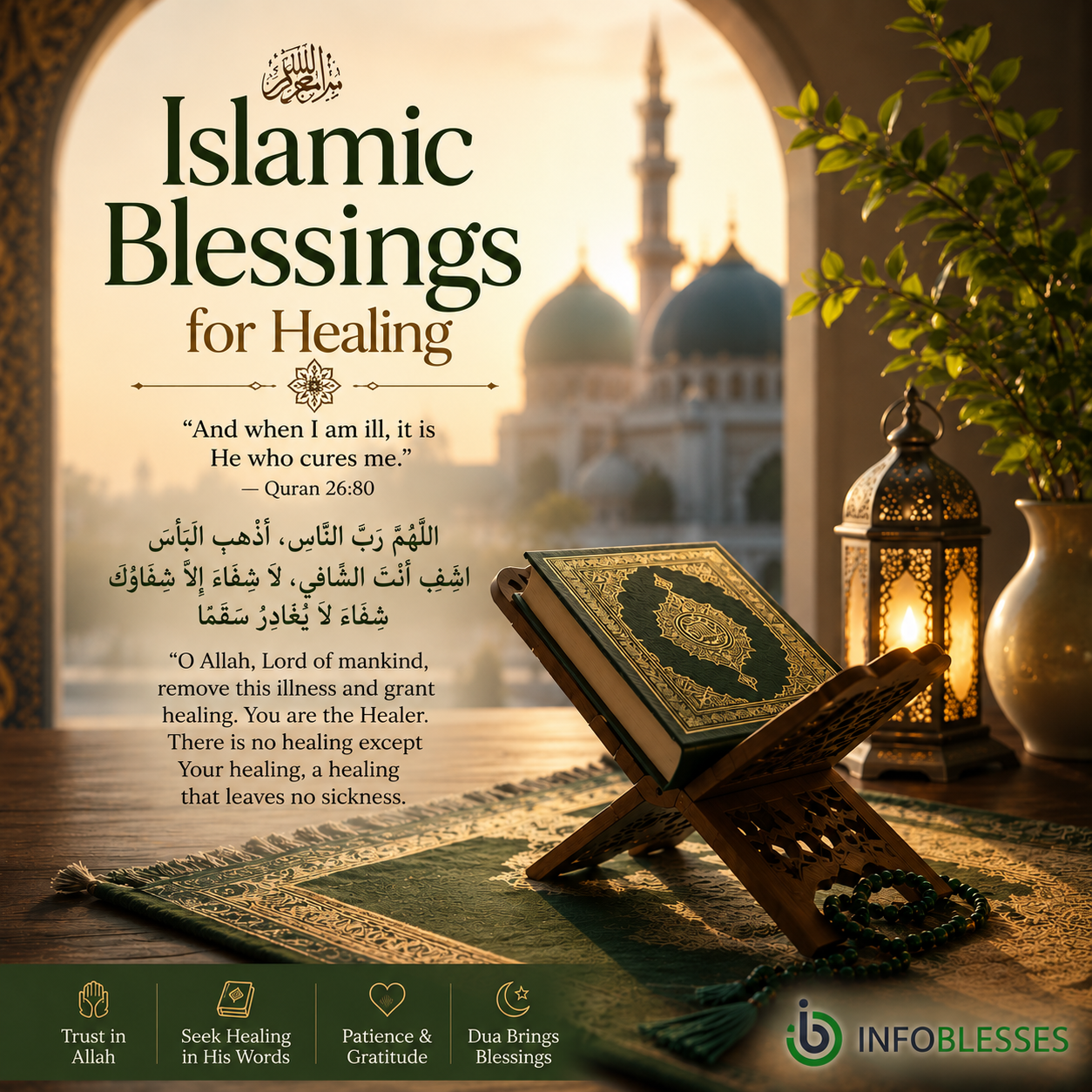
Illness is one of life’s greatest tests, yet Islam teaches that every hardship carries wisdom, mercy, and an opportunity to grow closer to Allah. Whether the pain is physical, emotional, or spiritual, Muslims believe that true healing comes only from Allah, the Most Merciful and the Ultimate Healer.
Throughout the Quran and the Sunnah, believers are encouraged to seek treatment while placing complete trust in Allah. Medicine is important, but faith, patience, and sincere supplication (dua) are equally essential. Every illness can become a source of forgiveness, spiritual purification, and increased reward when faced with patience.
Many Muslims search for Islamic Blessings for Healing during times of sickness because they want authentic duas and Quranic guidance that bring peace to the heart and hope to the soul. The Quran reminds believers that Allah’s mercy is greater than every difficulty, and His power extends over every disease and every cure.
Healing in Islam is much broader than simply recovering from physical illness. It also includes healing from anxiety, grief, sadness, depression, fear, broken relationships, spiritual weakness, and emotional pain. Every believer experiences different trials, but Allah’s mercy encompasses them all.
This comprehensive guide explores authentic Islamic prayers, Quranic verses, prophetic supplications, and practical ways to seek healing while strengthening your relationship with Allah.
What Is Healing in Islam?

Healing in Islam is not limited to medicine alone. Rather, it combines faith, patience, prayer, righteous actions, and lawful medical treatment.
Islam encourages believers to care for both the body and the soul. Physical health allows Muslims to worship more effectively, while spiritual health strengthens the heart during life’s challenges.
The Arabic word Shifa means healing, cure, restoration, and recovery. The Quran repeatedly describes itself as a source of healing for believers.
Allah says:
“And We send down of the Qur’an that which is healing and mercy for the believers.”
(Quran 17:82)
This beautiful verse reminds Muslims that the Quran heals hearts before it heals bodies. It removes doubt, strengthens faith, increases hope, and fills the believer with tranquility.
Islam teaches that illnesses may serve several purposes:
- A test of faith
- A means of forgiveness
- A source of immense reward
- A reminder to return to Allah
- A purification from sins
- A lesson in patience
The Prophet Muhammad ﷺ explained that even a small pain experienced by a believer removes sins by Allah’s permission.
Instead of seeing illness as a punishment, Muslims are encouraged to see it as an opportunity to draw closer to Allah through worship, gratitude, remembrance, and sincere dua.
Allah Is Ash-Shafi – The Ultimate Healer

Among Allah’s beautiful names is Ash-Shafi, meaning The Healer.
Doctors prescribe medicine.
Families provide support.
Friends offer encouragement.
But the cure itself belongs only to Allah.
The Prophet Muhammad ﷺ would often recite the following dua when visiting the sick:
“O Allah, Lord of mankind, remove the suffering and heal, for You are the Healer. There is no healing except Your healing, a healing that leaves behind no illness.”
This authentic supplication teaches Muslims several important lessons.
First, healing belongs entirely to Allah.
Second, every illness has hope.
Third, believers should never lose trust in Allah’s mercy.
Even when medical treatment seems difficult or uncertain, Muslims continue asking Allah because His power has no limits.
One of the most comforting stories comes from Prophet Ibrahim (Abraham عليه السلام), who declared:
“And when I become ill, it is He who cures me.”
(Quran 26:80)
This verse beautifully summarizes Islamic belief regarding health and recovery.
Seeking treatment is encouraged, but complete reliance remains upon Allah.
Why Muslims Turn to Dua During Illness

Dua is one of the greatest acts of worship in Islam. During illness, it becomes a direct conversation between the servant and Allah.
Unlike ordinary conversations, dua has no barriers.
Allah hears every whispered prayer.
He understands every tear.
He knows every hidden fear.
The Prophet ﷺ encouraged believers never to stop making dua because Allah loves those who continuously ask Him.
When making healing duas, Muslims should:
- Begin by praising Allah.
- Send blessings upon Prophet Muhammad ﷺ.
- Raise the hands if appropriate.
- Face the Qiblah when possible.
- Ask sincerely.
- Repeat the dua.
- Have certainty that Allah hears every prayer.
- End by praising Allah again.
One of the greatest qualities of dua is that it brings inner peace, even before physical healing arrives.
Many believers find that sincere supplication reduces anxiety, increases hope, and strengthens patience during difficult times.
15 Powerful Islamic Blessings for Healing

Below are authentic Islamic prayers and Quranic supplications that Muslims commonly recite while seeking Allah’s healing.
1. Dua of the Prophet ﷺ
O Allah, Lord of mankind, remove the harm and heal. You are the Healer. There is no healing except Your healing—a healing that leaves no illness behind.
This is among the most authentic healing duas in Islam.
2. Surah Al-Fatihah
Known as the Opening Chapter of the Quran, Surah Al-Fatihah has long been recited for spiritual healing and comfort. It reminds believers of Allah’s mercy, guidance, and lordship over all creation.
3. Ayat al-Kursi
This powerful verse from Surah Al-Baqarah is often recited for protection, peace, and seeking Allah’s help during times of illness and hardship.
4. The Last Two Verses of Surah Al-Baqarah
These verses emphasize Allah’s mercy, forgiveness, and support for believers. Many Muslims recite them every night as part of their daily remembrance.
5. Surah Al-Ikhlas, Al-Falaq, and An-Nas
The Prophet Muhammad ﷺ frequently recited these three short chapters and would blow gently into his hands before wiping them over his body, seeking Allah’s protection from harm and illness.
6. Dua for Removing Pain
Place your hand on the area of pain and sincerely ask Allah to remove the discomfort while trusting in His wisdom and mercy. This practice is based on authentic Prophetic guidance.
7. Asking Allah by His Beautiful Names
Invoke Allah using His beautiful names such as Ar-Rahman (The Most Merciful), Ar-Raheem (The Especially Merciful), and Ash-Shafi (The Healer). Calling upon Allah through His names is a beloved form of supplication.
8. Frequent Istighfar (Seeking Forgiveness)
Seeking forgiveness by saying Astaghfirullah regularly softens the heart, increases reliance upon Allah, and reminds believers of His limitless mercy.
9. Sending Blessings Upon the Prophet ﷺ
Reciting Salawat upon Prophet Muhammad ﷺ is a noble act of worship. It is a means of drawing closer to Allah and increasing blessings in one’s life.
10. Reciting the Quran Daily
Making time each day to recite and reflect upon the Quran nourishes the heart and strengthens faith. The words of Allah bring comfort during times of difficulty.
11. Giving Charity (Sadaqah)
Helping those in need is a righteous deed encouraged throughout Islam. Charity can be a means of seeking Allah’s mercy and blessings while facing personal trials.
12. Maintaining Daily Prayers
The five daily prayers keep the believer connected to Allah. Regular prayer provides spiritual strength, discipline, and hope during illness.
13. Making Dua During the Last Third of the Night
The last portion of the night is a special time for sincere supplication. Many Muslims wake for voluntary prayer and ask Allah for healing, forgiveness, and guidance.
14. Praying for Others
Islam encourages believers to pray not only for themselves but also for family, friends, and the wider Muslim community. Praying for others reflects compassion and selflessness.
15. Remaining Patient (Sabr)
Patience is one of the greatest virtues in Islam. While recovery may take time, trusting Allah’s plan and remaining steadfast can bring immense spiritual reward and inner peace.
Benefits of Islamic Healing Through Faith

Seeking healing through Islamic teachings offers benefits that go beyond physical recovery. A believer who combines sincere dua, regular worship, and lawful medical treatment often experiences renewed hope, emotional resilience, and a deeper connection with Allah.
Some of the key benefits include:
- Strengthening trust (tawakkul) in Allah.
- Finding peace during difficult times.
- Increasing patience and gratitude.
- Encouraging regular remembrance of Allah (dhikr).
- Building hope and optimism even in prolonged illness.
- Deepening appreciation for health and well-being.
- Earning spiritual reward through perseverance.
Islam does not discourage medical care. Rather, it teaches Muslims to seek treatment while recognizing that every cure ultimately comes from Allah alone. Faith and medicine complement one another, guiding the believer toward both physical recovery and spiritual growth.
Frequently Asked Questions (FAQs)
1. What is the best Islamic dua for healing?
One of the most authentic supplications is:
“O Allah, Lord of mankind, remove the suffering and heal, for You are the Healer. There is no healing except Your healing, a healing that leaves behind no illness.”
This dua was taught by the Prophet Muhammad ﷺ and is widely recited when praying for someone who is ill.
2. Can I make dua for someone else’s healing?
Yes. Islam strongly encourages Muslims to pray for others. Making sincere dua for family members, friends, and fellow Muslims is an act of kindness and compassion. The angels also pray for the person who sincerely prays for others.
3. Does the Quran mention healing?
Yes. The Quran describes itself as a source of healing and mercy for believers.
Allah says:
“And We send down of the Qur’an that which is healing and mercy for the believers.”
(Quran 17:82)
This healing includes spiritual guidance, comfort for the heart, and strengthening of faith.
4. Should Muslims rely only on dua when they are sick?
No. Islam teaches a balanced approach. Muslims should make sincere dua, trust Allah, and also seek appropriate medical treatment. The Prophet Muhammad ﷺ encouraged people to seek remedies while remembering that the ultimate cure comes from Allah.
5. When is the best time to make a healing dua?
Some of the most recommended times include:
- During the last third of the night.
- While in sujood (prostration).
- Between the Adhan and Iqamah.
- On Fridays.
- While fasting.
- During rainfall.
- At any moment of sincere need.
However, Allah hears every sincere supplication at any time.
6. Can illness be a blessing in Islam?
Yes. While illness is difficult, Islam teaches that it can become a means of spiritual purification, forgiveness of sins, and increased reward when endured with patience and trust in Allah.
The Prophet Muhammad ﷺ explained that even minor hardships experienced by a believer can erase sins by Allah’s permission.
7. Which Surahs are commonly recited for comfort and healing?
Many Muslims regularly recite:
- Surah Al-Fatihah
- Ayat al-Kursi (Surah Al-Baqarah 2:255)
- Surah Al-Ikhlas
- Surah Al-Falaq
- Surah An-Nas
These chapters are part of the authentic daily remembrances taught by the Prophet ﷺ and are recited for protection and spiritual comfort.
Key Takeaways
Healing in Islam is a journey that combines faith, patience, prayer, and taking the lawful means available for recovery. Whether the illness affects the body, mind, or heart, a believer is encouraged to remain steadfast and hopeful.
Remember these important points:
- Allah alone is Ash-Shafi (The Healer).
- Continue making sincere dua without losing hope.
- Follow authentic teachings from the Quran and Sunnah.
- Seek appropriate medical care alongside spiritual practices.
- Maintain your daily prayers and remembrance of Allah.
- Practice patience (sabr) and gratitude in all circumstances.
- Trust that Allah’s wisdom is perfect, even when the outcome is unknown.
Every challenge presents an opportunity to draw closer to Allah, strengthen faith, and earn reward.
Conclusion:

Seeking Islamic Blessings for Healing is more than reciting a few words during times of illness. It is about turning to Allah with sincerity, maintaining hope in His mercy, and trusting His perfect wisdom. The Quran and the authentic Sunnah remind believers that every hardship carries meaning and that Allah never abandons those who call upon Him.
True healing may come in different forms. Sometimes Allah grants a complete physical recovery. At other times, He provides emotional strength, spiritual peace, patience, or the ability to endure a trial with dignity and faith. Every blessing, whether seen or unseen, comes from Him alone.
As you continue your journey, remember to perform your prayers, recite the Quran, make heartfelt duas, seek beneficial treatment, and support others who may also be facing hardship. By combining faith with positive action, you place your trust where it truly belongs—with Allah, the Most Merciful and the Ultimate Healer.
May Allah grant healing to every sick person, ease every burden, forgive our shortcomings, and bless us with strong faith, sound health, and steadfast hearts. Ameen.