
Sleep is one of Allah’s greatest blessings. After a long day of work, worship, and responsibilities, our bodies and minds need rest. Islam beautifully teaches that even something as ordinary as sleeping can become an act of worship when done with the right intention and by following the Sunnah of Prophet Muhammad ﷺ.
The Prophet ﷺ taught many authentic duas (supplications) and Sunnah practices that bring peace before sleep, protect believers from harm, strengthen faith, and remind Muslims that every night is a return to Allah. Going to bed with the remembrance (dhikr) of Allah fills the heart with tranquility and helps a believer end the day in gratitude and begin the next one with renewed faith.
In this comprehensive guide, you’ll discover authentic Islamic blessings before sleep, powerful duas from the Sunnah, the spiritual benefits of remembering Allah at night, and practical habits every Muslim can follow before going to bed.
Why Islam Encourages Remembering Allah Before Sleep

Islam teaches that every moment of life can become worship when it is connected to Allah. Sleep is no exception.
Allah says in the Holy Quran:
“It is He Who takes your souls by night and knows what you have committed by day.”
(Quran 6:60)
This verse reminds believers that sleep resembles a temporary departure of the soul. Each night is a reminder that life itself is in Allah’s control.
Before sleeping, Muslims are encouraged to:
- Seek Allah’s forgiveness.
- Remember Him through dhikr.
- Recite Quran.
- Place complete trust (Tawakkul) in Allah.
- Sleep with a clean heart.
These simple acts transform ordinary sleep into a spiritually rewarding experience.
Authentic Dua Before Sleeping

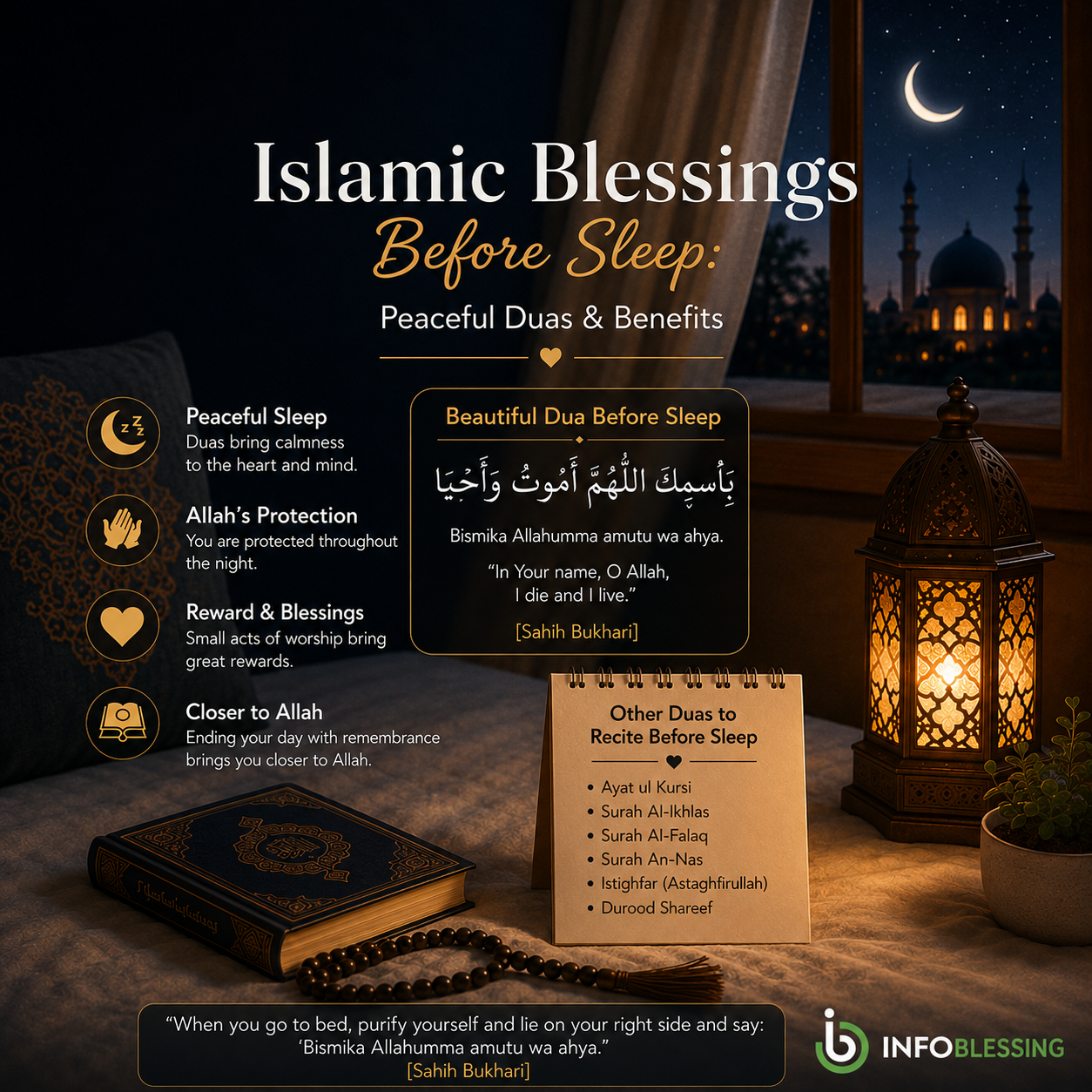
One of the most authentic duas taught by Prophet Muhammad ﷺ is:
Arabic:
بِاسْمِكَ اللَّهُمَّ أَمُوتُ وَأَحْيَا
Transliteration:
Bismika Allahumma amutu wa ahya.
Meaning:
“In Your Name, O Allah, I die and I live.”
This beautiful dua reminds believers that both life and death belong entirely to Allah.
The Prophet ﷺ regularly recited this before sleeping.
Ayat al-Kursi Before Sleep

One of the greatest protections before sleeping is reciting Ayat al-Kursi (Quran 2:255).
According to an authentic hadith, whoever recites Ayat al-Kursi before sleeping will have a guardian appointed by Allah throughout the night, and Satan will not come near them until morning.
This makes Ayat al-Kursi one of the most powerful nightly practices in Islam.
Benefits include:
- Protection from Shaytan
- Increased peace of mind
- Spiritual security
- Stronger connection with Allah
Reciting the Last Two Verses of Surah Al-Baqarah

The Prophet ﷺ said that whoever recites the last two verses of Surah Al-Baqarah at night, they will be sufficient for them.
These verses contain:
- Faith
- Submission
- Mercy
- Forgiveness
- Reliance upon Allah
Many scholars explain that “sufficient” includes protection, blessings, and spiritual comfort.
Recite Surah Al-Ikhlas, Al-Falaq, and An-Nas

Every night before sleeping, the Prophet ﷺ would:
- Recite Surah Al-Ikhlas
- Recite Surah Al-Falaq
- Recite Surah An-Nas
After reciting them three times, he would blow lightly into his hands and wipe them over his body.
This Sunnah protects believers from:
- Evil eye
- Black magic
- Harmful whispers
- Spiritual dangers
Following this practice daily brings comfort and confidence in Allah’s protection.
Say SubhanAllah, Alhamdulillah, and Allahu Akbar

Fatimah (RA), the beloved daughter of the Prophet ﷺ, once requested a servant due to household work.
Instead, the Prophet ﷺ taught her a greater gift:
Before sleeping say:
- SubhanAllah – 33 times
- Alhamdulillah – 33 times
- Allahu Akbar – 34 times
This remembrance strengthens both body and soul.
Many Muslims continue this beautiful Sunnah every night.
Make Istighfar Before Sleeping

No one passes an entire day without making mistakes.
Therefore, before sleeping, believers should sincerely ask Allah for forgiveness.
A simple phrase is:
Astaghfirullah wa atubu ilayh.
Meaning:
“I seek Allah’s forgiveness and repent to Him.”
Sleeping after repentance brings peace to the heart.
The Connection Between Nighttime Dhikr and a Peaceful Muslim Heart

Islam teaches that true peace does not only come from physical comfort but from remembering Allah. When a believer ends the day with dhikr, the heart becomes calmer and more connected to its Creator.
Nighttime remembrance creates a special moment between a servant and Allah. Away from daily distractions, a Muslim can reflect on blessings, ask for forgiveness, and place all worries in Allah’s hands.
Regularly practicing dhikr before sleep can help a believer:
- Develop stronger trust in Allah.
- Feel emotional and spiritual comfort.
- Replace negative thoughts with remembrance of Allah.
- Start each morning with renewed faith.
The quiet moments before sleep are a beautiful opportunity to strengthen the relationship between the heart and Allah.
How Sleeping With Faith Brings Blessings Into the Next Day

A Muslim’s night routine can influence the way they begin the next day. When someone sleeps after making dua, seeking forgiveness, and remembering Allah, they wake up with a heart full of gratitude and hope.
Islam encourages believers to begin and end their days with Allah’s remembrance. A peaceful night filled with faith prepares the soul for a productive and blessed morning.
The benefits of sleeping with remembrance include:
- Waking up with a grateful heart.
- Increasing awareness of Allah’s mercy.
- Building consistency in worship.
- Creating a positive spiritual lifestyle.
Every night is a chance to renew faith, seek Allah’s protection, and prepare the soul for another day of blessings.
Sleep with Wudu

The Prophet ﷺ advised Muslims to perform wudu before sleeping whenever possible.
Sleeping in a state of purification has numerous blessings:
- Angels make dua for the believer.
- Increased spiritual cleanliness.
- Better remembrance of Allah.
- Following the Sunnah.
Many scholars recommend making this a daily habit.
Sunnah Sleeping Position

The Prophet Muhammad ﷺ slept on his right side.
He also placed his right hand beneath his cheek.
Sleeping this way reminds believers to follow the Sunnah even in rest.
Benefits of Islamic Blessings Before Sleep

Following the Sunnah before sleeping offers many spiritual and emotional benefits.
1. Protection from Shaytan
Authentic duas and Quranic recitations protect believers throughout the night.
2. Peace of Heart
Remembering Allah removes anxiety and replaces it with tranquility.
3. Better Sleep
A calm heart naturally experiences deeper and more peaceful rest.
4. Increased Faith
Daily remembrance strengthens one’s relationship with Allah.
5. Forgiveness
Ending the day with repentance allows believers to sleep with hope in Allah’s mercy.
6. Following the Sunnah
Every Sunnah practiced earns rewards and increases love for Prophet Muhammad ﷺ.
7. Gratitude
Thanking Allah before sleeping reminds us of His countless blessings.
A Simple Islamic Bedtime Routine

A practical nightly routine inspired by the Sunnah includes:
- Pray Isha on time.
- Perform wudu before bed.
- Recite Ayat al-Kursi.
- Recite the last two verses of Surah Al-Baqarah.
- Recite Surah Al-Ikhlas, Al-Falaq, and An-Nas three times.
- Say SubhanAllah (33), Alhamdulillah (33), Allahu Akbar (34).
- Make sincere istighfar.
- Read the bedtime dua.
- Sleep on your right side.
- Trust Allah completely.
Even if you cannot complete every step every night, consistently practicing as much as you can is a beneficial habit.
Tips for Developing the Habit
Building a nightly routine takes consistency. Keep a small Quran or a booklet of authentic duas near your bed. If you use a phone, avoid distractions before sleep and instead open a trusted Quran or dua app. Teach these Sunnahs to your children so they grow up remembering Allah before sleep. If you miss a practice one night, simply begin again the next night without discouragement. The goal is steady remembrance of Allah and sincere effort.
Frequently Asked Questions (FAQs)
1. What is the best Islamic dua before sleeping?
The most well-known bedtime dua is: “Bismika Allahumma amutu wa ahya” (In Your name, O Allah, I die and I live). It was regularly recited by Prophet Muhammad ﷺ before sleep.
2. Why should Muslims recite duas before going to bed?
Reciting bedtime duas helps believers remember Allah, seek His protection, and end the day with gratitude and trust in Him.
3. Which Quran verse should be recited before sleeping?
Ayat al-Kursi (Quran 2:255) is one of the most recommended verses to recite before sleep because it offers Allah’s protection throughout the night.
4. What are the benefits of reciting Ayat al-Kursi before bed?
It protects from Shaytan, brings peace of mind, strengthens faith, and provides spiritual protection until morning.
5. Which Surahs did Prophet Muhammad ﷺ recite before sleeping?
He regularly recited Surah Al-Ikhlas, Surah Al-Falaq, and Surah An-Nas, then blew into his hands and wiped them over his body.
6. Is performing wudu before sleeping recommended in Islam?
Yes. The Prophet ﷺ encouraged Muslims to sleep in a state of purification by performing wudu before going to bed.
7. What is the Sunnah sleeping position?
The Sunnah is to sleep on the right side, placing the right hand under the right cheek.
8. Can bedtime duas help reduce anxiety?
Yes. Remembering Allah before sleep brings peace to the heart, reduces worry, and helps a believer sleep with tranquility.
9. Why is making istighfar before sleeping important?
Seeking Allah’s forgiveness before sleep allows believers to repent sincerely and end the day with hope in His mercy.
10. What dhikr should be recited before sleeping?
The Prophet ﷺ taught Muslims to recite:
- SubhanAllah – 33 times
- Alhamdulillah – 33 times
- Allahu Akbar – 34 times
Conclusion:
Sleep is more than physical rest—it is an opportunity to draw closer to Allah. By following the authentic Sunnah of Prophet Muhammad ﷺ before sleeping, every believer can end the day with gratitude, remembrance, and trust in the Creator. Reciting the prescribed duas, reading portions of the Quran, seeking forgiveness, and sleeping in a state of purification are simple actions with immense spiritual rewards.
May Allah fill our nights with peace, protect us from every harm, forgive our shortcomings, and allow us to awaken each morning with renewed faith and gratitude. Ameen.