Understanding an Islam Place of Worship
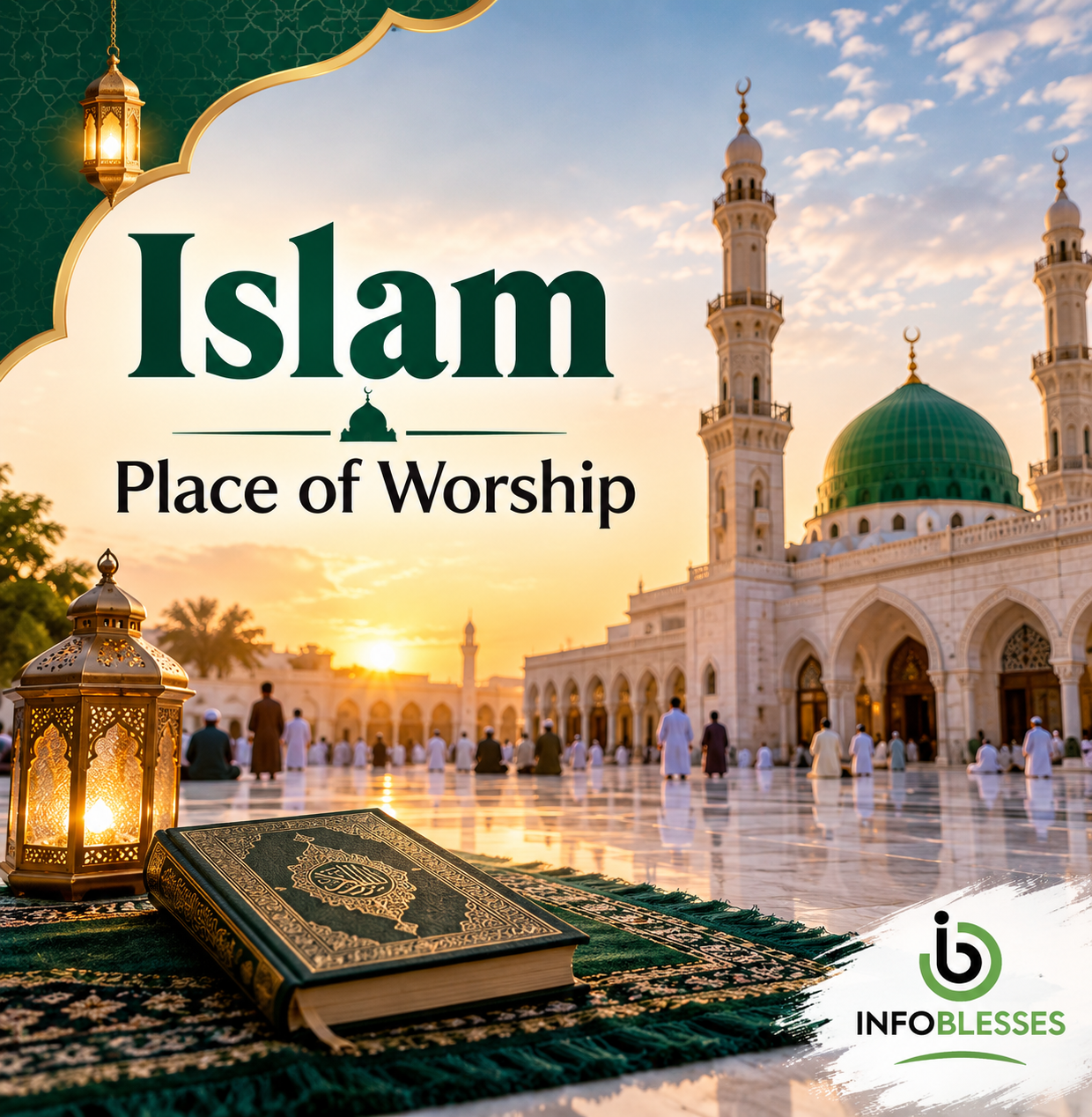
When people search for an Islam place of worship, they are usually looking for one simple answer: a mosque. A mosque is the central place where Muslims gather for prayer, reflection, learning, and community activities. In Arabic, the word masjid means a place of prostration, referring to the act of bowing and placing the forehead on the ground during prayer.
Yet a mosque is much more than a building. It can be a quiet neighborhood prayer space, a historic architectural landmark, a large Friday congregation, or a community center serving thousands of people. Across the Muslim world, mosques take many forms, but their spiritual purpose remains closely connected to worshipping Allah and strengthening the Muslim community.
Islam itself is a monotheistic faith centered on belief in one God, known in Arabic as Allah. Muslims follow the Qur’an and the teachings and example of the Prophet Muhammad. Daily prayer, known as salah, is one of the Five Pillars of Islam, and the mosque provides an important setting for communal worship.
The design of mosques can also tell fascinating stories. A mosque may feature a mihrab indicating the direction of Mecca, a minbar used for sermons, a courtyard, a dome, a minaret, decorative geometric patterns, or beautiful Arabic calligraphy. However, not every mosque contains all these features, and there is no single architectural style that defines every Muslim house of worship. The Metropolitan Museum of Art notes that mosque design varies considerably according to local climate, materials, and cultural traditions.
The following guide explores the meaning, history, architecture, religious role, and community importance of mosques while answering common questions about Islamic worship.
The Meaning of a Mosque
What Is a Mosque?
A mosque is a Muslim house of worship. The Arabic term masjid is associated with prostration, emphasizing the physical act of submitting before God during prayer. This meaning captures an important idea in Islam: worship is not only about a particular building but about devotion, humility, and obedience to Allah.
A mosque can be large or small. Some are grand historical monuments, while others are simple community prayer rooms. What makes a place a mosque is primarily its religious function rather than a particular architectural appearance.
Muslims can pray in many clean and suitable places, so a mosque isn’t the only location where Islamic prayer can take place. Nevertheless, mosques hold a special place because they bring believers together. They provide an environment where people can pray in congregation, listen to religious teaching, meet neighbors, support charitable activities, and celebrate important occasions.
Why Is the Mosque Important in Islam?
The mosque has both a spiritual and social role. For an individual Muslim, entering a mosque can create a sense of peace, focus, and connection with God. For a community, the mosque can act as a shared center where people from different backgrounds stand together in prayer.
This communal aspect is especially visible during Friday prayer. Muslims gather for Jumu’ah, the weekly congregational prayer held on Friday. The gathering usually includes a sermon, known as the khutbah, followed by the congregational prayer.
Historically, mosques have also served educational and intellectual purposes. The Metropolitan Museum of Art explains that mosques have been important centers of education and intellectual life, as well as places of communal worship.
The Five Daily Prayers
One of the most recognizable features of Muslim religious life is the five daily prayers:
- Fajr — the prayer before sunrise.
- Dhuhr — the midday prayer.
- Asr — the afternoon prayer.
- Maghrib — the prayer shortly after sunset.
- Isha — the evening prayer.
These prayers create a regular rhythm throughout the day. Muslims may perform them at home, at work, while traveling, or in a mosque when appropriate.
When Muslims pray together in a mosque, they generally stand in organized rows facing the direction of the Kaaba in Mecca. This direction is called the qibla.
The Qibla and the Mihrab
The qibla is fundamental to mosque organization. The prayer hall is arranged so worshippers know which direction to face.
A mihrab is a niche or marked feature in the qibla wall that indicates the direction of Mecca. It often becomes the visual focus of the prayer space. Some mihrabs are relatively simple, while others are richly decorated with tilework, stone, wood, or calligraphy.
The mihrab demonstrates how practical function and artistic expression can work together. It helps worshippers orient themselves while also becoming an important element of Islamic architecture.
Friday Prayer and the Minbar
Friday has special significance in Muslim communal life because of Jumu’ah, the congregational Friday prayer.
A mosque used for a large Friday congregation may contain a minbar, or pulpit. The imam or speaker uses the minbar for the khutbah, which commonly addresses religious guidance, moral responsibilities, community concerns, and remembrance of God.
The exact practices and arrangements can vary between communities and Islamic traditions. However, the Friday gathering remains one of the most visible expressions of collective Muslim worship.
Mosque Architecture: A Beautiful Blend of Faith and Culture
The Prayer Hall
The prayer hall is the heart of many mosques. It provides a large, open area where worshippers can stand in rows during communal prayer.
Unlike some religious buildings where seating is central, traditional mosque prayer spaces are generally designed to accommodate standing, bowing, and prostration. This helps explain why mosque interiors often contain broad areas covered with carpets or other clean flooring.
The interior can range from extremely simple to highly elaborate. Some mosques emphasize natural light and open space, while others feature detailed tilework, carved wood, marble, stained glass, or painted decoration.
The Minaret
A minaret is a tower associated with many mosques. Historically, minarets were connected with the public announcement of the call to prayer, known as the adhan. Today, loudspeakers are commonly used, and the call may be delivered from different parts of a mosque.
It’s important to remember that a minaret is not a universal requirement for a mosque. Many mosques have no minaret at all. The tower became a prominent feature of Islamic architecture over time and developed differently in different regions.
The Dome
Domes are strongly associated with Islamic architecture, but they aren’t required for a mosque to function as a place of worship.
Large domes became prominent in several Islamic architectural traditions because they can create impressive interior spaces and help emphasize the central prayer area. Ottoman mosques, for example, are famous for their monumental domed structures.
At the same time, many mosques around the world use flat roofs, vaulted ceilings, multiple smaller domes, or completely different designs.
The Courtyard and Ablution Areas
Many historic mosques include a courtyard, often called a sahn. Courtyards can provide ventilation, light, gathering space, and access to water.
Before prayer, Muslims perform wudu, a ritual purification involving washing specific parts of the body. Mosques therefore commonly provide facilities where worshippers can perform ablution.
Cleanliness has a significant place in Islamic worship. The arrangement of water facilities in mosques reflects both religious practice and practical architectural needs.
Islamic Art and Decoration
One of the most recognizable aspects of mosque interiors is Islamic decorative art.
Common forms include:
- Arabic calligraphy
- Geometric patterns
- Floral and vegetal designs
- Tile mosaics
- Carved wood
- Stonework
- Decorative plaster
- Colored glass
- Repeating mathematical patterns
Arabic calligraphy is especially important because the Qur’an is central to Muslim faith and is traditionally written in Arabic. Qur’anic inscriptions therefore became an influential feature of Islamic art and mosque decoration.
Mosque decoration also varies considerably. Some communities prefer restrained interiors, while others preserve elaborate historic artistic traditions.
Mosques Around the World
There is no single “correct” mosque design.
A mosque in North Africa may look very different from one in Turkey, Iran, Pakistan, Indonesia, West Africa, or Europe. Local building traditions, available materials, climate, history, and artistic preferences all influence mosque architecture.
For example, Iranian mosques are historically associated with large iwans and distinctive tilework, while Ottoman mosques often emphasize large central domes. South Asian mosques may combine Islamic architectural ideas with regional building traditions.
This diversity is one of the most fascinating features of the Islam place of worship. The religious purpose is shared, but architectural expression can be remarkably varied.
For additional educational material on mosque architecture and Islamic art, see The Metropolitan Museum of Art’s guide to the mosque.
Nine Powerful Insights About Mosques
1. A Mosque Is More Than a Building
The mosque represents a place where worshippers gather to remember God, pray, learn, and build community relationships.
2. Muslims Do Not Need a Mosque for Every Prayer
Islamic prayer can be performed in many clean and appropriate locations. The mosque is especially valuable for communal worship.
3. The Qibla Connects Muslims Worldwide
Whether a mosque is in Africa, Asia, Europe, or the Americas, its prayer orientation connects worshippers toward the Kaaba in Mecca.
4. Mosque Architecture Is Not Uniform
There isn’t one universal mosque style. Regional traditions have produced countless architectural forms.
5. The Mihrab Has a Practical Purpose
The mihrab helps identify the qibla direction and often becomes a major visual feature of the prayer hall.
6. Minarets Are Traditional, Not Essential
A mosque can function perfectly well without a minaret. The tower is an architectural tradition rather than the basic definition of a mosque.
7. Mosques Can Support Education
Throughout Islamic history, mosques have been associated with teaching, scholarship, and intellectual activity.
8. Community Service Matters
Many contemporary mosques support charitable work, food distribution, educational programs, counseling, youth activities, and assistance for people in need.
9. Islamic Art Often Combines Beauty and Meaning
Calligraphy, geometry, and vegetal designs can transform mosque interiors while connecting visual beauty with religious ideas and cultural heritage.
Mosque Etiquette for Visitors
What Should Visitors Wear?
Visitors should generally dress modestly when entering a mosque. Clothing should cover the body appropriately, and visitors should follow any specific local guidelines.
In some mosques, women may be asked to cover their hair, particularly in more conservative communities. Rules differ, so it’s best to follow the guidance provided by the mosque.
Should Shoes Be Removed?
In many mosques, shoes are removed before entering the main prayer area. This helps keep carpets and floors clean because worshippers place their foreheads on the ground during prayer.
If you’re visiting a mosque for the first time, simply look for shoe racks or ask a member of the community.
Can Non-Muslims Visit a Mosque?
Many mosques welcome respectful non-Muslim visitors, although policies vary. Some locations have special visiting hours, guided tours, or restrictions around prayer times.
Visitors should avoid walking directly in front of people who are praying, keep noise low, and ask before taking photographs.
The golden rule is simple: observe, respect, and ask when unsure.
FAQs About an Islam Place of Worship
1. What is the Islam place of worship called?
The primary Islam place of worship is called a mosque, or masjid in Arabic. Muslims gather there for prayer, religious learning, community activities, and especially congregational worship.
2. What is the purpose of a mosque?
A mosque provides a dedicated setting for Muslim worship and community life. It can host daily prayers, Friday prayer, religious education, charitable activities, lectures, social events, and other community programs.
3. What is the most important part of a mosque?
There isn’t one universal architectural feature that makes a mosque a mosque. However, the prayer space and its orientation toward the qibla are fundamental. The mihrab commonly marks the direction of Mecca.
4. Why do Muslims face Mecca when they pray?
Muslims face the Kaaba in Mecca during formal prayer because the qibla provides a shared direction of worship. It symbolizes unity among Muslims around the world.
5. What is a mihrab?
A mihrab is a niche or architectural feature in the qibla wall of a mosque that indicates the direction toward Mecca. It can be plain or highly decorated.
6. What is a minaret?
A minaret is a tower associated with many mosques. Historically, it was connected with the public call to prayer. Today, it is also an important architectural and visual feature in many Islamic communities.
7. What happens inside a mosque?
Activities vary, but a mosque may host the five daily prayers, Friday prayer, Qur’an study, religious classes, lectures, weddings or community events where appropriate, charity programs, and social gatherings.
8. Are all mosques decorated with domes and minarets?
No. Domes and minarets are common traditional features, but neither is required for a building to serve as a mosque. Mosque architecture differs greatly between regions and historical periods.
9. Can someone visit a mosque if they aren’t Muslim?
Often, yes. Many mosques welcome visitors, but policies differ. A visitor should dress modestly, respect prayer times, remove shoes when requested, avoid disturbing worshippers, and follow the mosque’s local rules.
Conclusion:
An Islam place of worship is much more than an impressive architectural structure. At its heart, a mosque is a place where Muslims turn toward God in prayer, gather with others, seek knowledge, and serve their communities.
From the quiet neighborhood mosque to historic landmarks with centuries of architectural history, mosques demonstrate the remarkable diversity of Islamic culture. Their designs may differ, yet key ideas connect them: worship, cleanliness, community, direction toward Mecca, and remembrance of Allah.
Understanding mosques also provides a useful window into Islamic faith. The prayer hall, mihrab, minbar, courtyard, calligraphy, and decorative patterns aren’t merely architectural details. Each can reflect religious practice, local history, artistic creativity, or community needs.
Ultimately, the beauty of a mosque lies not only in its walls, domes, tiles, or towers. Its deeper significance comes from the people who gather there to worship, learn, help one another, and strengthen their relationship with God. That’s what makes the mosque such an enduring and meaningful institution in Muslim life.

Welcome to Info Blesses I am Rana Ahtasham an AI Powered SEO and Content Writer With 3 year experience.I help websites rank highter, grow traffic, and look amazing. My goal is to make SEO and web design simple and effective for everyone.Lets achieve more togather!