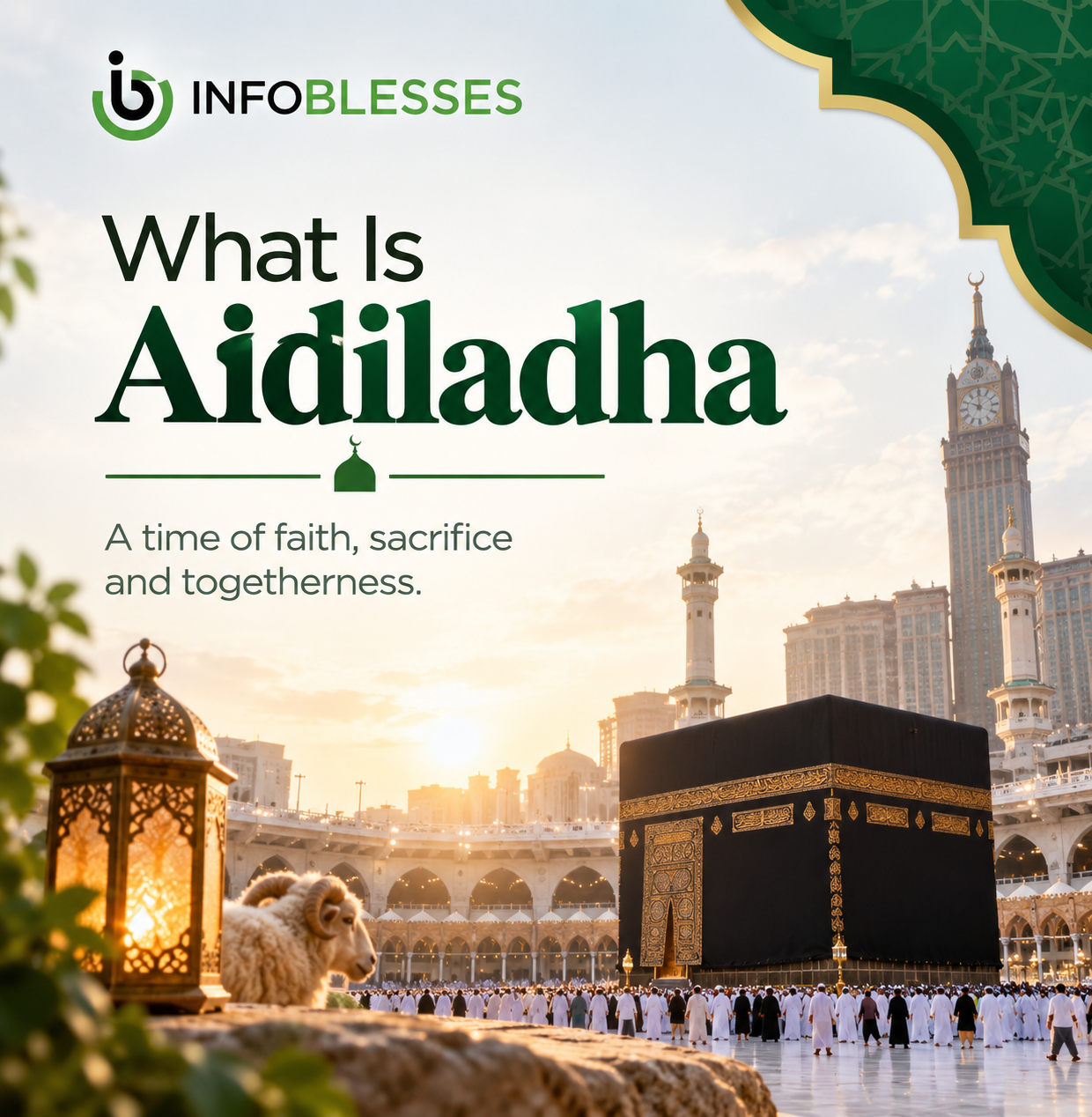
What Is Aidiladha?
Aidiladha, also written as Eid al-Adha, is one of the two major Islamic festivals. It is widely known as the Festival of Sacrifice or Feast of Sacrifice. The celebration takes place on the 10th day of Dhul Hijjah, the final month of the Islamic calendar, and it comes during the period of Hajj, the annual pilgrimage to Makkah.
At its heart, Aidiladha is a celebration of faith, obedience, gratitude, sacrifice, and generosity. Muslims remember the profound example of Prophet Ibrahim (Abraham), who demonstrated complete submission to Allah when he was tested with the command concerning his son. The Qur’an describes the episode in Surah As-Saffat, where Ibrahim tells his son about the dream and his son responds with patience and willingness to obey Allah. The Qur’an then describes Allah providing a great sacrifice in place of the son.
For Muslims, the story isn’t simply an ancient event to remember once a year. It offers a lesson about trusting Allah when life presents difficult choices. Aidiladha therefore combines worship with celebration. People attend the special Eid prayer, recite takbeer, spend time with relatives and friends, give charity, and, where applicable, perform Qurbani, the ritual sacrifice of an eligible animal.
The festival is closely connected with Hajj. Pilgrims in Makkah perform important rites during Dhul Hijjah, while Muslims who aren’t performing Hajj celebrate Eid in their own communities. In this way, the festival creates a remarkable sense of unity: Muslims in different countries, languages, and cultures turn toward the same religious traditions at roughly the same time.
The name itself is worth understanding. Eid means a recurring festival or celebration, while Adha is associated with sacrifice. As a result, the expression Eid al-Adha is commonly translated as “Festival of Sacrifice.” The term Aidiladha is especially common in parts of Southeast Asia, while Muslims in South Asia may also use names such as Eid ul-Adha, Bakra Eid, or Bakrid.
Although customs differ from one country to another, the central religious message remains remarkably consistent. Aidiladha encourages believers to put faith before selfish desire, remember people in need, and appreciate the blessings they already have.
Why Is Aidiladha Important to Muslims?
Aidiladha is important because it connects several major Islamic themes in one occasion.
These include:
- Tawhid: worshipping Allah alone.
- Submission: accepting Allah’s guidance.
- Sabr: remaining patient during trials.
- Shukr: showing gratitude for blessings.
- Sadaqah: giving voluntarily to help others.
- Community: strengthening family and social bonds.
- Remembrance: keeping Allah at the center of celebration.
The festival also reminds Muslims that sacrifice isn’t limited to an animal. A person may need to sacrifice time, money, comfort, pride, or unhealthy habits in order to become a better believer.
That is one reason Aidiladha remains relevant in modern life. Its message isn’t only about what happens on one day. It’s about how faith shapes everyday choices.
Meaning of Aidiladha and the Festival of Sacrifice
The phrase Aidiladha carries a deeper meaning than simply “a Muslim holiday.” It represents a religious occasion built around remembrance and worship.
The central idea is sacrifice for the sake of Allah. In Islamic understanding, however, sacrifice isn’t about blood or meat alone. The deeper purpose is sincerity and submission. The Qur’an makes this principle especially clear in its discussion of sacrificial animals: what matters to Allah is not the physical substance of the offering but the believer’s devotion and consciousness of Him.
This gives the festival a powerful ethical dimension. A wealthy person may have the ability to purchase an animal, but that doesn’t automatically make the act spiritually meaningful. The intention behind the sacrifice matters. Likewise, sharing meat with people who need it turns a personal act of worship into an opportunity for community care.
Aidiladha and the Meaning of Qurbani
Qurbani, also called Udhiyah, refers to the ritual sacrifice performed during the specified days of Eid. Depending on the school of Islamic jurisprudence followed, its legal status differs. For example, the Hanafi school generally considers it wajib for qualifying Muslims who meet the relevant financial conditions, while the Maliki, Shafi’i, and Hanbali schools generally regard it as a strongly emphasized Sunnah.
Eligible animals traditionally include:
| Animal | Common Qurbani Use |
|---|---|
| Sheep | One person’s share |
| Goat | One person’s share |
| Cow | Can represent multiple shares |
| Buffalo | Can represent multiple shares |
| Camel | Can represent multiple shares |
Specific rules concerning age, health, shares, slaughter, and distribution can vary according to Islamic school and local religious guidance. Therefore, Muslims should consult a trusted local scholar or mosque when they need a ruling for their individual circumstances.
The Spiritual Meaning Behind Sacrifice
The most important question isn’t simply, “What animal will be sacrificed?”
A better question is:
“What does this sacrifice teach me about my relationship with Allah and with other people?”
The answer can include several lessons.
First, it teaches obedience. Prophet Ibrahim is remembered for being prepared to obey Allah even when the test was extremely difficult.
Second, it teaches trust. The believer may not always understand how a difficult situation will end, but faith encourages trust in Allah’s wisdom.
Third, it teaches generosity. Qurbani creates an opportunity to share food with relatives, neighbors, and people experiencing hardship.
Finally, it teaches detachment from possessions. Wealth is useful, but it shouldn’t become the purpose of life.
That combination makes Aidiladha both a religious festival and a time for personal reflection.
When Is Aidiladha Celebrated?
Aidiladha is celebrated on 10 Dhul Hijjah, the twelfth and final month of the Islamic lunar calendar. Because the Islamic calendar follows the moon, the festival moves through the Gregorian calendar from year to year.
The exact date can also differ between countries or communities because Islamic months may begin according to different moon-sighting or calendar methods.
The festival follows the Day of Arafah, which falls on 9 Dhul Hijjah and is one of the most important days of Hajj. The 10th of Dhul Hijjah then marks Eid al-Adha.
The days immediately following Eid are commonly known as the Days of Tashreeq, especially 11, 12, and 13 Dhul Hijjah. These are also days of remembrance, eating, drinking, and worship.
Why the Islamic Date Changes Every Year
The Islamic lunar year is shorter than the Gregorian solar year. Consequently, Aidiladha occurs approximately 10 to 12 days earlier each Gregorian year.
This means a person might celebrate Eid during summer one year and during winter many years later.
For Muslims, this movement through the seasons is a reminder that worship isn’t tied to a particular climate, month, or culture. The religious calendar follows its own rhythm.
Is Aidiladha a One-Day or Multi-Day Celebration?
The principal Eid day is 10 Dhul Hijjah, but celebrations and related religious practices continue during the following days.
Different communities may describe the festival as lasting three or four days depending on which religious and cultural practices they include. Islamic Relief, for example, describes Eid al-Adha as a three-day celebration while also discussing the wider Days of Tashreeq.
The key point is that Muslims shouldn’t assume every cultural custom has the same religious status. Some practices are established acts of worship, while others are simply local traditions.
The History of Aidiladha: Prophet Ibrahim and Ismail
The history of Aidiladha reaches back to Prophet Ibrahim, known as Abraham in Jewish and Christian traditions.
In Islam, Ibrahim is one of the most important prophets. His life is associated with unwavering belief in one God, rejection of idolatry, migration for the sake of faith, and devotion to Allah.
The story connected with Aidiladha centers on a severe test.
According to the Qur’an, Ibrahim tells his son that he has seen in a dream that he is to sacrifice him. His son responds by encouraging his father to carry out what he has been commanded to do and expresses patience and steadfastness. The Qur’an then states that both submitted and that Allah declared Ibrahim’s vision fulfilled, providing a great sacrifice instead.
Islamic tradition identifies the son in this account as Ismail (Ishmael). This differs from the Biblical account, in which the son is identified as Isaac. That distinction is important when writing about the topic because the two religious traditions preserve different understandings of the story.
The Central Lesson of Ibrahim’s Trial
The story is not primarily a story about human sacrifice.
Instead, it demonstrates the depth of submission to Allah.
Ibrahim was willing to obey, while Ismail displayed patience and trust. Yet Allah did not require the human sacrifice to be completed. The Qur’an says that Ibrahim had fulfilled the vision and that his son was ransomed with a great sacrifice.
This is a crucial point when explaining Aidiladha to children or people unfamiliar with Islam. Muslims don’t sacrifice human beings. The historical story is understood as a divine test that ended with substitution.
From Ibrahim’s Story to Modern Qurbani
Qurbani commemorates the spirit of this event. Muslims who perform the sacrifice aren’t attempting to repeat the test literally. Instead, they perform an established act of worship in remembrance of Ibrahim’s devotion.
Islamic Relief’s scholar-reviewed guidance explains that Qurbani is performed in remembrance of Ibrahim and is connected with worship, sacrifice, and helping people in need.
In other words, the sacrifice becomes a practical reminder:
Faith should lead to action.
A person can’t simply claim to value generosity while refusing to share. Likewise, remembering Ibrahim’s obedience should encourage Muslims to examine their own willingness to follow Islamic teachings.
Aidiladha and Hajj: How Are They Connected?
Aidiladha is deeply connected to Hajj, the annual pilgrimage to Makkah.
Hajj takes place during Dhul Hijjah and brings Muslims from around the world together in one of Islam’s most important acts of worship. The festival of Aidiladha occurs during this sacred period.
For pilgrims, Eid is experienced in the setting of the Hajj rites. For Muslims elsewhere, the festival allows them to share spiritually in the same sacred season.
Several Hajj rituals are associated in Islamic tradition with Prophet Ibrahim and his family. These include the sacrifice, the rites at Mina, and other acts connected with the legacy of Ibrahim, Ismail, and Hajar.
The relationship between Hajj and Aidiladha therefore isn’t accidental. Both emphasize submission, remembrance, sacrifice, equality, and obedience.
What Happens During Hajj Around Eid?
Hajj contains a sequence of major rites. One of the best-known moments is the Day of Arafah on 9 Dhul Hijjah. After that comes the 10th of Dhul Hijjah, associated with major Hajj actions and Eid al-Adha.
Pilgrims perform the sacrifice as part of the Hajj rites, while Muslims elsewhere may perform Qurbani in their own communities.
The shared timing creates a remarkable global connection.
A Muslim family in Pakistan, a community in Malaysia, a congregation in Nigeria, and pilgrims in Makkah may all be observing the same religious occasion, even though their meals, clothes, languages, and family customs look different.
How Muslims Celebrate Aidiladha
Aidiladha celebrations usually begin with worship and then develop into a day of family, community, food, and generosity.
The exact customs vary widely, but many Muslims follow a familiar pattern.
1. Preparing for Eid Prayer
Before leaving for the Eid prayer, Muslims may perform ghusl, wear clean or their best clothing, and prepare themselves mentally for worship.
The morning often has a special atmosphere. Families wake early, recite takbeer, and prepare to join the wider Muslim community.
2. Performing Eid Salah
The Eid prayer is a special congregational prayer held in the morning. It consists of two rakahs and includes additional takbeers, although details can differ between schools of thought.
A khutbah, or sermon, follows the prayer.
Islamic Relief notes that the Eid prayer is traditionally performed shortly after sunrise and that the number and arrangement of additional takbeers can vary according to one’s madhhab.
3. Performing Qurbani
For Muslims who are performing Qurbani, the sacrifice is carried out after the Eid prayer according to the relevant rules.
The timing is important. A sacrifice performed before the Eid prayer may not count as Qurbani according to established Islamic guidance.
4. Sharing Food
Food plays an important role in Aidiladha.
Families may prepare traditional dishes using Qurbani meat. Recipes differ from region to region. In South Asia, for example, families may prepare biryani, qorma, kebabs, curries, or other festive dishes.
In Arab countries, rice and meat dishes are common. Southeast Asian communities may prepare their own traditional meals.
The menu changes, but the idea remains the same: celebrate, share, and give thanks.
5. Visiting Family and Friends
Eid is also a time to strengthen relationships.
People may visit:
- Parents and grandparents
- Siblings
- Relatives
- Neighbors
- Friends
- Community members who live alone
Children may receive gifts or money, while families may exchange sweets and meals.
These customs help turn Eid from a private religious observance into a community celebration.
Qurbani and the Distribution of Meat
One of the most visible parts of Aidiladha is the distribution of Qurbani meat.
The goal isn’t simply to fill one’s own freezer. Sharing is an important part of the spirit of the sacrifice.
Many communities divide the meat among different groups, commonly including family, friends or neighbors, and people in need. Exact distribution practices vary according to scholarly guidance and local custom.
The wider principle is straightforward:
A religious celebration should not leave vulnerable people behind.
Qurbani therefore creates a direct connection between worship and social responsibility.
Islamic Relief explains that Qurbani meat from eligible animals is distributed to help people in need and notes that larger animals can represent multiple shares.
Helping People Beyond Your Own Household
Modern Qurbani can have a significant humanitarian role.
In areas affected by poverty, conflict, disaster, or food insecurity, receiving meat during Eid can be especially meaningful. Organizations that arrange Qurbani internationally can distribute meat to communities that may rarely have access to it.
However, Muslims should choose charitable organizations carefully. Look for transparent organizations that explain how donations are collected, where the sacrifice takes place, and how meat is distributed.
A good Eid isn’t measured only by how much food appears on one family’s table. It can also be measured by how many other people are able to enjoy the celebration.
Aidiladha Around the World
Aidiladha is celebrated across Muslim-majority countries and Muslim communities worldwide.
The religious foundation is shared, but cultural expressions can be very different.
In Pakistan and India, Eid may involve colorful clothing, family gatherings, Qurbani, traditional meat dishes, and visits between relatives.
In Bangladesh, families often combine prayer, sacrifice, food, and visits with relatives and neighbors.
In Indonesia and Malaysia, the festival may be called Eid al-Adha, Hari Raya Haji, or Aidiladha depending on the country and language. Community gatherings and charitable distribution are important parts of the occasion.
In Arab countries, Eid celebrations may include family meals, traditional clothing, hospitality, and visits.
In Muslim communities in Europe, North America, Australia, and elsewhere, Muslims often adapt Eid customs to local circumstances. A community may hold prayer in a mosque, Islamic center, rented hall, stadium, or open field.
This diversity is one of the most beautiful aspects of Aidiladha. The food and clothing may change, but the core values remain recognizable.
Eid al-Fitr vs Aidiladha
People who are new to Islam sometimes confuse the two major Eids.
Here’s a simple comparison:
| Feature | Eid al-Fitr | Eid al-Adha |
|---|---|---|
| Main association | End of Ramadan | Sacrifice and Hajj season |
| Islamic date | 1 Shawwal | 10 Dhul Hijjah |
| Fasting beforehand | Ramadan fasting | No fasting on Eid itself |
| Major theme | Gratitude after Ramadan | Faith, sacrifice, and submission |
| Special charity | Zakat al-Fitr | Qurbani and general charity |
| Eid prayer | Yes | Yes |
| Family gatherings | Common | Common |
| Food and gifts | Common | Common |
Both festivals are joyful occasions, but their religious contexts are different.
Eid al-Fitr marks the end of Ramadan, while Aidiladha occurs during Dhul Hijjah and is associated with Hajj and the remembrance of Ibrahim’s sacrifice.
Important Spiritual Lessons of Aidiladha
The deepest value of Aidiladha can be found in the lessons it teaches.
1. Faith Requires Trust
Ibrahim’s story demonstrates extraordinary trust in Allah.
Modern life may not present the same kind of test, but people still face uncertainty. Financial pressure, family problems, career decisions, and personal struggles can all test patience.
Aidiladha encourages Muslims to respond to difficulty with faith rather than despair.
2. Sacrifice Is Part of Growth
Growth often requires giving something up.
A student may sacrifice entertainment to study. A parent may sacrifice personal comfort for a child. A person trying to become healthier may sacrifice unhealthy habits.
The religious lesson is broader: meaningful goals often require discipline.
3. Wealth Should Be Shared
Qurbani turns personal resources into community benefit.
This is particularly important during times when economic inequality is visible. A celebration becomes more meaningful when people remember those who have less.
4. Family Relationships Matter
The story of Ibrahim and Ismail also highlights family.
Their conversation is especially powerful because it shows communication between father and son during a difficult moment. Rather than presenting faith as something that ignores family bonds, the story shows a relationship shaped by trust and shared commitment to Allah.
5. Gratitude Changes Celebration
Eid isn’t simply a chance to eat delicious food and wear new clothes.
Those things can certainly be enjoyable. But gratitude gives them deeper meaning.
A person can enjoy a meal while remembering where the food came from, who helped provide it, and who may not have enough to eat.
How to Celebrate Aidiladha Responsibly
A meaningful Aidiladha celebration should combine joy with responsibility.
If you’re arranging Qurbani, consider the following:
- Learn the rules before Eid.
- Use a healthy, eligible animal.
- Choose a qualified and humane slaughter process.
- Follow local health and sanitation regulations.
- Avoid unnecessary waste.
- Share meat fairly.
- Include people who may otherwise be overlooked.
- Keep the celebration within your means.
- Avoid turning Eid into a competition over clothes, cars, food, or expensive gifts.
- Remember the spiritual purpose behind the celebration.
Animal welfare and hygiene are particularly important. Religious devotion should never be used as an excuse for careless handling, unsafe slaughter, or unnecessary suffering.
Muslims should follow the guidance of qualified scholars and relevant local authorities when arranging Qurbani.
Common Aidiladha Traditions
Although traditions differ, the following practices are widely associated with the festival:
- Eid prayer
- Takbeer
- Clean or new clothes
- Qurbani
- Sharing meat
- Charity
- Visiting relatives
- Greeting neighbors
- Preparing special meals
- Giving children gifts
- Visiting graves in communities where this is customary
- Spending time with family
- Making dua
- Remembering Allah
Not every custom has the same religious status. Some are established Sunnah practices, while others are cultural traditions that developed in different communities.
That distinction is worth remembering because Islam is practiced across many cultures. A tradition can be meaningful without being a universal religious requirement.
Frequently Asked Questions About Aidiladha
What does Aidiladha mean?
Aidiladha is another commonly used name for Eid al-Adha, the Islamic Festival of Sacrifice. It commemorates the devotion and obedience associated with Prophet Ibrahim and is celebrated on 10 Dhul Hijjah.
Why do Muslims sacrifice animals on Aidiladha?
Muslims perform Qurbani to commemorate Prophet Ibrahim’s willingness to sacrifice his son in obedience to Allah. The Qur’an describes Allah providing a great sacrifice instead. Qurbani is therefore understood as an act of worship, remembrance, and generosity.
Which animals can be used for Qurbani?
Common eligible animals include sheep, goats, cattle or buffalo, and camels, subject to Islamic requirements concerning age, health, and other conditions. Specific rules can differ according to the school of Islamic law being followed.
When should Qurbani be performed?
Qurbani is performed after the Eid prayer on the first day and during the prescribed days of sacrifice. Muslims should follow the timing rules of their school of thought and local religious authority. A sacrifice made before the Eid prayer does not generally count as the Eid Qurbani.
Is Qurbani compulsory for every Muslim?
No single answer applies across all Islamic schools. The Hanafi school generally considers Qurbani wajib for Muslims who meet specified financial conditions, while the Maliki, Shafi’i, and Hanbali schools generally regard it as a strongly emphasized Sunnah. Personal circumstances can also matter.
Is Aidiladha the same as Eid al-Fitr?
No. Both are major Islamic festivals, but they occur at different times and commemorate different religious themes. Eid al-Fitr comes after Ramadan, while Aidiladha occurs on 10 Dhul Hijjah during the Hajj season.
How long does Aidiladha last?
The main Eid day is 10 Dhul Hijjah, while related celebrations and religious observances continue during the following Days of Tashreeq. Some organizations describe Eid al-Adha itself as a three-day celebration.
What should Muslims do on Aidiladha morning?
Many Muslims perform ghusl, wear their best or clean clothes, recite takbeer, attend Eid Salah, listen to the khutbah, and then continue with family, charitable, and Qurbani activities as appropriate.
Can people celebrate Aidiladha without performing Qurbani?
Yes. Muslims can participate in Eid prayer, worship, charity, family gatherings, remembrance, and other permitted celebrations regardless of whether they personally perform Qurbani. The legal requirement or recommendation for Qurbani depends on circumstances and school of thought.
What is the main lesson of Aidiladha?
The central lesson is submission to Allah combined with faith, patience, gratitude, and generosity. The festival encourages Muslims to ask what they are willing to sacrifice for what is right and how they can share their blessings with others.
Conclusion:
Aidiladha is much more than a festival involving a special prayer and a family meal.
It is a yearly reminder of faith under pressure, obedience during difficulty, and generosity toward others. Through the story of Prophet Ibrahim and Ismail, Muslims remember the importance of trusting Allah and putting sincere faith into action.
The Qurbani sacrifice gives that lesson a practical form. Meat can reach families who need it. Relatives come together. Neighbors exchange greetings. Communities gather for prayer. Children experience the joy of Eid. And believers are encouraged to look beyond themselves.
At its best, Aidiladha combines worship and compassion.
The festival also carries a timeless message for modern life: sacrifice should not be understood only as giving up something valuable. It can mean giving time to family, helping someone in difficulty, controlling selfish desires, giving charity, forgiving another person, or choosing faith and integrity when doing so is difficult.
That is why the meaning of Aidiladha remains powerful across generations and cultures.

Welcome to Info Blesses I am Rana Ahtasham an AI Powered SEO and Content Writer With 3 year experience.I help websites rank highter, grow traffic, and look amazing. My goal is to make SEO and web design simple and effective for everyone.Lets achieve more togather!