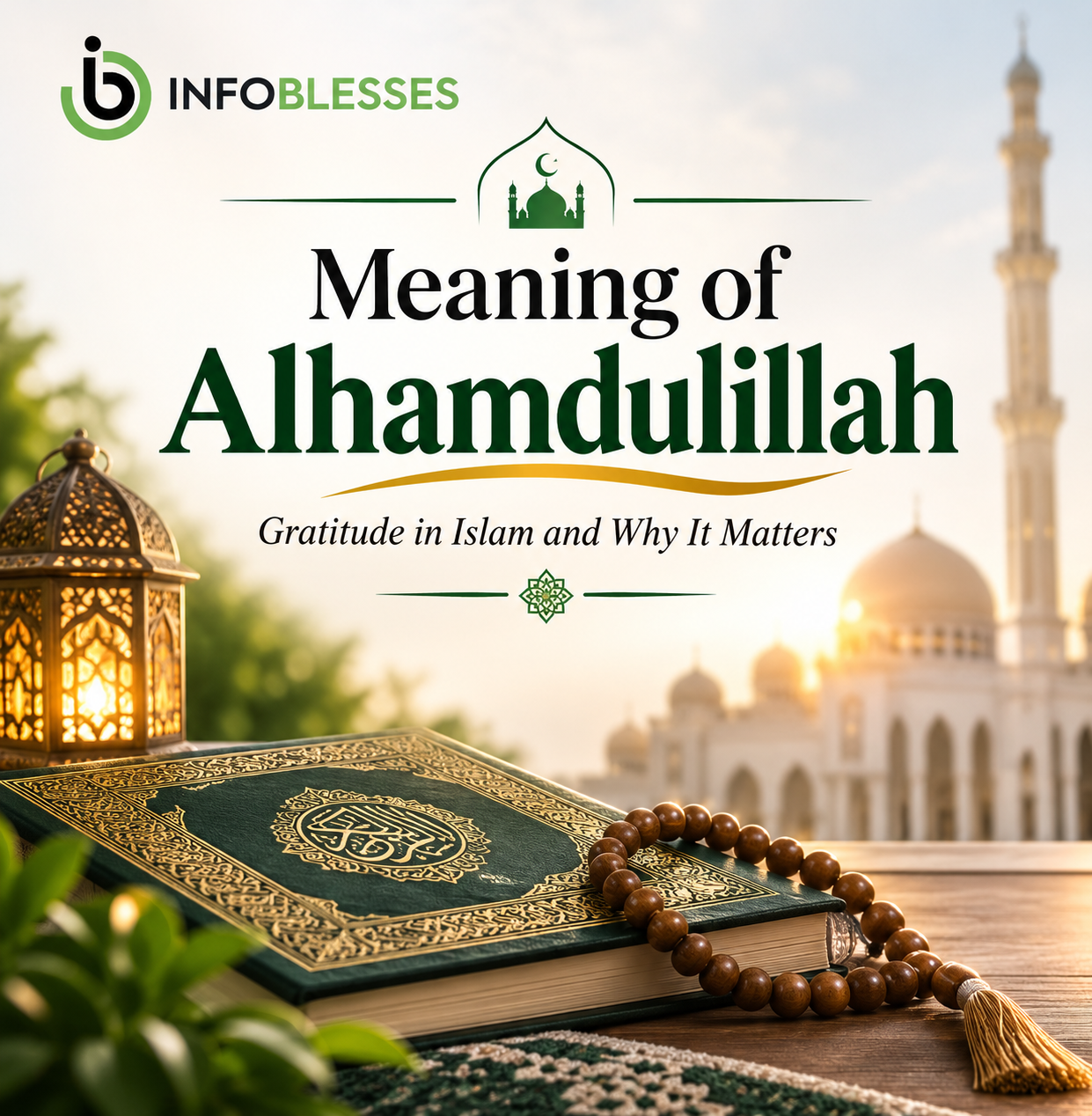
1. Introduction: Understanding the Meaning of Alhamdulillah
The phrase Alhamdulillah is one of the most beautiful and meaningful expressions in Islam. Muslims around the world use it every day to express gratitude, praise Allah, and recognize His countless blessings.
Whether someone has received good news, enjoyed a delicious meal, recovered from an illness, or simply woken up in the morning, saying Alhamdulillah is a way of acknowledging Allah’s kindness.
But what does Meaning of Alhamdulillah really mean? Is it simply another way of saying thank you, or does it carry a deeper spiritual message?
The answer is that it carries a much deeper meaning.
Alhamdulillah reminds Muslims that everything good ultimately comes from Allah. It encourages believers to remain thankful during happy moments and patient during difficult situations.
In today’s busy world, people often focus on what they don’t have instead of appreciating what they already possess. Practicing gratitude through Alhamdulillah can help change this mindset.
It teaches us to appreciate:
-
The gift of life and good health.
-
The love and support of family.
-
Food, water, shelter, and other basic necessities.
-
Opportunities to learn, grow, and improve.
-
The ability to worship Allah.
-
The blessings we sometimes overlook.
Most importantly, Alhamdulillah isn’t limited to moments when everything goes according to plan. A Muslim can praise Allah even during hardship because faith includes trusting His wisdom and mercy.
This simple expression can become a meaningful part of everyday life when spoken sincerely and understood properly.
2. What Is the Meaning of Alhamdulillah?
Alhamdulillah (ٱلْحَمْدُ لِلَّٰهِ) is an Arabic expression that means:
“All praise and thanks be to Allah.”
It is also commonly translated as:
-
Praise be to Allah.
-
All praise belongs to Allah.
-
All thanks are due to Allah.
-
Praise and gratitude are for Allah alone.
The phrase consists of three main parts.
| Arabic | Meaning |
|---|---|
| Al (ال) | The or all |
| Hamd (حمد) | Praise and gratitude |
| Lillah (لله) | Belonging to Allah or for Allah |
Together, these words express that all genuine praise and gratitude ultimately belong to Allah.
2.1 The Deeper Meaning of Alhamdulillah
The meaning of Alhamdulillah goes beyond thanking someone for a favor.
In everyday life, people usually say thank you when another person helps them. However, Alhamdulillah recognizes Allah as the ultimate source of every blessing.
For example, when someone receives a new job, they might thank the person who recommended them. At the same time, they say Alhamdulillah because they believe that the opportunity and its outcome are ultimately granted by Allah.
This expression combines two important ideas:
-
Praise: Recognizing Allah’s greatness, perfection, and beautiful attributes.
-
Gratitude: Appreciating the blessings Allah has provided.
It also encourages humility. Instead of believing that every achievement comes entirely from personal effort, a believer recognizes the abilities, opportunities, and circumstances that Allah has provided.
2.2 Is Alhamdulillah the Same as Thank You?
Not exactly.
Although Alhamdulillah expresses gratitude, it has a broader spiritual meaning than ordinary words of thanks.
Consider these examples:
-
Saying thank you to a friend acknowledges their kindness.
-
Saying Alhamdulillah acknowledges Allah’s blessings.
-
Saying Alhamdulillah after receiving help recognizes that people can become a means through which Allah provides assistance.
Islam also encourages Muslims to appreciate other people. Gratitude toward Allah shouldn’t become an excuse to ignore the kindness of family members, friends, or strangers.
In other words, thanking people and praising Allah can go hand in hand.
3. Alhamdulillah in Arabic: Spelling and Pronunciation
The correct Arabic spelling of Alhamdulillah is:
ٱلْحَمْدُ لِلَّٰهِ
Its common English transliteration is:
Alhamdulillah
Other transliterations include:
-
Al-Hamdu Lillah
-
Alhamdu lillah
-
Al-Hamdulillah
-
Al-Hamdu lillahi
These spellings represent the same Arabic expression.
3.1 How to Pronounce Alhamdulillah
A simple pronunciation guide is:
Al-ham-doo-lil-lah
Break it into smaller parts:
-
Al
-
Ham
-
Du
-
Lil
-
Lah
The Arabic pronunciation has sounds that may not be perfectly represented by English letters. Listening to a qualified Arabic speaker or Quran reciter can help improve pronunciation.
3.2 Why Correct Pronunciation Matters
Learning to pronounce Arabic expressions correctly is a valuable part of understanding Islamic worship.
However, don’t become discouraged if you’re a beginner. Learning takes time, and sincere effort matters.
Try repeating the expression slowly and listening carefully to its Arabic pronunciation.
With regular practice, it becomes easier to say naturally.
4. Islamic Significance of Alhamdulillah
Alhamdulillah holds an important place in Islam because praising Allah is a central part of a Muslim’s relationship with Him.
It expresses faith, humility, love, and gratitude.
Muslims don’t praise Allah because He needs their praise. Rather, they praise Him because He deserves it and because remembering Him benefits their spiritual lives.
The expression also helps believers recognize that their lives are filled with blessings, including those they may not immediately notice.
For example, a person may think that having money is the greatest blessing. However, good health, faith, family, safety, and the abilisty to breathe are also precious gifts.
4.1 Alhamdulillah and Tawheed
Tawheed means believing in the oneness of Allah.
Saying Alhamdulillah reflects this belief because Muslims direct their ultimate praise and gratitude toward Allah alone.
It reminds believers that Allah is the Creator, Sustainer, and Lord of all worlds.
4.2 Alhamdulillah and Shukr
Shukr is the Arabic word for gratitude or thankfulness.
Islam teaches that gratitude should be expressed in three ways:
-
Through the heart: Recognizing blessings and appreciating their source.
-
Through the tongue: Praising Allah and expressing thanks.
-
Through actions: Using blessings in beneficial and responsible ways.
For instance, saying Alhamdulillah for good health should encourage someone to take care of their body.
Similarly, being grateful for wealth should encourage generosity, charity, and responsible spending.
Gratitude becomes more meaningful when words and actions support each other.
5. Alhamdulillah in the Holy Quran
One of the most important places where Alhamdulillah appears is the opening chapter of the Holy Quran, Surah Al-Fatihah.
The second verse states:
الْحَمْدُ لِلَّهِ رَبِّ الْعَالَمِينَ
Translation: “All praise is for Allah—Lord of all worlds.” (Quran 1:2)
This verse establishes that Allah deserves all praise and is the Lord of everything in existence.
Quran.com+1
Muslims recite Surah Al-Fatihah in every unit (rak’ah) of their obligatory prayers, making this expression a regular part of daily worship.
5.1 Why Does Surah Al-Fatihah Begin with Praise?
Beginning the Quran’s opening chapter with praise teaches believers an important lesson: their relationship with Allah should begin with recognition of His greatness and blessings.
Before asking Allah for guidance, mercy, or assistance, Muslims acknowledge His greatness.
This order encourages humility and reminds people that they are dependent on their Creator.
5.2 Other Quranic Lessons About Gratitude
The Quran repeatedly encourages believers to be thankful.
For example, Surah Ibrahim (14:7) teaches that if people are grateful, Allah will increase them in blessings.
This verse highlights the importance of gratitude in a believer’s life.
It doesn’t mean that every expression of gratitude will immediately produce more money or material possessions. Rather, it teaches believers to recognize Allah’s generosity and remain thankful for His favors.
The Quran also reminds Muslims that Allah’s blessings are too numerous to count.
This is a powerful reason to make Alhamdulillah a regular part of everyday life.
6. Alhamdulillah in Hadith
The importance of praising Allah is also highlighted in the teachings of Prophet Muhammad (peace be upon him).
One well-known narration appears in Sahih Muslim.
According to Sahih Muslim 223, the Prophet Muhammad (PBUH) explained that the statement Alhamdulillah fills the scale of good deeds.
The same narration mentions that SubhanAllah and Alhamdulillah together fill what is between the heavens and the earth.
Sunnah.com+1
This hadith highlights the tremendous spiritual value of remembering Allah.
It teaches Muslims that even a short expression of praise can carry great importance.
6.1 The Virtue of Praising Allah After Receiving Blessings
A narration in Sunan Ibn Majah 3805 also discusses the virtue of praising Allah when receiving a blessing.
It reports that when Allah grants a person a blessing and the person responds with Alhamdulillah, that praise is described as better than the blessing received.
This teaching encourages believers to appreciate Allah’s generosity rather than becoming distracted by the blessings themselves.
6.2 What Can Muslims Learn From These Hadith?
These narrations offer several important lessons:
-
Remember Allah regularly.
-
Never consider praise of Allah a small or meaningless action.
-
Appreciate blessings instead of taking them for granted.
-
Make gratitude part of daily worship.
-
Recognize the spiritual value of sincere remembrance.
The message is simple: a thankful heart can turn ordinary moments into opportunities for worship.
7. Benefits of Saying Alhamdulillah
Saying Alhamdulillah offers several spiritual and practical benefits.
Its greatest importance is its connection to faith and worship. It also encourages a positive attitude toward life’s blessings and challenges.
Here are some important benefits.
7.1 Strengthens Your Relationship With Allah
When Muslims regularly praise Allah, they become more conscious of His blessings.
This awareness can strengthen their faith and encourage them to remember their Creator throughout the day.
7.2 Encourages a Grateful Mindset
People sometimes become so focused on their problems that they forget the good things in their lives.
Alhamdulillah encourages believers to pause and appreciate what they have.
7.3 Promotes Humility
The expression reminds Muslims that their abilities, achievements, and opportunities are blessings from Allah.
This understanding can reduce arrogance and encourage modesty.
7.4 Encourages Patience During Difficult Times
Life includes unexpected challenges, disappointments, and losses.
Saying Alhamdulillah can help believers remember that their relationship with Allah isn’t dependent on receiving everything they want.
It doesn’t require someone to deny pain or pretend that suffering doesn’t exist. Rather, it encourages faith and hope while facing difficulties.
7.5 Makes Everyday Worship More Meaningful
A Muslim can say Alhamdulillah after eating, drinking, completing a task, or receiving good news.
These small moments become opportunities to remember Allah.
7.6 Helps Develop Contentment
Gratitude encourages people to appreciate their current blessings instead of constantly comparing their lives with others.
Contentment doesn’t mean abandoning ambition. It means pursuing improvement without forgetting to appreciate what Allah has already provided.
7.7 Encourages Positive Actions
A grateful person is more likely to recognize the importance of sharing blessings.
For example, someone grateful for food may become more willing to feed people in need.
Someone grateful for knowledge may help others learn.
In this way, gratitude can influence behavior as well as thoughts.
8. 15 Powerful Reasons to Say Alhamdulillah Every Day
The meaning of Alhamdulillah becomes even more valuable when Muslims understand how to apply it in everyday situations.
Here are 15 powerful reasons to make this beautiful expression part of your daily routine.
1. To Thank Allah for the Gift of Life
Every new morning is an opportunity to appreciate life. Being alive gives you another chance to worship Allah, help others, learn something new, and improve yourself.
Start your day with Alhamdulillah and remember that life itself is a precious blessing.
2. To Appreciate Good Health
Good health is something people often overlook until they become sick.
Being able to walk, breathe, see, hear, and perform daily activities is a blessing worth appreciating.
Say Alhamdulillah for your health and take care of the body Allah has entrusted to you.
3. To Thank Allah for Your Family
Family members can provide love, comfort, encouragement, and support.
Even when family relationships have difficulties, appreciating the people who genuinely care for you can help build stronger relationships.
4. To Appreciate Food and Water
Food and clean water are essential for survival, yet many people don’t have reliable access to them.
Saying Alhamdulillah before and after eating reminds Muslims to appreciate their meals and avoid wasting food.
5. To Express Gratitude for Financial Provision
Money can provide necessities, opportunities, and security.
Whether someone has a large income or modest earnings, gratitude helps them recognize the value of what they have.
It also encourages responsible spending and generosity.
6. To Remain Thankful During Difficulties
Life doesn’t always go according to our plans.
A person may experience financial problems, disappointment, illness, or personal loss.
Alhamdulillah can remind believers to maintain their connection with Allah even during difficult moments.
It doesn’t mean that hardship should be ignored. Muslims can seek help, make efforts to improve their situation, and remain hopeful.
7. To Appreciate the Gift of Faith
Iman, or faith, is among the greatest blessings in a Muslim’s life.
The ability to believe in Allah, perform Salah, read the Quran, and seek forgiveness deserves sincere gratitude.
8. To Celebrate Success Without Arrogance
Whether you pass an examination, receive a promotion, or achieve a personal goal, saying Alhamdulillah helps you remain humble.
It reminds you that effort is important, but success also depends on opportunities and blessings granted by Allah.
9. To Appreciate Small Blessings
Not every blessing needs to be extraordinary.
A peaceful evening, a comfortable home, a friendly conversation, or a safe journey can all be reasons to praise Allah.
Sometimes the smallest things bring the greatest comfort.
10. To Develop Patience
Gratitude can support patience by helping believers remember that life contains both ease and difficulty.
Instead of allowing disappointment to destroy hope, they can continue making dua, taking appropriate action, and trusting Allah.
11. To Appreciate Education and Knowledge
The ability to read, understand, study, and learn new skills is a valuable gift.
Students can say Alhamdulillah after completing an examination, understanding a difficult lesson, or making progress in their studies.
12. To Recognize Allah’s Mercy
No human being is perfect.
People make mistakes, experience weaknesses, and sometimes fall short of their responsibilities.
Remembering Allah’s mercy encourages believers to seek forgiveness, improve their behavior, and never lose hope in His compassion.
13. To Encourage Generosity
Gratitude helps people understand that blessings shouldn’t always be enjoyed alone.
Sharing food, supporting poor families, helping neighbors, and giving charity are practical ways to appreciate what Allah has provided.
14. To Find Meaning in Everyday Life
Daily routines can sometimes feel repetitive.
However, remembering Allah during ordinary activities can give those moments spiritual meaning.
A simple Alhamdulillah after finishing work or returning home can remind you to appreciate another day.
15. To Prepare for the Hereafter
Muslims believe that their actions, including their worship and remembrance of Allah, matter beyond this temporary world.
Saying Alhamdulillah with sincerity encourages a life built around faith, humility, and good deeds.
These 15 reasons show that gratitude isn’t limited to special occasions. It can become a consistent part of a Muslim’s character.
9. When Should You Say Alhamdulillah?
There isn’t just one specific situation in which Muslims can say Alhamdulillah.
It can be used whenever someone wishes to praise Allah, recognize His blessings, or express gratitude.
Here are some common situations.
| Situation | Why You Say Alhamdulillah |
|---|---|
| After waking up | To thank Allah for another day |
| After eating | To appreciate the blessing of food |
| After drinking water | To recognize the gift of nourishment |
| After completing Salah | To express praise and gratitude |
| After receiving good news | To thank Allah for the blessing |
| After recovering from illness | To appreciate restored health |
| After completing work | To recognize the opportunity and ability to work |
| After returning home safely | To appreciate safety |
| After achieving a goal | To remain grateful and humble |
| During difficult moments | To maintain remembrance and trust in Allah |
9.1 Saying Alhamdulillah After Sneezing
One particularly familiar occasion is sneezing.
According to Islamic teachings, when a Muslim sneezes, they should say:
Alhamdulillah
A person who hears this should respond:
Yarhamukallah (May Allah have mercy on you).
The person who sneezed can then reply:
Yahdikumullah wa yuslihu balakum (May Allah guide you and improve your condition).
This exchange reflects Islamic manners and encourages Muslims to remember Allah even during ordinary daily activities.
9.2 Saying Alhamdulillah After Eating
Muslims are encouraged to praise Allah after finishing their meals.
A common expression is:
Alhamdulillahilladhi at’amana wa saqana wa ja’alana Muslimin.
Meaning:
“All praise is due to Allah, who has fed us, given us drink, and made us Muslims.”
This expression combines gratitude for physical nourishment with appreciation for the blessing of Islam.
10. Difference Between Alhamdulillah, SubhanAllah, and Allahu Akbar
Muslims frequently use three beautiful Arabic expressions in their daily remembrance of Allah.
Although they are all forms of dhikr, their meanings are different.
ٱلْحَمْدُ لِلَّٰهِ
Alhamdulillah
Meaning: All praise and thanks belong to Allah.
Purpose: Expressing gratitude and praising Allah for His blessings.
سُبْحَانَ ٱللَّٰهِ
SubhanAllah
Meaning: Glory be to Allah.
Purpose: Declaring Allah free from every imperfection.
ٱللَّٰهُ أَكْبَرُ
Allahu Akbar
Meaning: Allah is the Greatest.
Purpose: Recognizing Allah’s greatness above everything.
10.1 Can You Say These Expressions Together?
Yes. Muslims frequently combine these expressions in dhikr.
For example:
-
SubhanAllah
-
Alhamdulillah
-
Allahu Akbar
Each expression communicates a different aspect of faith.
SubhanAllah recognizes Allah’s perfection, Alhamdulillah expresses praise and gratitude, and Allahu Akbar declares His greatness.
Together, they help Muslims maintain a strong connection with Allah.
11. How to Make Alhamdulillah a Daily Habit
Understanding the meaning of Alhamdulillah is important, but practicing gratitude is equally valuable.
You don’t need a complicated routine to begin. A few simple habits can make a difference.
11.1 Start Your Morning With Gratitude
When you wake up, take a moment to appreciate another day of life.
Remember that you have another opportunity to worship Allah, fulfill your responsibilities, and help others.
11.2 Say Alhamdulillah After Every Meal
Make it a habit to praise Allah after eating.
This simple action encourages you to appreciate food and remember people who don’t have enough to eat.
11.3 Recognize Three Blessings Every Day
Before going to sleep, think about three things you’re grateful for.
For example:
-
Your health.
-
Your family’s well-being.
-
The opportunity to learn or earn a living.
This exercise can help you become more aware of everyday blessings.
11.4 Combine Gratitude With Good Actions
Don’t allow gratitude to remain only in words.
If you’re grateful for wealth, consider helping someone in need.
If you’re grateful for knowledge, share something useful.
If you’re grateful for good health, use your energy for beneficial activities.
11.5 Remember Allah During Difficult Moments
When facing challenges, remember that it’s possible to feel sadness while maintaining faith.
You can ask Allah for help, seek support from trustworthy people, and continue saying Alhamdulillah for the blessings that remain.
Gratitude doesn’t mean pretending everything is perfect.
It means recognizing Allah’s blessings even when life is difficult.
12. Common Mistakes and Misunderstandings About Alhamdulillah
Although Alhamdulillah is a familiar Islamic expression, some people misunderstand its meaning or use.
Let’s clarify a few common misconceptions.
12.1 Thinking It Only Applies to Good News
Some people believe Alhamdulillah should only be said when something positive happens.
In reality, praising Allah isn’t restricted to moments of happiness.
Muslims can remember Allah during both ease and hardship.
12.2 Saying It Without Understanding Its Meaning
Repeating Arabic expressions is valuable, but understanding what they mean can make remembrance more meaningful.
Learning the translation helps believers develop a deeper appreciation for the words they speak.
12.3 Believing Gratitude Means Never Feeling Sad
This is another misunderstanding.
Being grateful doesn’t mean a person cannot experience grief, anxiety, disappointment, or emotional pain.
Faith and human emotions can exist together.
12.4 Forgetting to Thank Other People
Islam teaches Muslims to appreciate kindness from other people too.
A sincere Alhamdulillah and a genuine thank-you to someone who helped you are not contradictory.
12.5 Treating Gratitude as a Replacement for Action
Saying Alhamdulillah for good health doesn’t remove the responsibility to seek medical care when needed.
Likewise, being grateful for financial provision doesn’t mean avoiding work or responsible planning.
Gratitude should encourage good actions, not replace them.
13. Frequently Asked Questions (FAQs) About Alhamdulillah
Here are answers to some commonly asked questions about the meaning, pronunciation, and importance of Alhamdulillah.
1. What Does Alhamdulillah Mean in English?
Alhamdulillah means “All praise and thanks be to Allah” or “Praise be to Allah.”
Muslims use this expression to show gratitude, recognize Allah’s blessings, and praise Him for His greatness.
2. What Is the Arabic Spelling of Alhamdulillah?
The Arabic spelling is:
ٱلْحَمْدُ لِلَّٰهِ
Its commonly used English transliteration is Alhamdulillah.
3. Why Do Muslims Say Alhamdulillah?
Muslims say Alhamdulillah to praise Allah and express gratitude for His blessings.
They use it after eating, receiving good news, recovering from illness, completing daily activities, and during many other situations.
It is also an important expression in Islamic prayer and remembrance.
4. Is Alhamdulillah Mentioned in the Quran?
Yes. Alhamdulillah appears in several places in the Quran.
One of its most familiar occurrences is in Surah Al-Fatihah, verse 2:
“All praise is for Allah—Lord of all worlds.”
This verse highlights Allah’s greatness and reminds believers that all praise belongs to Him.
5. What Is the Difference Between Alhamdulillah and Mashallah?
Both expressions are used by Muslims, but they have different meanings.
-
Alhamdulillah: All praise and thanks belong to Allah.
-
Mashallah: What Allah has willed; an expression used when appreciating something Allah has granted or willed.
For example, someone might say Alhamdulillah after receiving good news and Mashallah when admiring someone’s beautiful home or achievement.
6. Can Muslims Say Alhamdulillah During Difficult Times?
Yes. Muslims can praise Allah during difficult times as well as happy moments.
It expresses continued faith, gratitude, and recognition of Allah’s wisdom.
However, it doesn’t mean that someone must hide their sadness or avoid seeking help when facing hardship.
7. What Are the Benefits of Saying Alhamdulillah?
Some important benefits include:
-
Strengthening one’s relationship with Allah.
-
Developing gratitude and humility.
-
Remembering Allah throughout the day.
-
Appreciating everyday blessings.
-
Encouraging patience and contentment.
-
Earning spiritual reward through sincere remembrance.
Sahih Muslim 223 specifically highlights the great virtue of Alhamdulillah, describing it as filling the scale of good deeds.
8. How Many Times Should You Say Alhamdulillah Every Day?
There isn’t one universal daily limit for saying Alhamdulillah in ordinary remembrance.
Muslims can praise Allah throughout the day whenever they wish.
There are also specific forms of dhikr with established counts and occasions. For example, the well-known remembrance after obligatory prayers includes SubhanAllah, Alhamdulillah, and Allahu Akbar in prescribed counts.
The important thing is to remember Allah sincerely and consistently.
9. Is Alhamdulillah the Same as Shukr?
They are closely related but not exactly identical.
Alhamdulillah is an expression of praise and gratitude directed toward Allah.
Shukr refers more broadly to the act and quality of being thankful.
A Muslim expresses Shukr through the heart, words, and actions, including saying Alhamdulillah.
10. Can Non-Muslims Say Alhamdulillah?
Alhamdulillah is an Arabic expression praising Allah. Anyone learning Arabic or exploring Islamic teachings can learn its meaning and pronunciation.
For Muslims, however, it has particular importance as an expression of faith, worship, and gratitude.
14. Conclusion:
The meaning of Alhamdulillah goes far beyond the simple translation of “Praise be to Allah.”
It represents gratitude, faith, humility, and recognition of the countless blessings Allah has provided.
From the opening verses of Surah Al-Fatihah to the daily remembrance of Muslims around the world, this beautiful expression holds a special place in Islamic life.
It teaches believers to appreciate their health, family, food, opportunities, and faith. It also reminds them to remain connected with Allah during difficult moments.
The most important lesson is that gratitude shouldn’t be limited to words. It should influence how we think, behave, and treat other people.
So, whether you’re celebrating a success, enjoying a meal, completing your daily responsibilities, or facing a difficult situation, remember the importance of praising Allah.
Say Alhamdulillah with understanding, sincerity, and a grateful heart.
May Allah make us among those who remember Him frequently, appreciate His blessings, remain patient during hardships, and live lives filled with faith and gratitude. Ameen.

Welcome to Info Blesses I am Rana Ahtasham an AI Powered SEO and Content Writer With 3 year experience.I help websites rank highter, grow traffic, and look amazing. My goal is to make SEO and web design simple and effective for everyone.Lets achieve more togather!