1. Understanding the Meaning of Barakah
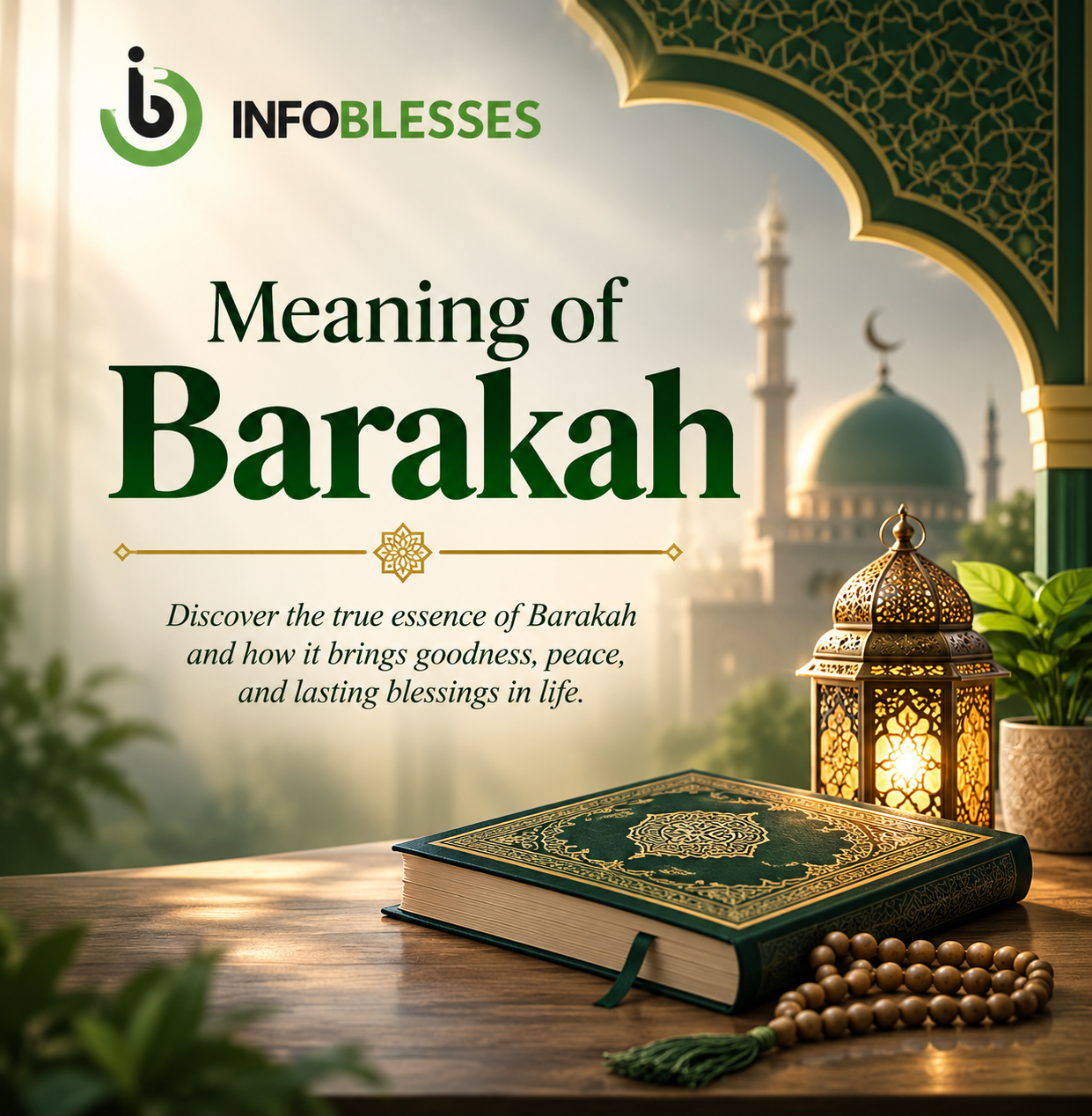
The concept of Barakah holds a special place in Islam. It represents a beautiful relationship between human life and the blessings of Allah. Although people often measure success through money, possessions, achievements, and social status, Islam teaches that true success involves much more than material wealth.
The meaning of Barakah goes beyond receiving something good. It refers to divine blessings that bring goodness, benefit, growth, and lasting value into different aspects of life. A person may have limited resources but enjoy tremendous peace and satisfaction because Allah has placed Barakah in those resources.
In simple words, Barakah means having more goodness in what you already have.
For example, two people may earn the same amount of money. One person struggles to manage expenses, while the other manages to support a family, help others, save money, and live comfortably. The difference may not be the amount of money but the blessings and wisdom associated with it.
This concept encourages Muslims to seek Allah’s pleasure rather than becoming obsessed with worldly possessions.
What Does Barakah Mean in Arabic?
The Arabic word Barakah (بركة) comes from the root letters B-R-K (ب ر ك). It is associated with blessing, increase, stability, and goodness.
In Islamic understanding, Barakah refers to goodness placed by Allah in something, allowing it to produce greater benefit than its apparent size or quantity might suggest.
Barakah can appear in many forms, including:
- Wealth: Money that provides sufficient support and allows a person to help others.
- Time: A day in which someone accomplishes meaningful tasks without unnecessary stress.
- Knowledge: Learning that improves character and benefits society.
- Health: Physical and emotional well-being that allows someone to fulfill responsibilities.
- Family: Relationships filled with love, patience, understanding, and mutual respect.
- Faith: A stronger connection with Allah and greater peace in the heart.
Therefore, Barakah isn’t restricted to financial matters. It can influence almost every part of human existence.
The Difference Between Barakah and Ordinary Blessings
People sometimes confuse Barakah with ordinary good fortune. However, the Islamic understanding is deeper.
An ordinary blessing might refer to receiving a particular benefit, such as getting a new job, buying a house, or earning a higher salary.
Barakah refers to the goodness and lasting benefit associated with that blessing.
Consider this example:
| Ordinary Situation | Situation With Barakah |
|---|---|
| Earning money | Earning halal money that supports a family |
| Having free time | Using time for beneficial activities |
| Gaining knowledge | Applying knowledge to improve life |
| Owning a house | Creating a peaceful and loving home |
| Having food | Enjoying food with gratitude and sharing it |
| Achieving success | Using success to benefit others |
This comparison shows why the meaning of Barakah is so valuable.
A person can possess many things yet feel constantly dissatisfied. Another person may have fewer possessions but experience happiness, contentment, and peace.
The difference reminds Muslims that the quality of life matters just as much as its quantity.
Why Barakah Is Important in Islam
Islam encourages believers to seek goodness in both worldly life and the Hereafter.
Barakah helps Muslims develop a balanced understanding of success. Instead of pursuing wealth without considering its source or purpose, believers are encouraged to earn through halal means, fulfill their responsibilities, and remember Allah.
It also teaches that blessings come with responsibilities.
For instance, wealth can become a means of helping the poor, supporting relatives, and contributing to society. Knowledge can be used to educate others. Time can be invested in worship and meaningful work.
The important lesson is that blessings should bring people closer to Allah rather than make them arrogant or careless.
Ultimately, Barakah encourages a lifestyle based on faith, gratitude, honesty, generosity, and contentment.
2. Barakah in the Quran and Sunnah
To understand the importance of Barakah, Muslims should explore its connection with the Quran and Sunnah.
The Quran repeatedly reminds believers that Allah is the ultimate source of blessings. Everything people possess, whether visible or invisible, ultimately depends on His mercy and generosity.
The Sunnah of Prophet Muhammad (peace be upon him) also provides practical guidance about seeking blessings in everyday activities.
These teachings demonstrate that Barakah isn’t simply a hopeful idea. It is an important part of Islamic belief and practice.
References to Barakah in the Holy Quran
The Quran mentions blessings in several contexts, including the blessings of revelation, places, provisions, and divine mercy.
One particularly important verse is found in Surah Al-A’raf.
Allah says:
“And if only the people of the cities had believed and feared Allah, We would have opened upon them blessings from the heaven and the earth…”
Reference: Quran 7:96
This verse highlights the relationship between faith, righteousness, and divine blessings.
It teaches that belief in Allah and consciousness of Him are essential qualities for a blessed life.
However, this verse shouldn’t be misunderstood as a promise that every righteous person will become financially wealthy or avoid every difficulty. Islamic teachings recognize that believers experience tests, hardship, and different circumstances.
Rather, the verse emphasizes Allah’s power to provide blessings and the importance of faith and obedience.
Another beautiful example appears in Surah Sad:
“Blessed is He in whose hand is the dominion, and He is over all things competent.”
Reference: Quran 67:1
This verse reminds Muslims that all authority and power belong to Allah.
It encourages humility and gratitude because human beings depend entirely on their Creator.
The Blessed Nature of the Quran
The Quran itself is described as a blessed Book.
In Surah Al-An’am, Allah describes the Quran as a Book that He has revealed and blessed.
Reference: Quran 6:92
This demonstrates that Barakah can also exist in spiritual guidance.
Reading the Quran, reflecting upon its meanings, and applying its teachings can transform a person’s character and understanding of life.
The greatest benefit isn’t merely completing a certain number of pages. It is allowing divine guidance to influence everyday decisions.
The Prophet Muhammad’s Teachings About Barakah
Prophet Muhammad (peace be upon him) taught his followers to seek blessings in their daily activities.
His teachings demonstrate that even simple actions can become meaningful when performed with the correct intention and in accordance with Islamic guidance.
For example, he taught Muslims to mention Allah’s name before eating.
A hadith reported by Umar ibn Abi Salamah describes the Prophet (peace be upon him) teaching him:
“Say Bismillah, eat with your right hand, and eat from what is near you.”
Reference: Sahih al-Bukhari 5376; Sahih Muslim 2022.
This teaching demonstrates the importance of remembering Allah during ordinary activities.
Similarly, the Prophet (peace be upon him) encouraged generosity, honesty in business, maintaining family relationships, and caring for others.
These actions create an environment in which goodness can flourish.
The Blessings of Early Mornings
Another important teaching concerns the early morning.
The Prophet Muhammad (peace be upon him) made a supplication:
“O Allah, bless my nation in its early mornings.”
Reference: Sunan Abi Dawud 2606; Jami’ at-Tirmidhi 1212.
This hadith highlights the value of beginning the day early.
Muslims can benefit from this teaching by organizing their mornings around prayer, remembrance of Allah, useful work, and family responsibilities.
It doesn’t mean every person must follow an identical schedule. Rather, it encourages believers to recognize the value of time and use it wisely.
Examples of Barakah in Islamic History
Islamic history offers many lessons about the importance of blessings and contentment.
The life of Prophet Muhammad (peace be upon him) provides an especially powerful example.
Despite facing enormous difficulties, he demonstrated patience, generosity, humility, and trust in Allah.
His home life was simple, yet his teachings transformed individuals, families, communities, and civilizations.
His example shows that a meaningful life isn’t defined by luxury.
The early Muslim community also demonstrated the importance of sharing resources, supporting one another, and prioritizing the needs of others.
The story of the Ansar, the Muslims of Madinah who welcomed and supported the migrating Muslims from Makkah, is an excellent example of generosity.
Allah praises their willingness to prefer others over themselves, even when they themselves were in need.
Reference: Quran 59:9.
This example teaches an important lesson: blessings are not only about what individuals receive. They can also be reflected in what they give.
3. Seven Powerful Ways to Bring Barakah into Your Life
Understanding the meaning of Barakah is important, but applying Islamic teachings in everyday life is equally valuable.
Muslims can develop habits that reflect faith, gratitude, sincerity, and good character.
The following seven practices are rooted in Islamic teachings and offer practical ways to seek Allah’s blessings.
1. Strengthen Your Connection with Allah
The foundation of a blessed life is a sincere relationship with Allah.
Regular prayer, remembrance, Quran recitation, and obedience help believers maintain spiritual awareness.
The five daily prayers are especially important because they create regular opportunities to reconnect with Allah.
Even during busy days, Muslims should make prayer a priority.
Consider establishing a simple routine:
- Perform the five obligatory prayers on time.
- Read a portion of the Quran every day.
- Remember Allah through morning and evening adhkar.
- Make sincere dua for guidance and blessings.
- Reflect on your actions and intentions.
These habits help build discipline and spiritual awareness.
A stronger connection with Allah also encourages patience during difficult circumstances.
2. Earn Halal Income
Another important way to seek Barakah is through halal earnings.
Islam places great importance on honesty, fairness, and lawful sources of income.
Money earned through dishonest business practices, fraud, exploitation, or prohibited activities cannot be treated as a source of genuine Islamic goodness.
The Quran encourages believers to consume what is lawful and good.
Reference: Quran 2:168.
For Muslims, earning money should involve more than increasing income. It should also involve maintaining ethical standards.
Practical ways to pursue halal earnings include:
- Being honest with customers.
- Avoiding deception in business transactions.
- Paying employees fairly.
- Fulfilling financial agreements.
- Avoiding interest-based dealings where prohibited.
- Keeping promises and respecting contracts.
A smaller income earned honestly may bring greater peace and satisfaction than a larger income obtained through dishonest methods.
3. Practice Gratitude
Gratitude is one of the most important qualities of a believer.
People often focus on what they lack while overlooking the blessings they already possess.
However, Islam encourages Muslims to recognize Allah’s favors and express thankfulness.
Allah says in Surah Ibrahim:
“If you are grateful, I will surely increase you…”
Reference: Quran 14:7.
This verse highlights the importance of gratitude.
Being grateful doesn’t mean ignoring difficulties or pretending that life is always easy.
Instead, it means recognizing blessings even when facing challenges.
You can develop gratitude through simple daily practices:
- Thank Allah after every prayer.
- Appreciate your health and family.
- Avoid constantly comparing your life with others.
- Recognize small achievements.
- Express appreciation to people who help you.
- Say Alhamdulillah regularly and sincerely.
Gratitude changes the way people view their circumstances.
It helps them recognize that even ordinary moments can contain extraordinary blessings.
4. Give Charity and Help Others
Charity is another powerful way to seek divine blessings.
Islam encourages Muslims to help people in need through Zakat, Sadaqah, and other acts of kindness.
Charity isn’t limited to wealthy individuals.
Even someone with limited financial resources can help others through a kind word, useful advice, or practical support.
The Quran teaches that spending in the way of Allah is rewarded abundantly.
Reference: Quran 2:261.
The Prophet Muhammad (peace be upon him) also taught that charity doesn’t decrease wealth.
Reference: Sahih Muslim 2588.
This teaching encourages Muslims to develop generosity instead of becoming excessively attached to material possessions.
You can practice charity by:
- Supporting poor families.
- Feeding people who are hungry.
- Helping students with educational expenses.
- Donating to trustworthy charitable organizations.
- Supporting relatives who need assistance.
- Offering your time and skills to benefit others.
The purpose of charity isn’t to become famous or receive public recognition.
Its greatest value lies in sincerity and seeking Allah’s pleasure.
5. Maintain Family Relationships
Maintaining family relationships is another important part of Islamic life.
Islam encourages kindness toward parents, relatives, spouses, children, and neighbors.
The Prophet Muhammad (peace be upon him) taught that maintaining family ties is associated with an increase in provision and lifespan.
Reference: Sahih al-Bukhari 5986; Sahih Muslim 2557.
Muslims can strengthen family relationships through simple actions:
- Visit parents and relatives.
- Speak respectfully.
- Forgive mistakes where appropriate.
- Support family members during difficult times.
- Avoid unnecessary arguments.
- Maintain communication.
Family relationships aren’t always easy.
Sometimes disagreements and misunderstandings create emotional distance.
Nevertheless, patience, kindness, and sincere efforts can help restore relationships.
Maintaining family ties doesn’t require accepting abuse or harmful behavior. Healthy boundaries can coexist with respectful conduct.
6. Begin Your Day Early
Time is one of the most valuable blessings Allah gives human beings.
Unfortunately, many people waste their mornings through excessive sleeping, unnecessary distractions, and unproductive habits.
The Prophet’s supplication concerning the early morning encourages Muslims to recognize the value of this part of the day.
A beneficial morning routine may include:
- Waking up for Fajr.
- Performing the morning adhkar.
- Reading or listening to the Quran.
- Planning important tasks.
- Beginning useful work.
- Spending quality time with family.
You don’t need an extremely complicated schedule.
Even a few minutes of intentional activity can help establish a more organized day.
The goal is to use time meaningfully rather than remain constantly busy.
7. Make Dua and Seek Forgiveness
Dua is an essential part of a Muslim’s relationship with Allah.
It allows believers to express their needs, seek guidance, ask for forgiveness, and request blessings.
The Quran encourages Muslims to call upon Allah.
Reference: Quran 40:60.
Seeking forgiveness through Istighfar is also strongly emphasized in Islamic teachings.
In Surah Nuh, Prophet Nuh (peace be upon him) encouraged his people to seek forgiveness from Allah and mentioned the blessings associated with His forgiveness.
Reference: Quran 71:10–12.
Muslims can regularly say:
Astaghfirullah – I seek forgiveness from Allah.
They can also make personal dua asking Allah to bless their wealth, time, family, health, knowledge, and future.
Dua should be accompanied by sincere effort and trust in Allah.
A believer asks for goodness while continuing to fulfill responsibilities and make wise decisions.
4. Barakah in Different Areas of Everyday Life
One beautiful aspect of Barakah is that it can relate to almost every part of daily existence.
It isn’t restricted to worship or financial matters. Islamic teachings encourage believers to seek goodness in their homes, work, relationships, health, and knowledge.
Understanding these different areas can help people recognize blessings that might otherwise go unnoticed.
Barakah in Wealth and Financial Matters
Financial success is often measured by salary, savings, investments, and possessions.
However, Islam encourages a broader understanding of wealth.
Money becomes beneficial when it is earned lawfully, spent responsibly, and used to fulfill legitimate needs.
For example, a family with a modest income may experience financial stability because they budget carefully, avoid unnecessary expenses, and support one another.
Another family may earn significantly more but struggle because of wasteful spending and constant dissatisfaction.
This illustrates why the meaning of Barakah is different from simply having more money.
Ways to seek blessings in wealth include:
- Earning through halal business and employment.
- Paying Zakat when it becomes obligatory.
- Giving voluntary charity.
- Avoiding unnecessary extravagance.
- Fulfilling debts and financial responsibilities.
- Supporting parents and relatives when appropriate.
- Being honest in business dealings.
The aim is to make wealth a useful resource rather than the center of one’s life.
Barakah in Time and Productivity
Time is a blessing that cannot be recovered once it has passed.
Many people complain that they don’t have enough hours in the day.
Yet they may spend considerable time on distractions, unnecessary entertainment, and activities that don’t support their goals.
Barakah in time can be understood as having meaningful opportunities and using available hours effectively.
For example, a student who studies with concentration for two hours may achieve more than someone who spends five hours studying while constantly checking a phone.
Likewise, a working professional who plans important tasks may complete responsibilities more efficiently.
Practical ways to improve time management include:
- Establishing a realistic daily schedule.
- Prioritizing important responsibilities.
- Reducing unnecessary screen time.
- Taking regular breaks.
- Maintaining consistent prayer times.
- Beginning important tasks early.
- Making time for family and personal development.
Remember, productivity isn’t about filling every minute with work.
Rest, recreation, worship, and spending time with loved ones are also valuable parts of a balanced life.
Barakah in Health and Family
Health is another priceless blessing.
People sometimes overlook their physical and emotional well-being until they experience illness or hardship.
Islam encourages moderation, cleanliness, responsibility, and care for the body.
A blessed family environment includes love, mutual respect, patience, and shared responsibilities.
Parents can help create such an environment by teaching children Islamic values and demonstrating good character.
Some useful habits include:
- Eating balanced and halal food.
- Maintaining cleanliness.
- Getting adequate sleep.
- Staying physically active.
- Speaking kindly to family members.
- Resolving disagreements respectfully.
- Supporting one another emotionally.
No family is perfect, and difficulties are part of human life.
However, patience, forgiveness, and communication can help create a more peaceful home.
Barakah in Knowledge and Personal Growth
Knowledge is one of the most valuable blessings a person can possess.
Islam places great importance on seeking beneficial knowledge.
However, knowledge becomes especially valuable when it improves a person’s behavior and benefits others.
For example, learning Islamic teachings can strengthen faith and improve character.
Professional education can help someone earn a halal livelihood and serve society.
A teacher who shares useful knowledge may benefit generations of students.
To seek Barakah in knowledge:
- Begin learning with sincere intentions.
- Ask Allah to increase beneficial knowledge.
- Learn from reliable and qualified sources.
- Apply what you learn.
- Share beneficial knowledge responsibly.
- Remain humble and willing to learn.
The objective isn’t simply to collect information.
It’s to become wiser, more responsible, and more beneficial to others.
5. Common Misunderstandings About Barakah
Although Barakah is an important Islamic concept, people sometimes misunderstand its meaning.
Clarifying these misunderstandings helps Muslims develop realistic expectations and a stronger understanding of divine blessings.
Misunderstanding 1: Barakah always means becoming wealthy.
This isn’t correct. Barakah can appear in wealth, but it can also appear in health, time, knowledge, family relationships, and spiritual well-being.
Misunderstanding 2: A person who experiences difficulties has no Barakah.
Hardship doesn’t automatically indicate an absence of divine blessings.
Prophets and righteous people experienced serious challenges. Difficulties can also become opportunities for patience, spiritual growth, and greater reliance on Allah.
Misunderstanding 3: Barakah means never facing problems.
No human being is guaranteed a life without difficulties.
Islam teaches believers to seek Allah’s help, remain patient, and act responsibly during challenging circumstances.
Misunderstanding 4: Only rich people can give charity.
Charity includes financial contributions, but kindness, assistance, and beneficial actions can also be forms of Sadaqah.
Misunderstanding 5: Saying certain words automatically guarantees success.
Words such as Bismillah, Alhamdulillah, and Astaghfirullah are important acts of remembrance. However, Muslims should avoid treating them as mechanical formulas that guarantee specific worldly outcomes.
Sincerity, faith, good actions, and trust in Allah are essential.
6. Frequently Asked Questions About Barakah
1. What is the simple meaning of Barakah in Islam?
Barakah means divine blessing, goodness, and beneficial increase. It refers to the goodness Allah places in something, allowing it to provide lasting value beyond its apparent quantity.
2. How can I increase Barakah in my life?
You can seek Barakah by strengthening your relationship with Allah, performing regular prayers, earning halal income, giving charity, maintaining family ties, expressing gratitude, making dua, and seeking forgiveness.
These practices are encouraged in Islamic teachings, although specific worldly results are not guaranteed.
3. Which Surah mentions Barakah?
Several Quranic passages discuss blessings. Surah Al-A’raf 7:96 mentions blessings from heaven and earth for people who believe and have Taqwa.
Other relevant passages include Surah Ibrahim 14:7, Surah Nuh 71:10–12, and Surah Al-An’am 6:92.
4. Does Barakah mean having more money?
Not necessarily. Barakah can exist in limited financial resources, allowing them to meet needs and provide benefits.
It can also exist in time, knowledge, health, relationships, and spiritual life.
5. Which dua should I read for Barakah?
You can make sincere personal dua asking Allah to bless your wealth, family, time, work, and health.
You can also regularly seek forgiveness by saying:
Astaghfirullah.
For a general supplication, you may say:
“Allahumma barik li fi rizqi.”
Meaning: O Allah, bless my provision.
This is a general personal supplication, not a claim that these exact words are a specially prescribed prophetic formula.
6. What is the relationship between gratitude and Barakah?
Gratitude helps believers recognize Allah’s blessings and appreciate what they already possess.
In Quran 14:7, Allah connects gratitude with an increase in His favors.
It encourages Muslims to develop contentment instead of constantly comparing themselves with others.
7. Can Barakah exist in a small amount of money?
Yes. A modest amount of halal income can provide meaningful benefits when managed wisely and used responsibly.
The Islamic understanding of blessings isn’t limited to financial quantity.
8. Why is Fajr important for Barakah?
Fajr is an obligatory prayer and an important part of a Muslim’s daily routine.
Additionally, the Prophet Muhammad (peace be upon him) made a supplication asking Allah to bless his nation in its early mornings.
This highlights the value of beginning the day with worship and beneficial activities.
7. Conclusion:
The meaning of Barakah teaches an important lesson about the true nature of success.
A blessed life isn’t necessarily the one filled with the greatest wealth, the biggest house, or the highest social position. Instead, it is a life enriched with faith, gratitude, peace, meaningful relationships, and beneficial actions.
Islam encourages believers to seek Allah’s blessings in every aspect of existence.
Whether you’re earning a living, raising children, studying, building a business, or helping others, you can approach everyday responsibilities with sincere intentions and trust in Allah.
Remember these seven important practices:
- Strengthen your connection with Allah.
- Earn through halal means.
- Practice gratitude.
- Give charity.
- Maintain family relationships.
- Use your time wisely.
- Make dua and seek forgiveness.
Most importantly, don’t measure your life only by what you possess. Appreciate what Allah has given you and use those blessings in ways that bring goodness to yourself and others.
May Allah place Barakah in our wealth, time, families, health, knowledge, and deeds. May He grant us contentment in this world and success in the Hereafter.
Ameen.

Welcome to Info Blesses I am Rana Ahtasham an AI Powered SEO and Content Writer With 3 year experience.I help websites rank highter, grow traffic, and look amazing. My goal is to make SEO and web design simple and effective for everyone.Lets achieve more togather!