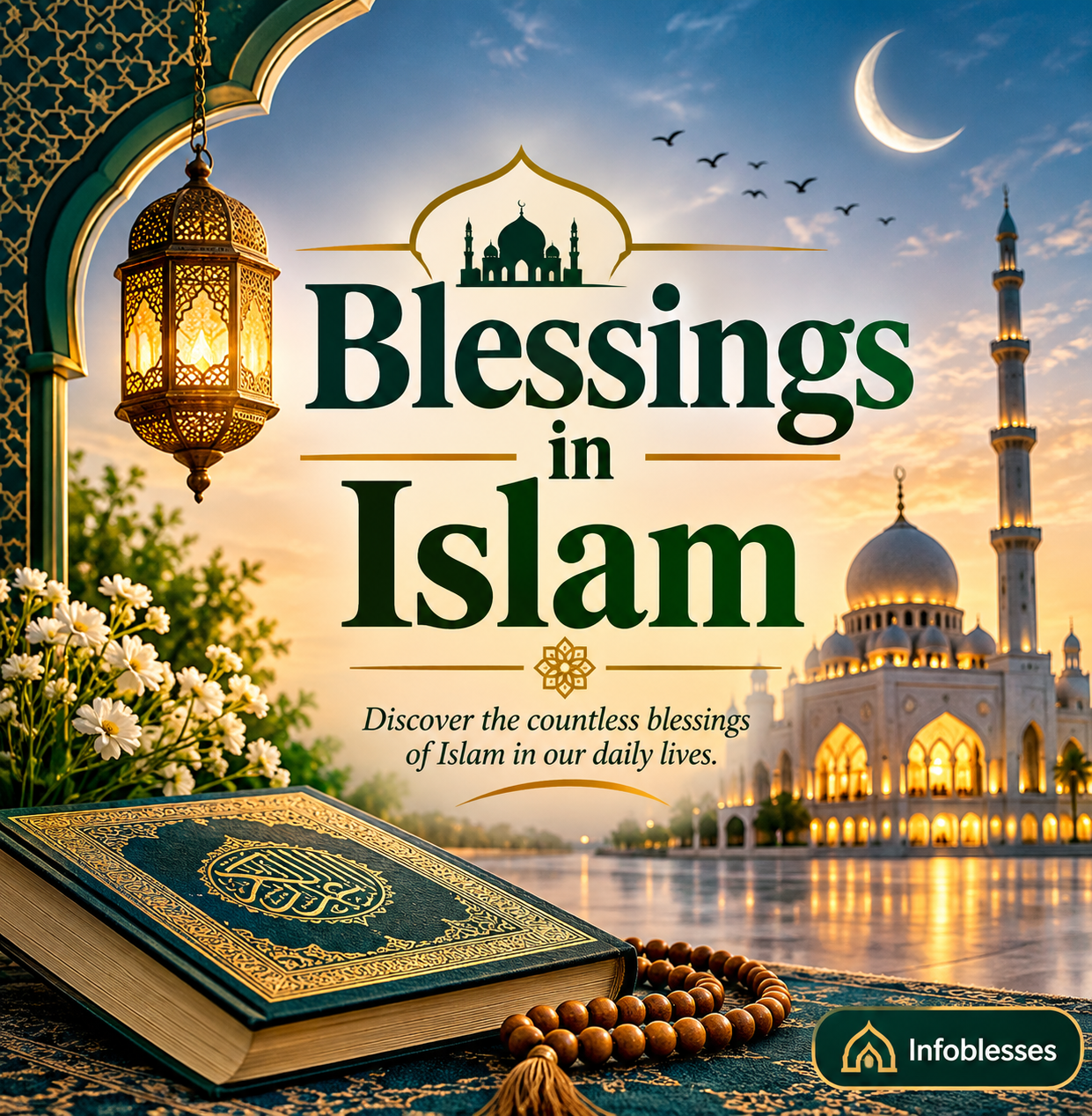
Blessings are among the greatest gifts that Allah Almighty has given humanity. Every breath, every moment of peace, every opportunity to learn, and every act of kindness can be considered a blessing. In Islam, blessings are not limited to wealth, good health, or material possessions. They also include faith, guidance, family, knowledge, patience, forgiveness, and countless unseen favors.
The concept of blessings in Islam is deeply connected to gratitude, faith, and a person’s relationship with Allah. Muslims are encouraged to recognize these favors, express appreciation, and use them in ways that please their Creator.
Sometimes, people focus so much on what they don’t have that they forget to appreciate what they already possess. Islamic teachings offer a different perspective: true happiness isn’t necessarily found in having everything, but in recognizing the value of what Allah has provided.
1. Understanding the Meaning of Blessings in Islam
What Does Blessing Mean in Islam?
In Islam, the Arabic word commonly associated with blessings is Ni’mah (نعمة), which means favor, benefit, or blessing. Another important word is Barakah (بركة), meaning divine blessing, abundance, or goodness that Allah places in something.
Although these terms are closely related, they have slightly different meanings.
-
Ni’mah: A gift or favor provided by Allah, such as health, wealth, family, and knowledge.
-
Barakah: The goodness, lasting benefit, and increase that Allah places within a gift or situation.
For example, someone may earn a modest income but manage it wisely, support their family, help others, and remain satisfied. Another person may earn much more but experience constant worry and dissatisfaction.
The first person’s situation may contain greater barakah, even though their financial resources are smaller.
This teaches an important lesson: blessings aren’t measured only by quantity. Their real value also depends on how beneficial they are and whether they bring a person closer to Allah.
Why Are Blessings Important in Islamic Belief?
Islam teaches that everything ultimately belongs to Allah. Human beings are temporary owners and caretakers of the things entrusted to them.
The Quran reminds humanity:
“And if you should count the favors of Allah, you could not enumerate them.”
— Surah Ibrahim, 14:34.
This verse highlights the enormous number of blessings that surround human life. Many of these favors are so common that people rarely notice them.
Consider some everyday examples:
-
Waking up safely in the morning.
-
Having clean drinking water.
-
Being able to see, hear, and speak.
-
Having food to eat.
-
Receiving affection from family members.
-
Having an opportunity to pray.
-
Learning something useful.
-
Finding comfort after a difficult day.
These ordinary experiences are valuable gifts.
A person doesn’t need to own a large house, expensive car, or substantial bank balance to experience the blessings of Allah. Sometimes, a peaceful heart and a healthy relationship with family are far more valuable than material possessions.
The Difference Between Ni’mah and Barakah
Understanding these two concepts helps Muslims appreciate blessings more deeply.
| Concept | Meaning | Example |
|---|---|---|
| Ni’mah | A favor or gift from Allah | Money, health, family |
| Barakah | Divine goodness and lasting benefit | A small income that meets many needs |
| Shukr | Gratitude toward Allah | Thanking Allah through words and actions |
| Sabr | Patience during difficulty | Remaining faithful during hardship |
In simple terms, Ni’mah refers to the gift, Barakah refers to the goodness within it, Shukr refers to gratitude, and Sabr refers to patience.
All four concepts contribute to a balanced Islamic lifestyle.
Are All Blessings Material?
No. This is one of the most important points to understand.
Many people associate blessings with money, property, jewelry, business success, and expensive possessions. However, Islamic teachings offer a much wider understanding.
Faith, guidance, knowledge, good character, forgiveness, and the ability to perform righteous deeds are also tremendous blessings.
In fact, spiritual blessings can be more valuable than material possessions because they influence a person’s relationship with Allah and their preparation for the Hereafter.
A wealthy person may have many possessions but struggle with gratitude. Meanwhile, someone with limited resources may possess strong faith, contentment, and generosity.
Islam encourages Muslims to value both worldly and spiritual favors without allowing material desires to control their hearts.
2. Types of Blessings in Islam
Allah has provided human beings with countless types of blessings. Some are visible, while others remain hidden. Some provide immediate comfort, while others become valuable over time.
Recognizing these different forms of blessings helps people develop gratitude and avoid taking everyday favors for granted.
1. Spiritual Blessings
Spiritual blessings are among the greatest favors Allah can give a person.
They include:
-
The gift of Islam.
-
Strong faith (Iman).
-
Guidance toward righteousness.
-
The ability to perform Salah.
-
Love for the Quran.
-
Repentance and forgiveness.
-
Trust in Allah (Tawakkul).
-
The desire to perform good deeds.
These blessings guide Muslims toward a meaningful life and help them remain connected to their Creator.
For instance, being able to wake up for Fajr prayer is a blessing. Having the desire to read the Quran is another. Even feeling regret after committing a sin can become an opportunity to return to Allah through sincere repentance.
Spiritual blessings aren’t always visible to other people, but their influence can be profound.
2. Physical and Health Blessings
A healthy body allows people to work, study, travel, worship, care for family members, and contribute to society.
Some important physical blessings include:
-
Healthy eyesight.
-
Hearing and speech.
-
Physical strength.
-
Mobility.
-
Restful sleep.
-
Access to clean water.
-
The ability to breathe comfortably.
People often recognize the importance of health only after experiencing illness or physical difficulty.
This is why Muslims should appreciate their health and use their physical abilities responsibly.
The Prophet Muhammad (peace be upon him) highlighted the importance of health and free time in a Hadith recorded in Sahih al-Bukhari.
He explained that many people lose out regarding two blessings: health and free time.
Reference: Sahih al-Bukhari 6412.
The lesson is simple: don’t waste valuable opportunities. Use your health and time for beneficial activities before circumstances change.
3. Financial and Material Blessings
Money and material possessions are also blessings from Allah.
They can help people meet their needs, support their families, educate their children, provide charity, and contribute to society.
Examples include:
-
A halal source of income.
-
A comfortable home.
-
Clothing and food.
-
Transportation.
-
Business opportunities.
-
Savings.
-
Useful possessions.
However, Islam doesn’t teach that wealth automatically means Allah is pleased with someone or that poverty means Allah has rejected someone.
Both wealth and financial difficulty can be tests.
A wealthy Muslim should show gratitude, avoid arrogance, and fulfill financial responsibilities. A person with limited resources should remain hopeful, seek lawful opportunities, and avoid despair.
4. Family and Relationship Blessings
Family relationships are among life’s most meaningful blessings.
Having caring parents, a supportive spouse, loving children, trustworthy friends, and kind neighbors can provide emotional support and companionship.
Important relationship blessings include:
-
Parents who offer guidance.
-
A spouse who provides support.
-
Children who bring happiness.
-
Friends who encourage good behavior.
-
Relatives who maintain family ties.
-
People who offer help during difficult moments.
Islam places great importance on kindness, respect, mercy, and maintaining family relationships.
A Muslim should never treat loved ones as ordinary possessions. Instead, they should recognize relationships as responsibilities and gifts that require care.
5. Blessings of Knowledge and Wisdom
Knowledge is another great favor.
The ability to read, understand, teach, learn, and make wise decisions helps people improve their lives and benefit others.
Islam encourages the pursuit of beneficial knowledge, particularly knowledge that strengthens faith and improves human well-being.
Examples include:
-
Understanding the Quran.
-
Learning Islamic teachings.
-
Developing useful professional skills.
-
Teaching children good manners.
-
Learning how to distinguish right from wrong.
-
Sharing beneficial information.
Knowledge becomes especially valuable when it is combined with humility and good actions.
6. Blessings of Time and Opportunities
Time is a gift that cannot be recovered once it has passed.
A free afternoon, an opportunity to study, a chance to reconcile with someone, or an available moment for prayer can all be blessings.
Muslims should avoid wasting time on activities that bring no meaningful benefit.
This doesn’t mean every moment must be spent working. Rest, recreation, and family time can also be beneficial when balanced appropriately.
The important thing is to use available opportunities wisely.
7. Hidden Blessings
Not every blessing appears pleasant at first.
Sometimes, a rejected opportunity prevents a person from entering a harmful situation. A delay may provide time for preparation. A difficult experience may teach patience, humility, or compassion.
However, Muslims shouldn’t assume that every hardship is automatically a blessing or claim to know Allah’s specific reason for an event.
Rather, they can maintain hope that Allah’s wisdom is greater than their understanding.
The key lesson: Blessings come in many forms. Recognizing them allows Muslims to develop gratitude, humility, and a stronger connection with Allah.
3. Importance of Blessings in Islam
Blessings play a central role in Islamic belief because they remind people of their dependence on Allah.
Every favor creates an opportunity to express gratitude and use that favor responsibly.
Blessings Strengthen Faith
When Muslims recognize the favors surrounding them, they become more aware of Allah’s mercy and generosity.
For example, considering the complexity of the human body, the availability of food, and the beauty of nature can encourage reflection on the greatness of the Creator.
This awareness strengthens faith and reminds people that life isn’t simply a collection of random possessions.
Blessings Teach Gratitude
Gratitude, known as Shukr, is an essential Islamic value.
The Quran clearly connects gratitude with an increase in Allah’s favors.
Allah says:
“If you are grateful, I will surely increase you [in favor].”
— Surah Ibrahim, 14:7.
Translation+1
This verse teaches that gratitude is more than polite language. It is an attitude that should influence a person’s behavior.
A grateful Muslim recognizes the source of their blessings and uses them responsibly.
Blessings Encourage Good Character
Recognizing blessings helps develop positive qualities such as:
-
Humility instead of arrogance.
-
Generosity instead of selfishness.
-
Contentment instead of constant dissatisfaction.
-
Kindness instead of harshness.
-
Patience instead of unnecessary complaints.
For example, someone who appreciates their financial resources may become more willing to help people experiencing poverty.
Likewise, someone who recognizes the blessing of education may help children who lack learning opportunities.
Blessings Create Social Responsibility
Islam doesn’t encourage people to enjoy their blessings while ignoring the needs of others.
Wealth creates responsibilities toward family members and those entitled to financial assistance. Knowledge creates opportunities to teach and guide. Physical strength can be used to help others.
In this way, blessings become a means of improving society.
Blessings Help Develop Contentment
Contentment doesn’t mean giving up on personal goals.
Muslims can work hard, improve their financial circumstances, pursue education, and seek a better future while remaining grateful for what they already have.
The Prophet Muhammad (peace be upon him) taught Muslims to look at those with fewer worldly possessions rather than constantly comparing themselves with those who have more.
This guidance is recorded in Sahih al-Bukhari 6490.
Sunnah+1
Such an attitude helps protect the heart from envy and endless dissatisfaction.
Blessings Remind Muslims of Accountability
Every blessing is also a responsibility.
A person who receives wealth should consider whether it was earned lawfully and spent appropriately.
Someone who receives knowledge should avoid using it to mislead others.
A person blessed with influence should use it fairly.
In other words, blessings aren’t merely things to enjoy. They’re also trusts for which people should act responsibly.
4. Quranic Teachings About Blessings in Islam
The Holy Quran contains many verses that remind humanity of Allah’s favors. These verses encourage Muslims to reflect, express gratitude, and recognize that everything they possess ultimately comes from their Creator.
Here are some important Quranic teachings about blessings.
Surah Ibrahim (14:7): Gratitude Brings Increase
One of the most well-known verses about gratitude states:
“If you are grateful, I will surely increase you [in favor].”
This verse teaches that gratitude is closely connected to receiving more of Allah’s favors.
However, an increase in blessings doesn’t always mean receiving more money or possessions. It may also include:
-
Greater peace of mind.
-
Stronger faith.
-
Better use of available resources.
-
More opportunities to perform good deeds.
-
Greater satisfaction with life.
-
Increased ability to help others.
Muslims should therefore practice gratitude regardless of their financial circumstances.
Surah Ibrahim (14:34): Allah’s Blessings Cannot Be Counted
Allah reminds humanity that His favors are beyond human calculation.
People can count their possessions, but they cannot fully count the blessings that make those possessions useful.
For example, owning a car is one blessing, but being healthy enough to drive it, having safe roads, and reaching a destination safely are additional favors.
This verse encourages Muslims to look beyond obvious possessions and appreciate the countless details that support everyday life.
Surah Ar-Rahman (55:13): Remember Allah’s Favors
One of the repeated messages in Surah Ar-Rahman asks:
“So which of the favors of your Lord would you deny?”
This question appears repeatedly throughout the Surah.
Its repetition encourages human beings and jinn to reflect on Allah’s generosity and acknowledge His countless gifts.
Translation+1
Surah Al-Baqarah (2:152): Remember Allah and Be Grateful
Allah says:
“So remember Me; I will remember you. And be grateful to Me and do not deny Me.”
This verse connects remembrance of Allah with gratitude.
Muslims can practice remembrance through Salah, Quran recitation, supplication, and phrases such as Alhamdulillah and SubhanAllah.
These practices help keep the heart connected to Allah throughout daily life.
5. Hadith About Blessings in Islam
The Sunnah of Prophet Muhammad (peace be upon him) provides practical guidance on recognizing and appreciating blessings.
Several authentic Hadith explain how Muslims should treat their health, time, wealth, and everyday opportunities.
Hadith 1: Health and Free Time Are Valuable Blessings
The Prophet Muhammad (peace be upon him) said that two blessings are often wasted by many people: health and free time.
Reference: Sahih al-Bukhari 6412.
This Hadith teaches Muslims not to postpone beneficial actions unnecessarily.
A person who has good health should use it for worship, work, and helping others. Someone with available time should use it for learning, family responsibilities, and other beneficial activities.
Hadith 2: Look at Those With Fewer Worldly Possessions
The Prophet Muhammad (peace be upon him) advised:
“Look at those who are below you and do not look at those who are above you.”
Reference: Sahih Muslim 2963; a related narration appears in Sahih al-Bukhari 6490.
This teaching helps people avoid constantly comparing their wealth, appearance, and possessions with others.
It doesn’t discourage ambition or improvement. Rather, it teaches Muslims to appreciate what they have while working toward their goals.
Hadith 3: Allah Loves Gratitude
The Prophet Muhammad (peace be upon him) explained that Allah is pleased with a person who eats food and praises Him for it, or drinks something and praises Him for it.
Reference: Sahih Muslim 2734.
This Hadith demonstrates that gratitude doesn’t require extraordinary events.
Even eating an ordinary meal provides an opportunity to thank Allah.
Hadith 4: Use Blessings Before They Disappear
Islamic teachings repeatedly encourage believers to take advantage of opportunities before circumstances change.
The Hadith about health and free time is especially important in this regard.
People should avoid waiting for a perfect moment to pray, learn, give charity, reconcile with relatives, or perform good deeds.
Life is temporary, and opportunities may not always remain available.
6. Shukr: The Islamic Concept of Gratitude
Shukr is the Arabic term for gratitude and thankfulness.
In Islam, gratitude means recognizing Allah’s favors, appreciating them sincerely, and using them in ways that please Him.
It’s not limited to saying Alhamdulillah. True gratitude should influence the heart, words, and actions.
Three Important Dimensions of Gratitude
1. Gratitude of the heart
This means believing that blessings come from Allah and appreciating His generosity.
For example, a person who receives a job should recognize that their abilities, opportunities, and circumstances are ultimately gifts from Allah.
2. Gratitude through words
Muslims can express appreciation by saying:
-
Alhamdulillah (All praise belongs to Allah).
-
JazakAllahu Khairan (May Allah reward you with goodness).
-
SubhanAllah (Glory be to Allah).
These expressions remind believers to acknowledge Allah’s favors.
3. Gratitude through actions
This is perhaps the most practical form of gratitude.
Examples include:
-
Using wealth to support people in need.
-
Using knowledge to educate others.
-
Using good health for worship and beneficial work.
-
Treating parents with kindness.
-
Protecting the rights of family members.
-
Avoiding sinful uses of personal resources.
How Can Muslims Practice Shukr Every Day?
Developing gratitude doesn’t have to be complicated.
A simple daily routine can make a meaningful difference.
| Time | Gratitude Practice |
|---|---|
| Morning | Thank Allah for another day |
| After Salah | Remember Allah and make dua |
| Before eating | Say Bismillah |
| After eating | Praise Allah |
| During work | Use your abilities responsibly |
| Evening | Reflect on daily blessings |
| Before sleeping | Thank Allah and seek forgiveness |
Shukr and Sabr: Two Essential Qualities
Shukr and Sabr are closely connected in Islamic life.
Shukr means showing gratitude when things are going well. Sabr means remaining patient and faithful when facing difficulties.
A Muslim needs both qualities.
When receiving wealth, express gratitude. When experiencing financial difficulty, remain patient while taking lawful steps to improve the situation.
When enjoying good health, thank Allah. When experiencing illness, seek appropriate treatment, make dua, and remain hopeful.
This balanced attitude prevents people from becoming arrogant during success or losing hope during hardship.
7. 11 Powerful Ways to Increase Blessings in Islam
Islam teaches several practical ways to recognize, preserve, and seek barakah in everyday life.
The following habits can help Muslims develop a more grateful and purposeful lifestyle.
1. Perform the Five Daily Prayers
Salah is one of the most important acts of worship in Islam.
Regular prayer strengthens a Muslim’s relationship with Allah and provides opportunities to remember Him throughout the day.
It also creates discipline and encourages reflection.
2. Recite and Understand the Quran
The Quran provides guidance for spiritual and practical life.
Muslims should try to read it regularly, understand its meanings, and apply its teachings.
Even a few verses read with understanding can provide valuable lessons.
3. Make Dua Regularly
Dua allows Muslims to ask Allah for guidance, forgiveness, protection, and goodness.
Ask Allah for barakah in:
-
Your health.
-
Your family.
-
Your income.
-
Your education.
-
Your time.
-
Your work.
-
Your faith.
Remember that dua should be accompanied by sincere effort and lawful action.
4. Give Charity (Sadaqah)
Charity is an excellent way to express gratitude.
It doesn’t always require large amounts of money. Helping a neighbor, feeding someone, supporting an orphan, or sharing useful knowledge can also be acts of kindness.
Sadaqah helps create compassion and strengthens relationships within society.
5. Earn and Spend Halal Wealth
Muslims should seek lawful income and avoid dishonest financial practices.
Honesty in business, fair treatment of employees, and fulfilling financial responsibilities are important parts of Islamic conduct.
Wealth becomes more beneficial when earned and spent responsibly.
6. Respect Parents and Maintain Family Relationships
Treating parents with kindness and maintaining family ties are important Islamic responsibilities.
Spend time with loved ones, speak respectfully, offer assistance, and forgive whenever appropriate.
Strong family relationships can bring emotional support and lasting happiness.
7. Practice Istighfar
Istighfar means seeking forgiveness from Allah.
Muslims can regularly say:
أَسْتَغْفِرُ اللَّهَ
Astaghfirullah — I seek forgiveness from Allah.
Repentance reminds believers of their dependence on Allah and encourages them to correct their mistakes.
8. Avoid Envy and Constant Comparison
Social media often encourages people to compare their homes, income, clothes, holidays, and achievements.
Such comparisons can create unnecessary dissatisfaction.
Instead, appreciate your own blessings, learn from others’ achievements, and ask Allah to provide goodness for everyone.
9. Be Kind and Generous
Kindness is an important part of Islamic character.
Help people when possible, speak gently, forgive mistakes, and avoid hurting others.
A person who uses their blessings to benefit others demonstrates gratitude through action.
10. Use Time Wisely
Time is a valuable gift.
Create a healthy balance between worship, work, education, family, rest, and recreation.
Avoid wasting entire days on activities that provide no meaningful benefit.
11. Say Alhamdulillah Frequently
One of the simplest ways to develop gratitude is to remember Allah throughout the day.
Say Alhamdulillah after meals, during moments of happiness, after completing tasks, and whenever you recognize a favor.
However, remember that gratitude should also appear in your behavior.
8. Blessings During Hardships and Difficult Times
One important aspect of Islamic teachings is that blessings aren’t always connected with comfort or happiness.
People experience illness, financial difficulties, family problems, disappointment, and loss. During such moments, it may become difficult to recognize the favors that remain in their lives.
However, Islam teaches believers to maintain hope, practice patience, and trust Allah.
Are Difficulties Also Tests From Allah?
Yes. The Quran explains that human beings will experience different kinds of tests.
In Surah Al-Baqarah (2:155), Allah mentions that people will be tested with fear, hunger, loss of wealth, lives, and fruits. The verse also gives glad tidings to those who remain patient.
This teaches Muslims that hardship is part of human life.
A difficult experience doesn’t automatically mean that Allah has abandoned someone or that the person is being punished.
Likewise, worldly success doesn’t automatically prove that someone is spiritually superior.
Both ease and difficulty can be tests.
How Should Muslims Respond to Hardships?
Muslims can respond to difficult situations through several important actions:
-
Practice Sabr: Remain patient and avoid losing hope.
-
Make Dua: Ask Allah for help, guidance, and relief.
-
Seek Solutions: Take practical steps to improve the situation.
-
Maintain Salah: Continue fulfilling religious responsibilities.
-
Seek Support: Talk to trustworthy family members, professionals, or knowledgeable people.
-
Remember Existing Blessings: Appreciate the good things that remain.
For example, someone facing unemployment may feel disappointed. However, they can continue applying for jobs, improving their skills, praying, and seeking lawful opportunities.
Gratitude doesn’t require ignoring pain. A person can feel sad, acknowledge hardship, and still remain thankful to Allah.
Finding Hope Through Faith
Faith provides emotional strength during difficult circumstances.
Muslims believe that Allah knows their struggles and that sincere prayers and good deeds are never insignificant.
Sometimes, a person discovers patience, compassion, and inner strength through experiences they never expected to face.
The goal isn’t to pretend that hardship is easy. It’s to face life’s challenges without losing hope in Allah’s mercy.
9. Barakah in Everyday Life
Barakah is an important concept in understanding the deeper meaning of blessings in Islam.
It refers to goodness and beneficial increase placed by Allah in something.
A person may have limited resources but experience satisfaction, stability, and usefulness in daily life.
Another person may have greater material wealth but struggle to find peace.
This shows why Muslims should seek barakah rather than focusing only on quantity.
Barakah in Wealth
Barakah in wealth is associated with lawful earnings, responsible spending, honesty, charity, and fulfilling financial obligations.
For example, a small business operated honestly may provide enough income to support a family and employ others.
A person should avoid cheating, fraud, exploitation, and unlawful financial practices.
Barakah in Time
Time becomes more beneficial when used wisely.
Someone who plans their day around prayer, work, learning, and family responsibilities may accomplish meaningful things without constantly feeling rushed.
Practical habits include:
-
Starting important tasks on time.
-
Avoiding unnecessary distractions.
-
Setting realistic priorities.
-
Taking appropriate breaks.
-
Maintaining a regular sleep schedule.
Barakah in Family Life
Family barakah can be encouraged through kindness, respect, forgiveness, and mutual support.
Parents should guide children with patience. Spouses should treat each other with dignity. Relatives should maintain relationships whenever possible.
A home doesn’t need expensive furniture or luxury decorations to become a place of comfort.
Love, mercy, respect, and faith contribute greatly to a peaceful household.
Barakah in Knowledge
Knowledge becomes beneficial when it is used to improve people’s lives.
A teacher who educates students sincerely, a doctor who treats patients responsibly, and a parent who teaches children good manners are all using knowledge for beneficial purposes.
Muslims should seek knowledge that strengthens faith and provides real value to society.
10. Common Mistakes About Blessings in Islam
Although blessings are an important part of Islamic belief, people sometimes misunderstand their meaning.
Avoiding these mistakes can help Muslims develop a healthier understanding of gratitude.
Mistake 1: Thinking Wealth Is the Only Blessing
Money is valuable, but it isn’t the only favor Allah provides.
Faith, family, health, knowledge, peace, and opportunities are also important blessings.
Mistake 2: Believing Every Wealthy Person Is More Blessed
A large bank balance doesn’t necessarily mean a person has greater barakah or spiritual success.
Wealth is a responsibility and a test.
Mistake 3: Forgetting Gratitude During Difficult Times
People sometimes focus entirely on their problems and overlook the good things that remain.
It’s important to acknowledge hardship while continuing to recognize Allah’s favors.
Mistake 4: Treating Gratitude as Words Only
Saying Alhamdulillah is important, but gratitude should also appear through actions.
Using wealth for charity, treating people kindly, and avoiding misuse of resources are practical expressions of thankfulness.
Mistake 5: Comparing Your Life With Others
Constant comparison can create envy and dissatisfaction.
Instead, Muslims should focus on personal improvement, lawful goals, and appreciation of their own circumstances.
Mistake 6: Taking Health and Time for Granted
Health and time are valuable opportunities.
People should use them wisely rather than waiting until they are lost to recognize their importance.
11. Frequently Asked Questions (FAQs) About Blessings in Islam
1. What Does Blessing Mean in Islam?
In Islam, a blessing is a favor or gift from Allah. It can include faith, health, wealth, family, knowledge, food, safety, and countless other benefits. The Arabic word Ni’mah commonly refers to a favor or blessing, while Barakah refers to divine goodness and beneficial increase.
2. What Is the Most Important Blessing in Islam?
Faith (Iman) and guidance toward Islam are among the greatest blessings because they guide a person toward worship, righteous behavior, and success in the Hereafter. Muslims should value spiritual blessings alongside their worldly favors.
3. Which Quranic Verse Talks About Increasing Blessings?
Surah Ibrahim (14:7) states that if people are grateful, Allah will increase His favors upon them. This verse highlights the importance of gratitude in Islamic life.
4. How Can I Get More Barakah in My Life?
Muslims can seek barakah through sincere faith, regular Salah, Quran recitation, dua, repentance, charity, lawful earnings, kindness, and gratitude. They should also fulfill their responsibilities and avoid dishonesty.
5. What Is the Difference Between Ni’mah and Barakah?
Ni’mah refers to a favor or gift from Allah, such as wealth, health, or family. Barakah refers to the goodness, benefit, and lasting value Allah places within something.
6. Is Good Health a Blessing in Islam?
Yes. Good health is a valuable blessing because it allows people to worship, work, study, support their families, and help others. Prophet Muhammad (peace be upon him) specifically mentioned health as one of the two blessings that many people waste.
7. Can Hardships Be a Blessing in Islam?
Hardships can become opportunities for patience, spiritual growth, repentance, and reflection. However, Muslims shouldn’t assume that every hardship is automatically a blessing or claim to know Allah’s specific purpose behind every event. They should seek help, take practical steps, and remain hopeful.
8. What Should Muslims Say When They Receive a Blessing?
Muslims can say Alhamdulillah, meaning “All praise belongs to Allah.” They can also express gratitude through sincere prayers and beneficial actions.
9. Does Giving Charity Increase Blessings?
Charity is strongly encouraged in Islam. It helps people in need, develops generosity, and brings spiritual reward. Muslims should give sincerely and avoid treating charity merely as a way to obtain worldly wealth.
10. How Can I Teach Children to Appreciate Allah’s Blessings?
Parents can teach gratitude by encouraging children to say Alhamdulillah, appreciate food and water, respect parents, share with others, care for their belongings, and recognize Allah’s favors in everyday life.
12. Conclusion:
Blessings in Islam are much more than wealth, possessions, or worldly success. They include faith, health, family, knowledge, time, peace, guidance, and countless favors that people often overlook.
The Quran and Sunnah teach Muslims to recognize these gifts, express gratitude, and use them responsibly.
Surah Ibrahim (14:7) provides a powerful reminder that gratitude is connected with an increase in Allah’s favors. Similarly, the teachings of Prophet Muhammad (peace be upon him) encourage believers to value their health, time, and everyday opportunities.
Every Muslim should try to develop three important habits:
-
Recognize: Identify and appreciate the blessings already present in your life.
-
Be grateful: Thank Allah through your heart, words, and actions.
-
Share: Use your blessings to help others and contribute positively to society.
Remember, a truly blessed life isn’t necessarily the one with the most possessions. It’s a life filled with faith, gratitude, kindness, contentment, and beneficial actions.
Make Alhamdulillah a regular part of your daily routine, remain patient during difficulties, and never underestimate the value of Allah’s countless favors.
May Allah bless us with beneficial knowledge, strong faith, good health, halal provision, peaceful families, and abundant barakah in this life and the Hereafter. Ameen.

Welcome to Info Blesses I am Rana Ahtasham an AI Powered SEO and Content Writer With 3 year experience.I help websites rank highter, grow traffic, and look amazing. My goal is to make SEO and web design simple and effective for everyone.Lets achieve more togather!