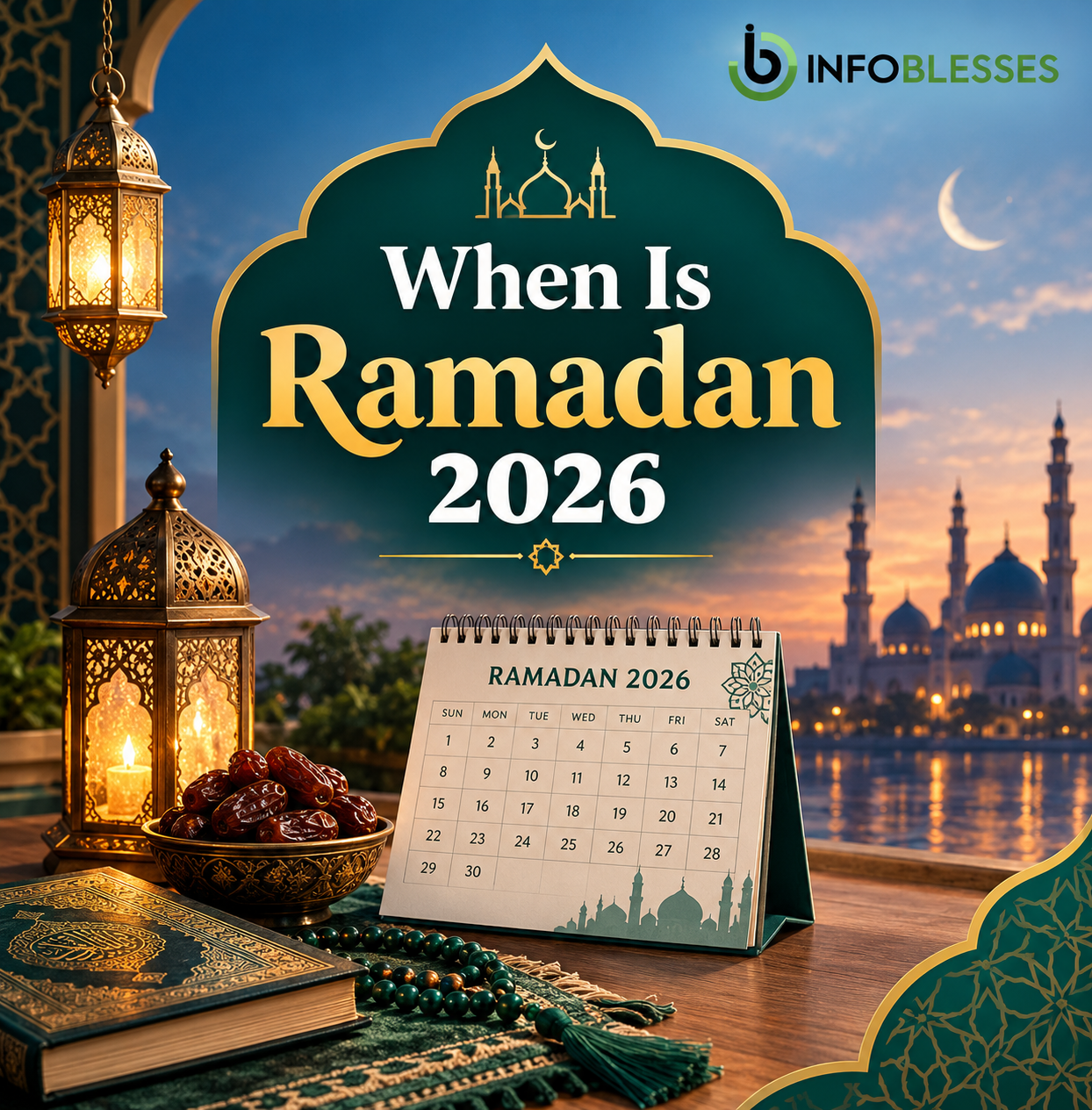
Ramadan is one of the most important months in the Islamic calendar. Every year, Muslims around the world look forward to this blessed month of fasting, prayer, charity, reflection, and spiritual growth. If you’re searching for when is Ramadan 2026, the answer depends on local moon sighting and the country where you live.
In Pakistan, the Central Ruet-e-Hilal Committee announced that the Ramadan crescent was sighted on the evening of February 18, 2026, making Thursday, February 19, 2026, the first day of Ramadan in Pakistan.
Internationally, dates were not identical everywhere. Islamic Relief reported that Ramadan began in some locations on the evening of February 17, with the first day of fasting on February 18, while the exact beginning depended on local moon sighting.
This guide explains the important Ramadan 2026 dates, how the Islamic calendar determines Ramadan, fasting, Suhoor and Iftar, Taraweeh, Laylatul Qadr, Eid al-Fitr, and practical ways to prepare for this special month.
Ramadan 2026 at a Glance
The exact date of Ramadan changes every year because the Islamic calendar follows the lunar cycle rather than the Gregorian calendar.
For Pakistan, the important 2026 dates were:
| Event | Date |
|---|---|
| Ramadan moon sighting in Pakistan | February 18, 2026 |
| First fast in Pakistan | February 19, 2026 |
| Ramadan month | Ramadan 1447 AH |
| Approximate length | 29 or 30 days |
| Eid al-Fitr | Determined by Shawwal moon sighting |
Pakistan’s Central Ruet-e-Hilal Committee confirmed the Ramadan moon after receiving verified testimonies from different parts of the country. The first fast was therefore observed on February 19.
The important thing to remember is that Ramadan does not always begin on the same Gregorian date worldwide. Different countries and communities may follow different moon-sighting decisions.
When Is Ramadan 2026 in Pakistan?
For people in Pakistan, Ramadan 2026 officially began on Thursday, February 19, 2026.
The Central Ruet-e-Hilal Committee met on February 18 to determine whether the Ramadan crescent had been sighted. After testimonies were received and verified, the committee announced that the moon had been sighted and that the first fast would take place on Thursday.
The Pakistan Meteorological Department had earlier reported that there was a fair chance of sighting the new moon on February 18. Its astronomical information indicated that the new moon had been born on February 17, while visibility on February 18 was considered possible.
This shows why calculated calendars and official announcements can sometimes differ. Astronomical calculations can estimate when the moon should be visible, but communities that follow traditional moon sighting may wait for an actual confirmed sighting.
For Pakistani Muslims, the official announcement from the Central Ruet-e-Hilal Committee determined the national start of Ramadan.
Why Does Ramadan Start on Different Dates?
Ramadan is the ninth month of the Islamic Hijri calendar. Unlike the Gregorian calendar, which follows the solar year, the Islamic calendar is based on lunar months.
A lunar month normally lasts either 29 or 30 days. Ramadan begins when the new crescent moon, known as the hilal, is confirmed according to the method followed by a particular community or country.
This means two countries can sometimes begin Ramadan on different days.
For example, in 2026, Saudi Arabia and several Gulf countries began fasting on February 18, while Pakistan’s official first fast was February 19 after its own crescent-sighting process.
Neither date should automatically be viewed as a mistake. Moon visibility can vary according to geography, weather, timing, and the religious method being followed.
How Long Is Ramadan 2026?
Ramadan can last 29 or 30 days.
The length is determined by the beginning of the following Islamic month, Shawwal. If the Shawwal crescent is sighted after 29 days of Ramadan, Eid al-Fitr begins. If it is not sighted, Ramadan completes 30 days.
This is why an exact Eid date can remain uncertain until the relevant moon-sighting decision is made.
Islamic Relief explains that Ramadan follows the lunar cycle and generally shifts earlier by around 10 to 11 days in the Gregorian calendar each year.
Over time, Ramadan therefore moves through every season. Muslims may experience Ramadan during winter, spring, summer, and autumn as the years pass.
What Is Ramadan and Why Is It Important?
Ramadan is the ninth month of the Islamic calendar and is regarded as one of the most sacred periods in Islam.
During Ramadan, healthy adult Muslims who are required to fast abstain from food and drink from dawn until sunset. Fasting is called Sawm and is one of the Five Pillars of Islam.
However, Ramadan is about much more than avoiding food and water.
Muslims are encouraged to increase:
- Daily prayers
- Quran reading
- Charity and generosity
- Patience
- Forgiveness
- Self-discipline
- Kindness toward others
- Remembering Allah
- Helping people in need
Ramadan is also associated with the revelation of the Quran to Prophet Muhammad (peace be upon him). Islamic Relief describes Ramadan as a period for strengthening one’s relationship with Allah and increasing acts of worship and charity.
For many Muslims, the month provides an opportunity to slow down, reflect, and reset spiritually.
What Happens During a Ramadan Fast?
A daily Ramadan fast begins before dawn and ends at sunset.
Muslims usually wake before dawn for Suhoor, the pre-dawn meal. After the fasting time begins, they avoid food and drink until Iftar, the meal that breaks the fast at sunset.
A typical day may look like this:
- Wake before dawn.
- Eat Suhoor.
- Perform Fajr prayer.
- Continue fasting throughout the daylight hours.
- Continue normal work, school, and daily responsibilities.
- Prepare for Iftar near sunset.
- Break the fast at sunset.
- Pray Maghrib.
- Eat the evening meal.
- Perform Isha and, for many Muslims, Taraweeh prayers.
Fasting is not simply a physical exercise. It is intended to develop self-control, gratitude, awareness of people experiencing hardship, and devotion.
People who are not required to fast because of specific circumstances may have different Islamic rulings. Anyone with questions about their individual religious obligations should consult a trusted qualified scholar.
What Is Suhoor?
Suhoor is the meal eaten before the daily fast begins.
A balanced Suhoor can help a person manage the fasting day more comfortably. Many people choose foods containing complex carbohydrates, protein, fruit, vegetables, and sufficient fluids.
Common Suhoor choices include:
- Oatmeal
- Eggs
- Yogurt
- Whole-grain bread
- Fruit
- Dates
- Vegetables
- Water
- Milk
Very salty foods may make thirst more noticeable during the day, so moderation can be useful.
The exact end of Suhoor depends on the local Fajr time. Muslims should follow a reliable local Ramadan timetable rather than using a generic time from another city.
What Is Iftar?
Iftar is the evening meal used to break the fast.
Many Muslims traditionally break their fast with dates and water before eating a larger meal. Families may then enjoy foods such as rice, meat, vegetables, soup, fruit, or other traditional dishes.
Iftar is also an important social moment.
Families often gather together, mosques may provide meals, and communities organize food distributions for people who need assistance.
The spirit of Iftar goes beyond the meal itself. Ramadan encourages generosity and reminds Muslims to care for neighbors, relatives, travelers, and people experiencing poverty.
What Is Taraweeh Prayer?
Taraweeh refers to special night prayers commonly performed during Ramadan after Isha prayer.
Many Muslims attend a mosque for Taraweeh, while others pray at home.
The number of prayer units can vary according to established practices and schools of Islamic jurisprudence. The focus is on worship, reflection, and recitation of the Quran.
Mosques may arrange extended Quran recitation throughout Ramadan, with some completing the Quran during the month.
Taraweeh can make Ramadan evenings feel especially peaceful and spiritually focused.
What Is Laylatul Qadr?
Laylatul Qadr, often translated as the Night of Decree or Night of Power, is one of the most significant nights of Ramadan.
It is associated with the revelation of the Quran and is described in Surah Al-Qadr.
Muslims seek Laylatul Qadr during the final ten nights of Ramadan. Many give special attention to the odd-numbered nights, such as the 21st, 23rd, 25th, 27th, and 29th nights.
Although the 27th night is widely emphasized in many communities, Islamic Relief notes that Muslims are encouraged to seek the special night throughout the final ten nights rather than assuming one specific night with certainty.
Common acts of worship during these nights include:
- Quran recitation
- Dua
- Dhikr
- Extra prayer
- Charity
- Asking Allah for forgiveness
- Reflection and repentance
Ramadan and the Quran
Ramadan has a particularly strong connection with the Quran.
Many Muslims set a goal to read more Quran during the month. Some read a few pages after each prayer, while others follow a structured daily reading plan.
A simple approach is to divide the Quran into manageable daily portions.
For example, a person who wants to complete the Quran during Ramadan can create a daily schedule based on their available time and reading speed.
The goal should not simply be finishing pages. Understanding, reflection, and applying Islamic teachings to daily life can also be important.
Even a small but consistent reading habit can make a meaningful difference.
Charity and Good Deeds During Ramadan
Charity is another major part of Ramadan.
Muslims may give Sadaqah, contribute to charitable projects, feed people, support families in need, or fulfill their required Zakat when due.
Good deeds don’t have to involve large amounts of money.
Examples include:
- Feeding someone
- Helping an elderly person
- Donating useful items
- Supporting a local charity
- Visiting someone who is alone
- Helping a neighbor
- Speaking kindly
- Forgiving someone
- Sharing food
Ramadan can therefore become a practical lesson in generosity.
How to Prepare for Ramadan
Preparing for Ramadan can make the month more organized and meaningful.
A few weeks before Ramadan, consider creating a simple plan.
Spiritual preparation
Set realistic goals for:
- Quran reading
- Daily prayers
- Dua
- Dhikr
- Charity
- Avoiding harmful habits
Practical preparation
You can also:
- Organize your Ramadan timetable
- Prepare basic groceries
- Plan Suhoor meals
- Plan balanced Iftar meals
- Adjust your sleep routine
- Reduce unnecessary screen time
- Set reminders for prayers
Don’t try to change everything overnight. Small, consistent improvements are often easier to maintain.
Ramadan Fasting Tips for a Better Routine
Fasting can change your normal daily routine, especially during the first few days.
Helpful general habits include drinking enough fluids between Iftar and Suhoor, eating balanced meals, getting sufficient rest, and avoiding excessive overeating.
A simple routine might include:
| Time | Activity |
|---|---|
| Before dawn | Suhoor and hydration |
| Dawn | Begin fast and pray Fajr |
| Daytime | Work, study, worship, and normal activities |
| Sunset | Iftar |
| Evening | Maghrib, dinner, and family time |
| Night | Isha, Taraweeh, Quran, and rest |
People with medical conditions, pregnant people, nursing mothers, older adults, children, or anyone unsure whether fasting is appropriate should seek qualified medical and religious guidance.
Ramadan 2026 and Eid al-Fitr
Ramadan ends when the month of Shawwal begins.
The first day of Shawwal is Eid al-Fitr, one of the two major Islamic festivals.
Because Ramadan can last 29 or 30 days, the exact Eid date depends on the sighting of the Shawwal crescent.
Islamic Relief’s 2026 calendar listed Eid al-Fitr as March 20 while noting that the date depends on moon sighting.
Eid al-Fitr usually includes:
- Eid prayer
- Charity through Zakat al-Fitr
- Family gatherings
- Visiting relatives and friends
- Sharing food
- Giving gifts
- Wearing clean or special clothing
- Thanking Allah for completing Ramadan
The festival marks the completion of a month of fasting and worship.
Ramadan 2026 Dates Around the World
There was some variation in Ramadan 2026 start dates around the world.
For example, Islamic Relief reported that Ramadan was expected to begin on the evening of February 17 in its timetable information, while Pakistan’s Central Ruet-e-Hilal Committee confirmed the first Pakistani fast for February 19.
This difference is normal because Islamic communities may follow local crescent sighting or other accepted methods for determining the beginning of an Islamic month.
When researching Ramadan dates online, always check the timetable for your own city and the religious authority or mosque you follow.
For additional Islamic calendar information, you can consult the Islamic Relief 2026 Islamic Calendar.
Ramadan 2026 Frequently Asked Questions
1. When did Ramadan 2026 start in Pakistan?
Ramadan 2026 started in Pakistan on Thursday, February 19, 2026. The Central Ruet-e-Hilal Committee announced the crescent sighting on February 18.
2. Why did some countries start Ramadan on a different day?
The Islamic calendar is lunar, and the beginning of Ramadan can depend on local crescent-moon sighting. Different countries and communities may therefore begin fasting on different dates.
3. How many days is Ramadan?
Ramadan lasts either 29 or 30 days, depending on the sighting that determines the beginning of Shawwal.
4. What is the first meal before fasting?
The pre-dawn meal is called Suhoor or Sehri. Muslims eat and drink before the daily fast begins.
5. What is Iftar?
Iftar is the meal used to break the fast at sunset. Many Muslims traditionally begin Iftar with dates and water.
6. What is Taraweeh?
Taraweeh is a special night prayer commonly performed during Ramadan after Isha prayer. It may be performed in a mosque or at home.
7. When is Laylatul Qadr?
Laylatul Qadr is sought during the final ten nights of Ramadan, especially the odd-numbered nights. Many communities give particular attention to the 27th night, but Muslims are encouraged to seek it throughout the final ten nights.
8. Does Ramadan begin at midnight?
No. The Islamic date begins at sunset. Therefore, the evening before the first day of fasting is already part of the new Islamic date.
9. Is Ramadan the same date every year?
No. Ramadan moves through the Gregorian calendar because the Islamic calendar is based on lunar months. It generally moves about 10 to 11 days earlier each Gregorian year.
10. When does Ramadan end?
Ramadan ends when Shawwal begins. The exact date depends on the sighting or determination of the Shawwal crescent, and that marks the beginning of Eid al-Fitr.
Final Thoughts on Ramadan 2026
So, when is Ramadan 2026? The answer depends on location and moon-sighting practice.
In Pakistan, the Central Ruet-e-Hilal Committee confirmed that the Ramadan crescent was sighted on February 18, making February 19, 2026, the first day of Ramadan.
Elsewhere, some Muslim communities began fasting a day earlier. This difference reflects the lunar nature of the Islamic calendar and the different moon-sighting practices used around the world.
Ramadan is much more than a calendar date. It is a month centered on fasting, prayer, Quran, charity, patience, forgiveness, and spiritual reflection.
Whether you’re researching Ramadan 2026 dates, preparing for future Ramadan months, or simply learning about Islamic traditions, understanding the lunar calendar and local moon-sighting process helps explain why dates can vary.
May Ramadan be a time of peace, mercy, reflection, generosity, and renewed faith for Muslims around the world.
Welcome to Info Blesses I am Rana Ahtasham an AI Powered SEO and Content Writer With 3 year experience.I help websites rank highter, grow traffic, and look amazing. My goal is to make SEO and web design simple and effective for everyone.Lets achieve more togather!