An Islamic prayer for blessings is a sincere dua in which a Muslim asks Allah for goodness, mercy, peace, protection, guidance, and barakah. Dua is an important part of a believer’s relationship with Allah because it reminds the heart that every blessing ultimately comes from Him.
In Islam, blessings aren’t limited to money or material success. A peaceful heart, righteous family, good health, halal income, beneficial knowledge, strong iman, and time spent in worship can all be blessings from Allah.
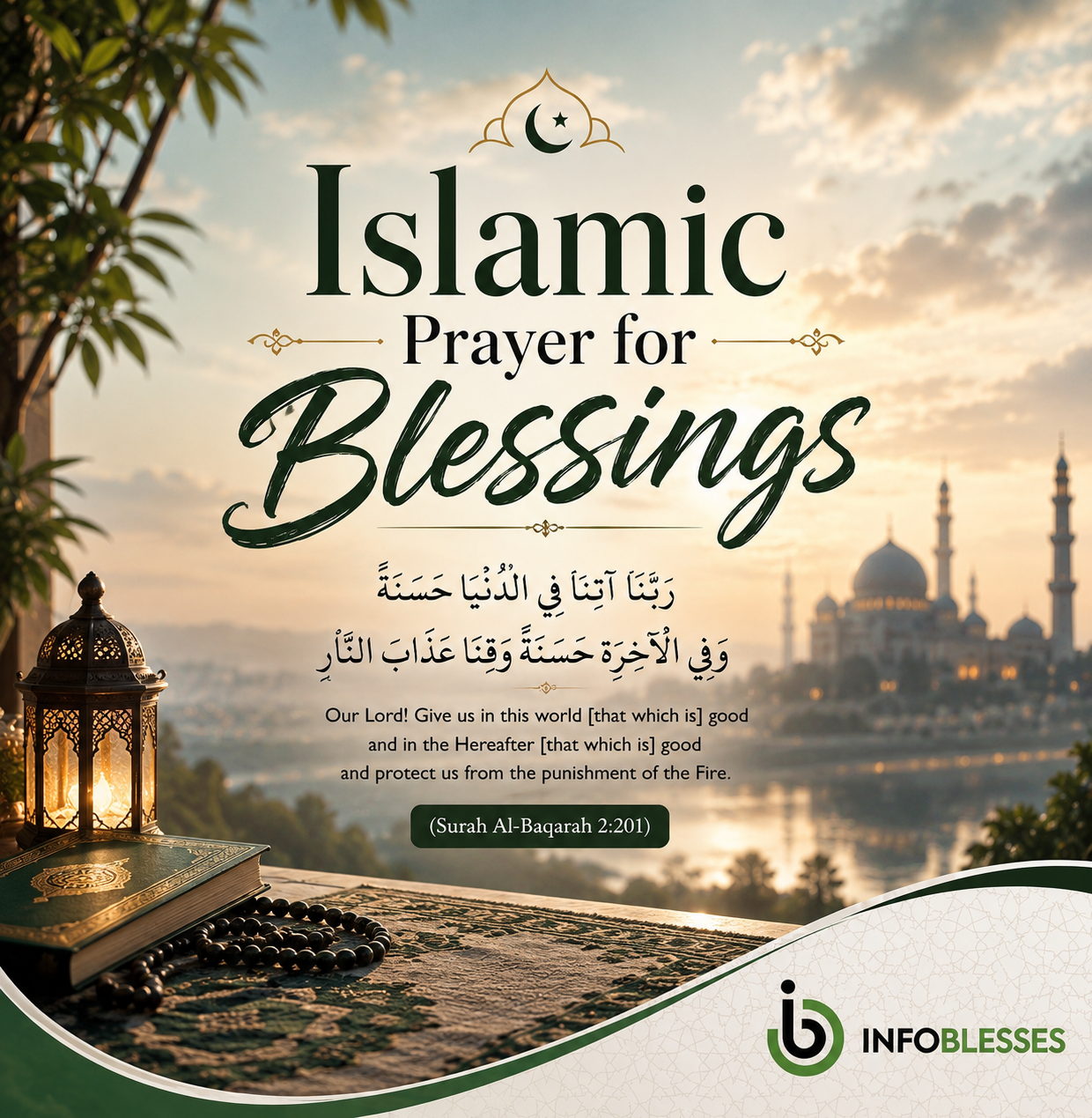
The Quran teaches Muslims to call upon Allah and seek His help. One of the most comprehensive supplications is:
“Our Lord, give us good in this world and good in the Hereafter.”
This dua from Surah Al-Baqarah 2:201 beautifully combines worldly and eternal goodness.
What Is Barakah in Islam?
Barakah means blessing, goodness, and beneficial increase. Something doesn’t have to be large to contain great barakah. A modest home can be filled with love, a small income can provide enough for a family, and a short amount of time can become productive when Allah places blessing in it.
Therefore, Muslims should ask Allah not only for more, but for barakah in what they already have.
You can ask Allah for barakah in:
- Your daily time
- Your halal income
- Your health
- Your family
- Your marriage
- Your children
- Your education
- Your business
- Your work
- Your home
- Your worship
- Your future
A sincere Islamic prayer for blessings can bring a believer’s attention back to gratitude and dependence upon Allah.
7 Powerful Islamic Duas for Blessings

The following duas focus on different areas of life. Some are Quranic supplications, while others are personal duas written in simple English. When making personal dua, Muslims can ask Allah sincerely for anything halal and beneficial.
1. Dua for General Blessings
“O Allah, bless my life, my faith, my family, my health, my work, and my halal provision. Give me what is good for me and keep me away from what harms me.”
This is a beautiful personal supplication for someone who wants Allah’s blessing in every important part of life.
2. Dua for Peace of Heart
“O Allah, fill my heart with iman, peace, patience, and gratitude. Remove unnecessary worry from my heart and guide me toward what pleases You.”
A believer can make this dua during stressful moments, after salah, or whenever the heart feels unsettled.
3. Dua for Family Blessings
The Quran contains a beautiful supplication for spouses and children:
“Our Lord, grant us from our spouses and offspring comfort to our eyes.”
This dua appears in Surah Al-Furqan 25:74. It reminds Muslims to ask Allah for righteous families and peaceful homes.
4. Dua for Halal Rizq
“O Allah, provide me with halal and wholesome rizq, place barakah in my provision, and make me grateful for everything You give me.”
A Muslim should seek halal provision rather than wealth through prohibited means. Barakah in income is more valuable than wealth without peace or gratitude.
5. Dua for Health and Strength
“O Allah, bless me with good health and strength, protect me from harm, and help me use my health in Your obedience.”
Health is a valuable blessing. Asking Allah for well-being should also encourage a person to care responsibly for the body Allah has entrusted to them.
6. Dua for Guidance
“O Allah, guide me to the straight path, strengthen my iman, and help me choose what is pleasing to You.”
Guidance is one of the greatest blessings a Muslim can receive. Wealth and success have little value if a person loses their connection with Allah.
7. Dua for Protection
“O Allah, protect my faith, my family, my home, and my future from every harmful matter, and keep me firm upon Islam.”
A Muslim can ask Allah for protection from visible and hidden harm while continuing to follow the Quran and Sunnah.
For Quranic verses and their meanings, you can use Quran.com as an additional Islamic reference.
Daily Ways to Seek Barakah From Allah

Dua becomes even more meaningful when it is supported by righteous actions. A Muslim shouldn’t simply ask Allah for blessings while ignoring the responsibilities of faith.
Start the day with Fajr prayer, remembrance of Allah, and a sincere intention to do good. Before work or study, ask Allah to place barakah in your efforts. During the day, maintain honesty, avoid haram earnings, treat people kindly, and remember Allah through dhikr.
Gratitude is another important part of seeking barakah. When you appreciate Allah’s blessings, you become less focused on what you don’t have and more aware of what you already possess.
Simple actions can make your daily routine more connected to Islam:
- Perform the five daily prayers.
- Read Quran regularly.
- Make morning and evening adhkar.
- Give charity when able.
- Treat parents with kindness.
- Maintain family relationships.
- Earn through halal means.
- Avoid ظلم and dishonesty.
- Ask Allah for forgiveness.
- Make sincere dua every day.
The goal isn’t perfection. Rather, it’s consistency. Small righteous actions performed regularly can help strengthen iman and bring a sense of purpose to everyday
How to Make an Islamic Prayer for Blessings

Making dua doesn’t require complicated words. Allah knows what is hidden in the heart, so a Muslim should approach Him with sincerity, humility, and hope.
Begin by praising Allah and acknowledging His greatness. You may then send blessings upon Prophet Muhammad ﷺ and ask Allah for forgiveness. After that, make your requests sincerely.
You can ask Allah for:
- Peace in your heart
- A righteous spouse
- Healthy children
- Halal rizq
- Success in beneficial work
- Protection from harm
- Forgiveness of sins
- Guidance
- Beneficial knowledge
- Strength during hardship
- Goodness in this life and the Hereafter
Best Times for Dua
Muslims can make dua at any time. However, certain moments are especially valued for supplication, including during sujood, the last part of the night, and other moments of sincere worship.
Don’t think of dua as a quick transaction. A believer asks Allah, then remains patient and trusts His wisdom.
Dua and Tawakkul
Tawakkul means relying upon Allah while taking appropriate action.
For example, if you’re asking Allah for success in your career, make dua but also work honestly, improve your skills, fulfill your responsibilities, and avoid haram income.
If you’re asking for success in education, pray for beneficial knowledge and then study diligently.
If you’re asking Allah for financial barakah, make dua while managing your finances responsibly and earning through halal means.
In other words:
Make dua + take halal action + remain patient + trust Allah.
That’s a beautiful Islamic approach to seeking blessings.
8 More Duas for Peace, Success & Barakah

8. Dua for Knowledge
“My Lord, increase me in knowledge.”
This short Quranic dua comes from Surah Taha 20:114. Students and anyone seeking beneficial knowledge can regularly ask Allah for understanding and wisdom.
9. Dua for Difficult Times
“O Allah, make my hardship easy, strengthen my heart, and open a door of relief for me.”
Hardship can test patience and faith. During difficult moments, don’t give up hope. Turn toward Allah, make dua, seek permissible solutions, and remain patient.
10. Dua for a Blessed Home
“O Allah, place peace, mercy, love, and barakah in my home. Keep my family united upon faith and goodness.”
A blessed home isn’t defined by expensive furniture or a large house. True blessing can be found in salah, Quran, kindness, forgiveness, and remembrance of Allah.
11. Dua for Work
“O Allah, place barakah in my work, make my efforts beneficial, and provide me with halal success.”
This dua is especially suitable before beginning a new task or professional responsibility.
12. Dua for Marriage
“O Allah, bless my marriage with love, mercy, patience, faith, and understanding. Keep my spouse and me close to You.”
Marriage in Islam involves responsibility, mercy, and mutual rights. Asking Allah for barakah can help a Muslim remember that a successful marriage should also strengthen faith.
13. Dua for Parents
“My Lord, have mercy upon them as they raised me when I was young.”
This beautiful Quranic supplication appears in Surah Al-Isra 17:24. Muslims can make this dua for their parents, especially while remembering their sacrifices and kindness.
14. Dua for Forgiveness
“O Allah, forgive my sins, have mercy upon me, and guide me back to what is right.”
Seeking forgiveness is an important part of Islamic spirituality. A believer should never become too proud to ask Allah for mercy.
15. Dua for Goodness in Both Worlds
“Our Lord, give us good in this world and good in the Hereafter.”
This Quranic supplication from Surah Al-Baqarah 2:201 is among the most comprehensive duas for a Muslim seeking complete goodness.
FAQs About Islamic Prayer for Blessings

What is the best Islamic prayer for blessings?
A highly comprehensive Quranic dua is the supplication from Surah Al-Baqarah 2:201 asking Allah for good in this world and the Hereafter. Muslims can also make personal duas for barakah in their families, health, work, and halal provision.
Can I make dua in English?
Yes, a Muslim can make personal supplication in English or another language they understand, particularly when expressing personal needs outside the formal Arabic wording of salah. Understanding the meaning of a dua can also help develop sincerity.
How can I ask Allah for barakah?
Ask Allah sincerely for barakah in your time, income, health, family, work, knowledge, and worship. At the same time, follow halal principles, practice gratitude, maintain salah, and avoid sinful sources of income.
Can dua give peace to the heart?
Dua can help a believer turn toward Allah during both ease and difficulty. Combined with salah, Quran, dhikr, patience, and tawakkul, it can strengthen hope and spiritual calm.
What should I do when my dua isn’t answered quickly?
Remain patient and continue asking Allah. A believer doesn’t know everything about what is beneficial or harmful. Allah’s wisdom is greater than human understanding, so continue making dua while taking permissible steps toward your goal.
Is it okay to ask Allah for worldly success?
Yes. Muslims can ask Allah for beneficial worldly blessings such as halal income, health, family happiness, knowledge, and success. However, the believer should also ask for goodness in the Hereafter and remember that worldly success isn’t the ultimate purpose of life.
What makes a dua sincere?
Sincerity means turning to Allah with genuine faith and humility rather than treating dua as a mere formula. Ask for halal things, praise Allah, seek forgiveness, remain hopeful, and trust His wisdom.
Conclusion:
An Islamic prayer for blessings is a beautiful way to seek Allah’s mercy, guidance, peace, protection, and barakah. True blessings aren’t measured only by money or possessions. They can appear as strong iman, a peaceful heart, righteous family members, halal rizq, beneficial knowledge, good health, and a life connected to Allah.
Make dua regularly, especially during moments of worship and need. Keep your intentions sincere, follow halal means, give thanks for what Allah has already given you, and remain patient when your desired answer doesn’t arrive immediately.
May Allah grant us barakah in our iman, families, health, homes, work, rizq, time, and worship, forgive our sins, protect us from harm, guide us to the straight path, and grant us goodness in this world and the Hereafter.
Ameen Ya Rabbal Alameen.